 MOHAMMAD ABUBAKR
Your credit score is one of the most important numbers in your financial life. It influences whether you qualify for loans, credit cards, apartments, and sometimes even jobs. While many people focus on paying bills on time, they often overlook one of the biggest factors affecting their score: credit utilization.
Credit utilization shows how much of your available credit you’re currently using. Although it sounds simple, this single factor can quickly improve or damage your credit score. Understanding how it works helps you make smarter financial decisions and avoid unnecessary credit problems.
In this guide, you’ll learn what credit utilization means, why lenders care about it, and practical ways to keep your utilization low while building a stronger credit profile.
What Is Credit Utilization?
Credit utilization is the percentage of your available revolving credit that you’re using.
Here’s the formula:
Credit Utilization = (Current Credit Card Balance ÷ Total Credit Limit) × 100
For example:
- Total credit limit: $10,000
- Current balance: $2,000
- Credit utilization: 20%
This means you’re using only one-fifth of your available credit, which is generally considered healthy.
The Biggest Credit Score Myths Explained
Why Credit Utilization Matters
Credit utilization is one of the largest factors affecting your credit score after payment history.
Lenders use it because it helps answer an important question:
Are you relying too heavily on borrowed money?
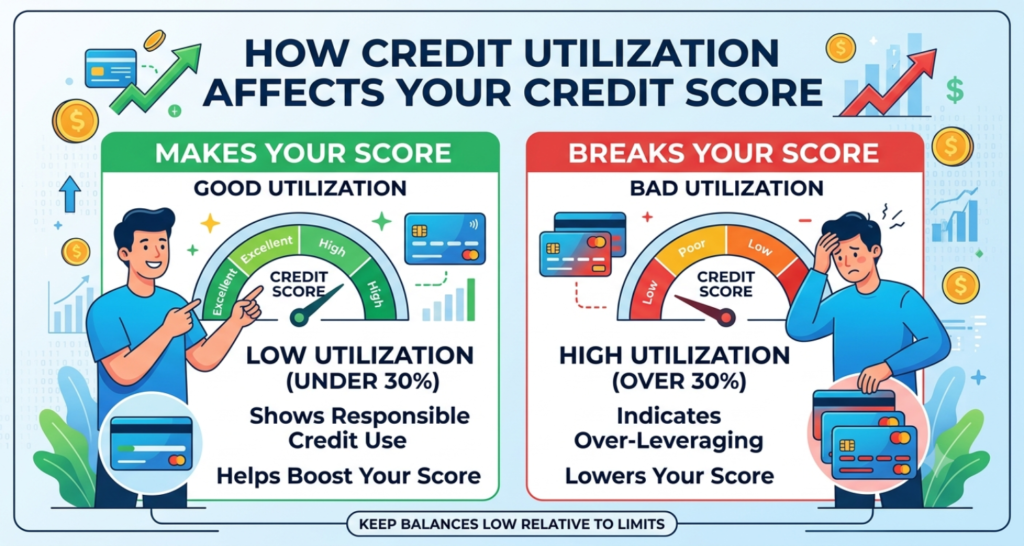
A high utilization ratio may suggest financial stress. On the other hand, low utilization demonstrates responsible credit management.
Because of this, even one month of high balances can lower your score if card issuers report those balances before you pay them off.
How Much Does Credit Utilization Affect Your Credit Score?
For most major credit scoring models, credit utilization makes up approximately 30% of your overall score.
Although payment history carries the most weight, utilization remains one of the fastest-changing factors.
Unlike late payments that remain on your credit report for years, utilization changes whenever new balances are reported.
As a result, lowering your balances can improve your score within a relatively short period.
The 30% Rule Explained
Many financial experts recommend keeping utilization below 30%.
However, lower is even better.
Here’s a general guideline:
| Credit Utilization | Credit Score Impact |
|---|---|
| Below 10% | Excellent |
| 10%–30% | Very Good |
| 30%–50% | Fair |
| 50%–75% | Poor |
| Above 75% | Very Negative |
People with the highest credit scores often maintain utilization below 10%.
High Credit Utilization Can Hurt More Than You Think
Many consumers assume making minimum payments is enough.
Unfortunately, that’s not always true.
Imagine this situation:
- Credit limit: $5,000
- Balance: $4,700
Even if every payment is made on time, the utilization rate reaches 94%.
This signals high borrowing activity, which may lower your credit score significantly.
Consequently, lenders could:
- Offer higher interest rates
- Reduce approval chances
- Lower credit limits
- Increase borrowing costs
Low Utilization Builds Financial Trust
Keeping balances low demonstrates responsible credit use.
It tells lenders that you:
- Don’t rely heavily on credit
- Manage debt responsibly
- Can handle available credit wisely
- Present lower lending risk
Therefore, lower utilization often leads to stronger loan offers and better credit card rewards.
Credit Utilization Is Calculated Per Card and Overall
Many people only calculate total utilization.
However, scoring models also look at utilization on each individual card.
Example:
Card A
- Limit: $2,000
- Balance: $1,900
- Utilization: 95%
Card B
- Limit: $8,000
- Balance: $100
- Utilization: 1%
Overall utilization equals only 20%.
Nevertheless, the nearly maxed-out first card may still negatively affect your score.
Because of this, it’s wise to keep balances low across all cards.
Common Mistakes That Increase Credit Utilization
Several habits unintentionally increase utilization.
Carrying Large Monthly Balances
Even if you pay your card in full every month, the reported balance may still be high if your issuer reports before payment.
Closing Old Credit Cards
Closing a card reduces your total available credit.
Consequently, your utilization percentage increases immediately.
Maxing Out One Card
Using most of one card’s limit—even when others have low balances—can still reduce your score.
Waiting Until the Due Date
Instead, paying before the statement closing date often lowers the balance that gets reported.
Smart Ways to Lower Credit Utilization
Fortunately, improving utilization doesn’t require complicated strategies.
Pay Your Balance Early
Instead of waiting until the due date, make payments before your statement closes.
This often results in lower reported balances.
Make Multiple Payments Each Month
Paying twice or several times each month keeps balances consistently low.
Request a Higher Credit Limit
If your issuer approves a higher limit without increasing spending, utilization naturally decreases.
For example:
- Old limit: $5,000
- New limit: $10,000
- Same balance: $2,000
Utilization drops from 40% to 20%.
Spread Purchases Across Cards
Rather than concentrating spending on one card, distribute purchases more evenly.
Avoid Closing Unused Cards
Older accounts with available credit help reduce overall utilization.
Does Paying Off Your Card Immediately Help?
Yes.
Many people pay their balance several days before the statement closing date.
As a result, the reported balance remains low, even if they continue using the card afterward.
This strategy can improve utilization without changing overall spending habits.
Does Credit Utilization Have Memory?
Older credit scoring models mainly consider your current reported balances.
Newer scoring models may analyze utilization trends over time.
Therefore, maintaining consistently low utilization becomes increasingly important.
Healthy habits today may provide long-term benefits tomorrow.
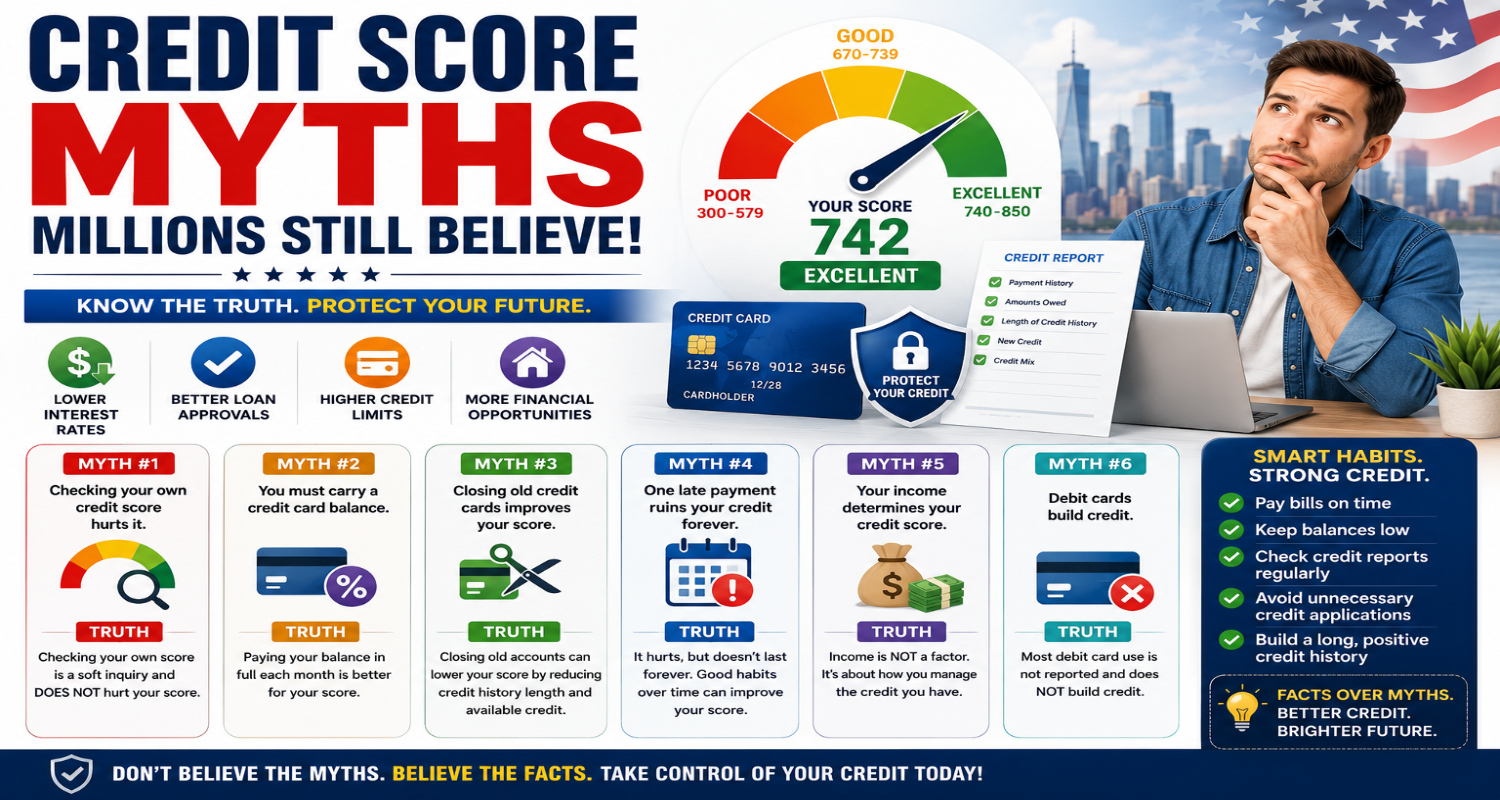
Myths About Credit Utilization
Myth 1: You Must Carry a Balance
False.
Paying your balance in full every month does not hurt your credit score.
Myth 2: Maxing Out Your Card Temporarily Doesn’t Matter
False.
If a high balance gets reported, your score can drop even if you pay it later.
Myth 3: Closing Paid-Off Cards Improves Your Score
Usually false.
Closing accounts often increases utilization by reducing available credit.
Best Practices for Excellent Credit Utilization
Follow these habits consistently:
- Keep utilization below 30%.
- Aim for under 10% whenever possible.
- Pay balances before statement closing dates.
- Avoid maxing out individual cards.
- Monitor your credit reports regularly.
- Request credit limit increases when appropriate.
- Keep older credit accounts open.
- Make multiple payments during the month.
Final Thoughts
Credit utilization is one of the fastest ways to influence your credit score. Although payment history remains the most important factor, your utilization ratio can significantly improve or damage your financial profile in just one reporting cycle.
Fortunately, managing utilization is straightforward. By keeping balances low, paying early, avoiding maxed-out cards, and maintaining healthy credit habits, you demonstrate financial responsibility to lenders. Over time, these practices can help you qualify for better loans, lower interest rates, and stronger credit card offers.
Whether you’re building credit for the first time or working to improve your score, controlling your credit utilization is one of the smartest financial moves you can make.
Consumer Financial Protection Bureau (CFPB):
Frequently Asked Questions
1. What is the best credit utilization ratio?
Keeping your utilization below 10% is ideal, although staying under 30% is generally considered good.
2. Can high credit utilization lower my score quickly?
Yes. A high reported balance can reduce your credit score even if you make on-time payments.
3. Should I close unused credit cards?
Usually not. Keeping older cards open can help lower your overall credit utilization.
4. Does paying my balance before the due date help?
Yes. Paying before the statement closing date often results in a lower reported balance.
5. Is credit utilization calculated across all cards?
Yes. Credit scoring models consider both your overall utilization and the utilization of each individual credit card.