 MOHAMMAD ABUBAKR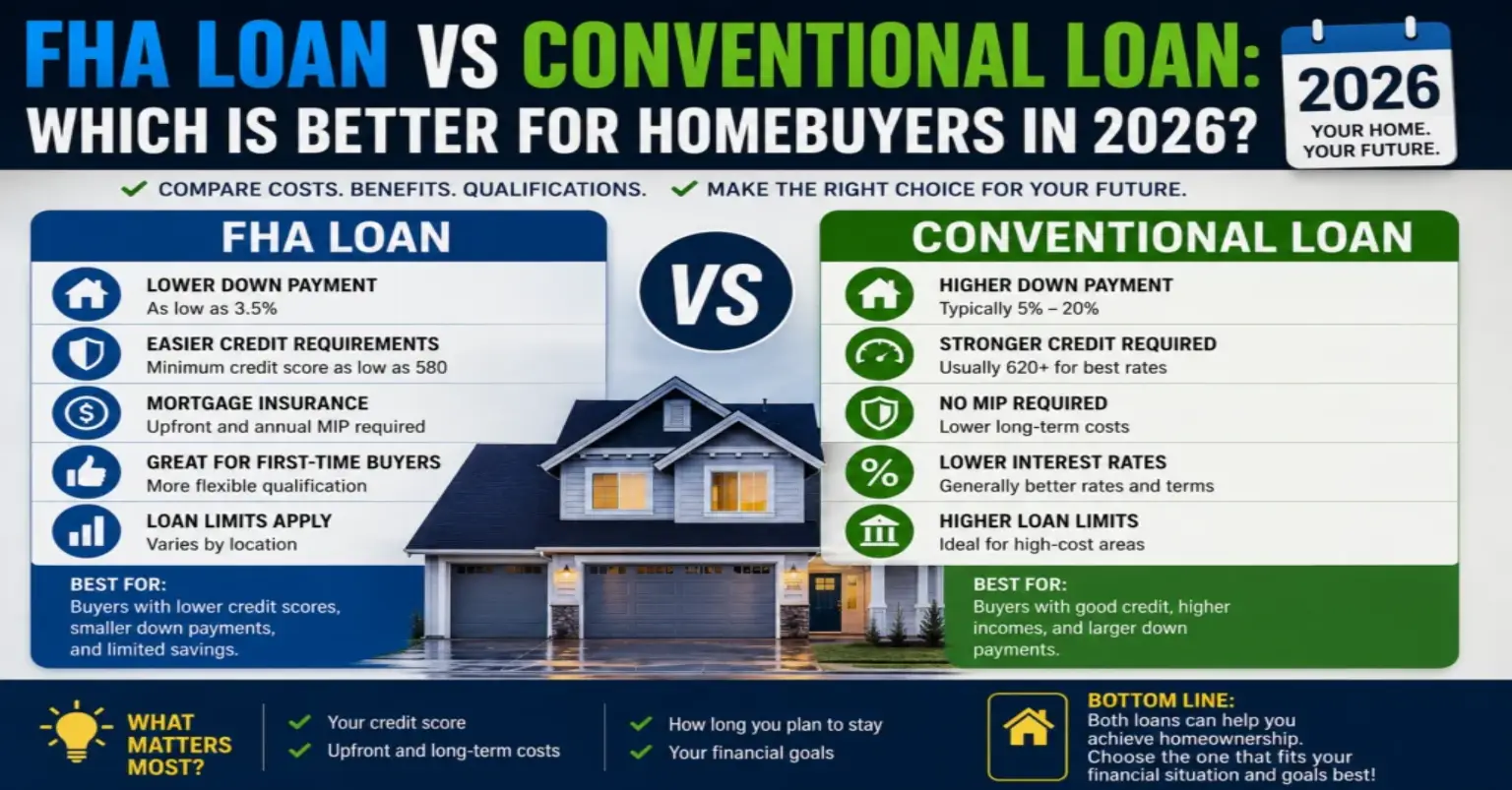
Buying a home is one of the biggest financial decisions most Americans will ever make. And before you start house hunting, you’ll likely face an important question:
Should you choose an FHA loan or a conventional loan?
Both mortgage options can help you become a homeowner, but they serve different types of borrowers and come with unique advantages and disadvantages.
In 2026, rising home prices and changing mortgage rates have made choosing the right loan more important than ever.
The truth is that neither loan is universally better. The right choice depends on your credit score, down payment, income, and long-term financial goals.
Your credit score can significantly impact the mortgage options available to you and the interest rate you’ll ultimately receive.
Here’s everything you need to know before deciding between an FHA loan and a conventional loan.
What Is an FHA Loan?
An FHA loan is a government-backed mortgage insured by the Federal Housing Administration.
These loans were designed to help borrowers who may have lower credit scores or limited savings for a down payment.
Key features of FHA loans include:
- Lower credit score requirements
- Smaller down payment options
- Flexible qualification standards
- Government-backed mortgage insurance
Because the government provides insurance to lenders, FHA loans are often easier to qualify for than conventional mortgages.
What Is a Conventional Loan?
A conventional loan is a mortgage that is not backed by a government agency.
Instead, these loans are offered by private lenders and typically follow guidelines established by Fannie Mae and Freddie Mac.
Conventional loans generally offer:
- Competitive interest rates
- Flexible loan terms
- Lower long-term costs for qualified borrowers
- Fewer property restrictions
Borrowers with strong financial profiles often prefer conventional mortgages because they may cost less over time.
FHA Loan vs Conventional Loan: Credit Score Requirements
One of the biggest differences involves credit scores.
FHA Loans
FHA loans are known for being more forgiving.
Borrowers with less-than-perfect credit may still qualify if they meet lender requirements.
This makes FHA loans popular among:
- First-time homebuyers
- Younger borrowers
- Individuals rebuilding credit
Conventional Loans
Conventional loans typically require stronger credit profiles.
Higher credit scores often lead to:
- Better interest rates
- Lower monthly payments
- More favorable loan terms
If you have excellent credit, a conventional loan may provide greater savings.
FHA Loan vs Conventional Loan: Down Payment Requirements
Saving for a down payment is often one of the biggest obstacles to homeownership.
FHA Loans
FHA loans are designed to help buyers enter the market with less cash upfront.
This can make homeownership more accessible for those with limited savings.
Conventional Loans
Many people mistakenly believe conventional loans require a 20% down payment.
While putting down 20% can eliminate private mortgage insurance, many conventional loan programs allow much smaller down payments.
As a result, the gap between FHA and conventional loans is often smaller than many buyers realize.
Mortgage Insurance Differences
Mortgage insurance is one of the most important factors when comparing these loans.
FHA Mortgage Insurance
FHA borrowers generally pay mortgage insurance premiums.
These costs may continue for a significant portion of the loan term and can increase overall borrowing expenses.
Conventional Mortgage Insurance
Conventional loans may require private mortgage insurance (PMI) when the down payment is below certain thresholds.
However, PMI can often be removed once sufficient home equity is built.
For many borrowers, this can create substantial long-term savings.
Which Loan Has Lower Monthly Payments?
The answer depends on several factors:
- Credit score
- Down payment amount
- Loan size
- Mortgage insurance costs
- Interest rates
Borrowers with excellent credit frequently find that conventional loans provide lower monthly payments.
Borrowers with lower credit scores may discover that FHA loans offer more affordable financing options.
Comparing loan estimates from multiple lenders is essential.
FHA Loan Pros
Easier Qualification
FHA loans help borrowers who may struggle to qualify for conventional financing.
Lower Credit Requirements
Credit challenges don’t automatically prevent approval.
Smaller Down Payments
Many buyers can purchase a home with less upfront cash.
Popular Among First-Time Buyers
FHA loans remain one of the most common first-time homebuyer mortgage options in the United States.
FHA Loan Cons
Mortgage Insurance Costs
Mortgage insurance can increase total borrowing expenses.
Property Requirements
Homes financed through FHA loans must meet specific property standards.
Potentially Higher Long-Term Costs
Over time, mortgage insurance expenses may make FHA loans more expensive than conventional alternatives.
Conventional Loan Pros
Lower Long-Term Costs
Qualified borrowers may save money through lower insurance costs and competitive rates.
Flexible Property Options
Conventional financing generally allows greater flexibility regarding eligible properties.
Removable Mortgage Insurance
Private mortgage insurance can often be canceled once sufficient equity is reached.
Attractive for Strong Borrowers
Excellent credit and stable finances can unlock better loan terms.
Conventional Loan Cons
Stricter Qualification Standards
Approval may be more difficult for borrowers with lower credit scores.
Stronger Financial Requirements
Lenders often expect more established financial histories.
Higher Standards for Approval
Income, debt ratios, and credit profiles may face greater scrutiny.
Which Loan Is Better for First-Time Homebuyers?
For many first-time homebuyers, FHA loans provide a practical path to homeownership.
However, not every first-time buyer automatically benefits from FHA financing.
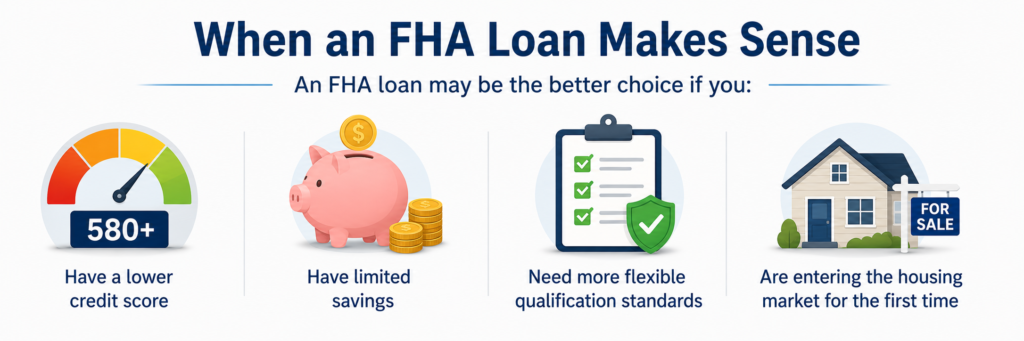
If you have:
- Good credit
- Stable income
- A reasonable down payment
a conventional loan may offer lower lifetime costs.
This is why comparing both options before making a decision is so important.
You can review current FHA loan requirements and eligibility guidelines directly through the U.S. Department of Housing and Urban Development.
When a Conventional Loan Makes Sense
A conventional loan may be the better option if you:
- Have strong credit
- Can make a larger down payment
- Want lower long-term costs
- Expect to build equity quickly
The Bottom Line
So, which is better: an FHA loan or a conventional loan?
The answer depends on your financial situation.
FHA loans offer easier qualification standards and can help buyers with lower credit scores or smaller down payments become homeowners sooner.
Conventional loans often provide lower long-term costs, especially for borrowers with strong credit and stable finances.
Before choosing either option, compare loan estimates from multiple lenders, evaluate total borrowing costs, and consider both your short-term affordability and long-term financial goals.
The best mortgage isn’t necessarily the one that’s easiest to get—it’s the one that helps you build wealth and maintain financial stability for years to come.