
 MOHAMMAD ABUBAKR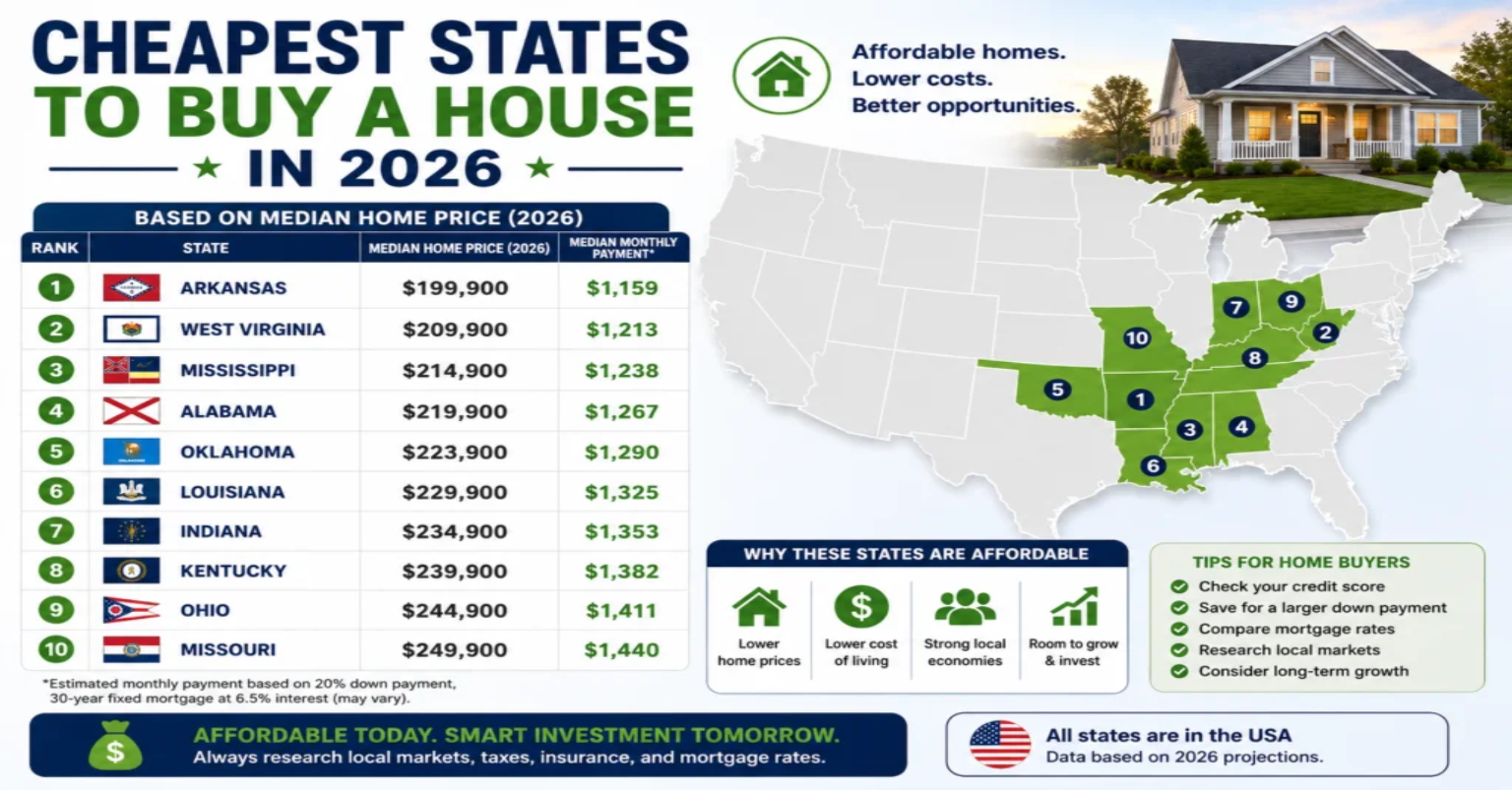
With home prices remaining high across much of the United States, many Americans are looking beyond expensive housing markets and searching for places where homeownership is still affordable. Whether you’re a first-time homebuyer, a remote worker, a retiree, or an investor, choosing the right state can save you hundreds of thousands of dollars.
So, where can you still buy a house without breaking the bank in 2026?
Based on recent housing affordability data, median home prices, property taxes, and overall cost of living, several Midwestern and Southern states continue to offer some of the best opportunities for affordable homeownership.
Why Housing Affordability Matters in 2026
The U.S. housing market remains challenging for many buyers. The national median home price is over $436,000, making affordability a major concern for families and first-time buyers. While mortgage rates have eased somewhat compared to previous years, housing costs remain significantly higher than they were before 2020.
Buyers can review the latest national housing market data published by the National Association of Realtors.
Fortunately, several states still offer homes at less than half the national median price.
Top 10 Cheapest States to Buy a House in 2026
1. West Virginia
Median Home Price: Approximately $148,000
West Virginia continues to rank as the most affordable state for homebuyers. Low property taxes, beautiful mountain scenery, and a low cost of living make it attractive for retirees and remote workers.
Pros:
- Lowest median home prices in the U.S.
- Affordable property taxes
- Low overall living expenses
Cons:
- Smaller job market
- Slower population growth
2. Mississippi
Median Home Price: Approximately $177,000
Mississippi offers some of the lowest housing costs in America. Buyers can often find larger homes and more land for significantly less than the national average.
Pros:
- Low home prices
- Affordable taxes
- Low cost of living
Cons:
- Lower average wages
- Limited economic growth in some areas
3. Arkansas
Median Home Price: Approximately $189,000
Arkansas has become increasingly popular among budget-conscious buyers. Cities like Fayetteville and Little Rock provide affordability while offering growing employment opportunities.
Pros:
- Affordable housing market
- Growing economy
- Outdoor recreation opportunities
Cons:
- Insurance costs can be higher in some regions
4. Oklahoma
Median Home Price: Approximately $195,000
Oklahoma combines affordable housing with strong job growth in energy, healthcare, and technology sectors.
Pros:
- Low housing costs
- Business-friendly environment
- Affordable property taxes
Cons:
- Severe weather risks
5. Iowa
Median Home Price: Approximately $203,000
Iowa consistently ranks among the most affordable states for homeownership when considering income-to-home-price ratios.
Pros:
- Strong affordability
- Stable economy
- Quality public schools
Cons:
- Higher property taxes than some neighboring states
6. Kentucky
Median Home Price: Approximately $210,000
Kentucky offers affordable housing while providing access to major metropolitan areas such as Louisville and Lexington.
Pros:
- Low home prices
- Affordable cost of living
- Growing housing demand
Cons:
- Limited inventory in popular areas
7. Kansas
Median Home Price: Approximately $215,000
Kansas remains one of the best values in the Midwest, particularly for families seeking affordable suburban living.
Pros:
- Strong affordability
- Good job market
- Family-friendly communities
Cons:
- Property taxes can be above average
8. Alabama
Median Home Price: Approximately $220,000
Alabama combines low property taxes with affordable home prices, making it attractive for retirees and first-time buyers alike.
Pros:
- One of the lowest property tax rates
- Affordable housing
- Growing cities like Huntsville
Cons:
- Weather-related insurance costs
9. Missouri
Median Home Price: Approximately $230,000
Missouri offers affordable homes along with major employment centers in Kansas City and St. Louis.
Pros:
- Affordable metropolitan areas
- Diverse economy
- Reasonable taxes
Cons:
- Housing prices rising in popular suburbs
10. Indiana
Median Home Price: Approximately $232,000
Indiana ranks among the most affordable states while maintaining strong employment opportunities and economic growth. Realtor.com recently ranked it among the best states for homebuyers due to affordability relative to income.
Pros:
- Strong affordability
- Growing economy
- Excellent value for first-time buyers
Cons:
- Competitive housing markets in some cities
Cheapest States to Buy a House in 2026: Quick Comparison
| State | Median Home Price |
|---|---|
| West Virginia | $148,000 |
| Mississippi | $177,000 |
| Arkansas | $189,000 |
| Oklahoma | $195,000 |
| Iowa | $203,000 |
| Kentucky | $210,000 |
| Kansas | $215,000 |
| Alabama | $220,000 |
| Missouri | $230,000 |
| Indiana | $232,000 |
These figures are dramatically lower than the national median home price of more than $436,000.
What Makes a State Affordable?
Many buyers focus only on home prices, but true affordability includes several factors:
Your credit profile can also influence how much house you can afford, since mortgage approval and interest rates often depend on your creditworthiness.
Property Taxes
Some states with low home prices have higher property tax rates. Buyers should calculate annual ownership costs, not just purchase prices.
Homeowners Insurance
Insurance premiums vary significantly depending on weather risks, flooding, and storm exposure.
Cost of Living
Utilities, transportation, healthcare, and groceries can impact long-term affordability.
Job Opportunities
A cheap house may not be a bargain if employment opportunities are limited.
Future Appreciation
Some affordable states are experiencing population growth and rising home values, creating potential long-term equity gains.
Best Affordable States for First-Time Homebuyers
If you’re buying your first home in 2026, these states stand out:
- Indiana
- Iowa
- Oklahoma
- Kentucky
- Arkansas
These markets offer a strong balance of affordability, employment opportunities, and long-term growth potential.
Should You Move to a Cheaper State?
Relocating to a lower-cost housing market can dramatically reduce your mortgage payment and improve your financial flexibility. Many remote workers and retirees are choosing affordable states where their income stretches further.
However, before moving, consider:
- Career opportunities
- Climate preferences
- Healthcare access
- School quality
- Property taxes
- Local housing demand
The cheapest state isn’t always the best fit for every buyer.
Final Thoughts
For Americans looking to achieve homeownership in 2026, affordable opportunities still exist. States like West Virginia, Mississippi, Arkansas, Oklahoma, and Iowa offer homes at prices far below the national average while maintaining reasonable living costs.
Before making a decision, compare not only home prices but also taxes, insurance, job prospects, and quality of life. Taking a holistic approach will help you find a home that fits both your budget and your lifestyle.
In a housing market where affordability is increasingly difficult to find, these states remain some of the best places in America to buy a house in 2026.