 MOHAMMAD ABUBAKR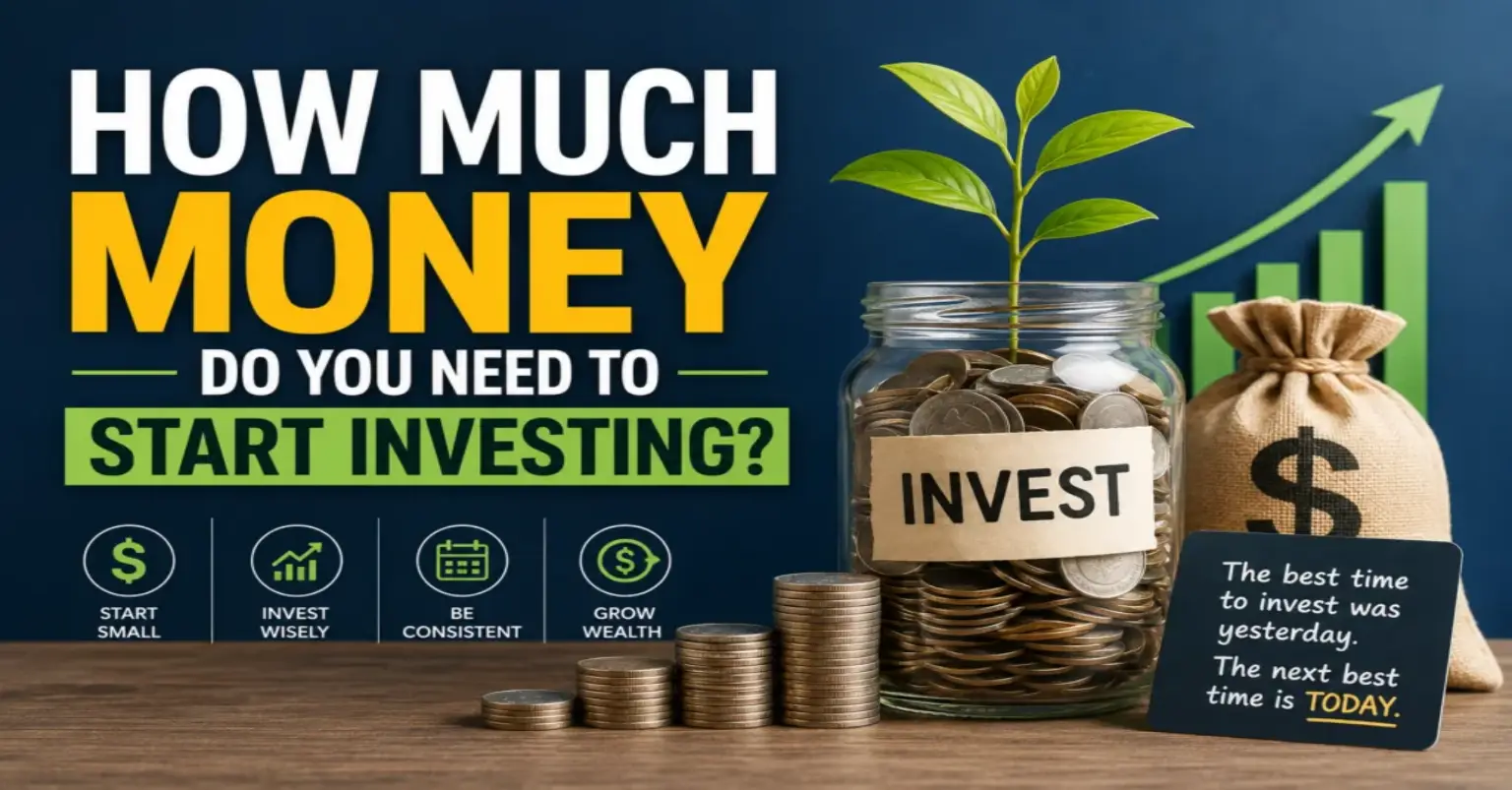
Many people believe investing is only for the wealthy. The truth is, you don’t need thousands of dollars to begin building wealth. In today’s digital world, anyone can start investing with as little as $10, $50, or $100.
If you’ve been wondering, “How much money do I need to start investing?” the answer may surprise you. The amount isn’t nearly as important as starting early and investing consistently.
In this guide, you’ll learn how much money you need to invest, the best investment options for beginners, and practical steps to start growing your money today.
The Short Answer: You Can Start Investing With Very Little Money
Years ago, investing often required large minimum deposits and expensive brokerage fees. Today, many online brokerages and investing apps allow you to start with almost any amount.
New investors can also learn the basics from Investor.gov’s Beginner Investing Guide.
Some platforms offer:
- Fractional shares starting at $1
- No account minimums
- Commission-free stock trading
- Automatic investing options
This means you don’t need $10,000 or even $1,000 to become an investor. What matters most is creating a habit of investing regularly.
Why Starting Early Matters More Than Starting Big
One of the biggest advantages investors have is time.
When you invest early, your money benefits from compound growth. This means you earn returns not only on your original investment but also on the returns you’ve already earned.
Many investors underestimate how powerful long-term investing can be when combined with clear financial goals.
Example:
Investor A invests $100 per month starting at age 25.
Investor B invests $200 per month starting at age 35.
Even though Investor B invests more each month, Investor A may end up with more money at retirement because of the extra years of compounding.
The lesson is simple: starting now is usually more important than waiting until you have a larger amount.
How Much Should Beginners Invest?
The ideal amount depends on your financial situation.
If You’re Living Paycheck to Paycheck
Start with:
- $10 to $25 per month
- A low-cost index fund
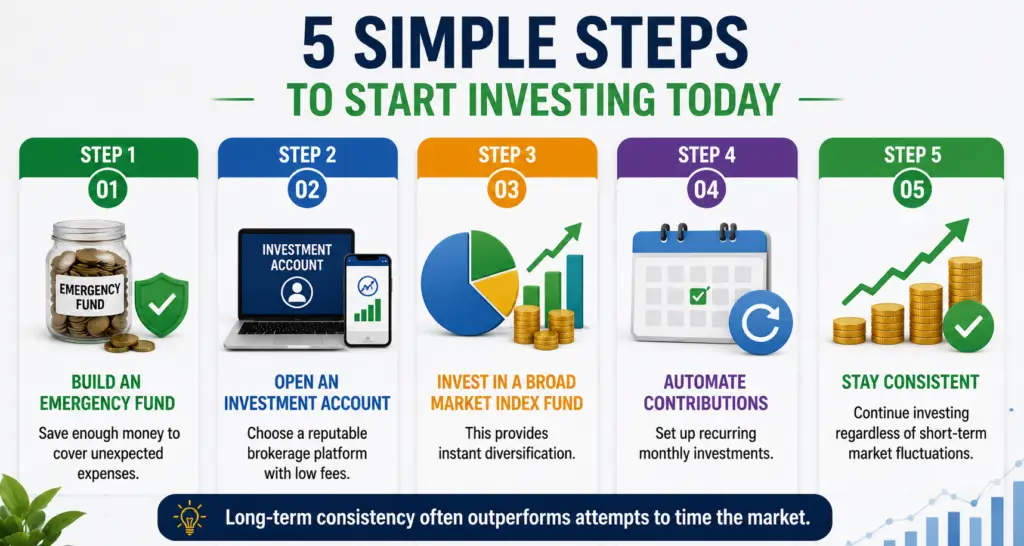
- Automatic monthly contributions
Building the habit is more important than the dollar amount.
If You Have Some Extra Income
Consider investing:
- $50 to $200 per month
- Into diversified ETFs or index funds
- Through a retirement account or brokerage account
If You Have Savings Available
You may choose to invest:
- $500 to $5,000 initially
- Plus ongoing monthly contributions
However, make sure you have an emergency fund before investing large amounts.
The Best Investments for Small Amounts of Money
If you’re starting with limited funds, focus on investments that provide diversification and long-term growth.
1. Index Funds
Index funds are among the most popular investments for beginners.
Benefits include:
- Low fees
- Broad market exposure
- Long-term growth potential
- Easy to manage
Many investors use S&P 500 index funds as a foundation for their portfolio.
2. Exchange-Traded Funds (ETFs)
ETFs work similarly to index funds but trade like stocks.
Advantages include:
- Diversification
- Low investment minimums
- Flexibility
- Affordable access to hundreds of companies
3. Fractional Shares
Fractional investing allows you to buy a portion of a stock instead of a whole share.
For example, if a stock costs $500 per share, you can invest $20 and own a fraction of that stock.
This makes investing accessible for almost everyone.
4. Retirement Accounts
Retirement accounts offer tax advantages that can help your investments grow faster.
Popular options include:
- Roth IRA
- Traditional IRA
- 401(k)
Many financial experts recommend contributing enough to receive any employer matching contributions first.
Retirement planning starts with understanding how much you’ll eventually need to achieve financial security.
Should You Pay Off Debt Before Investing?
This depends on the type of debt.
High-Interest Debt
If you have:
- Credit card debt
- Payday loans
- High-interest personal loans
Paying off that debt may provide a better financial return than investing.
Low-Interest Debt
For lower-interest debts like some mortgages or student loans, many people choose to invest while making regular debt payments.
Consider your risk tolerance and financial goals before deciding.
Common Investing Mistakes Beginners Make
Waiting for the Perfect Time
Many people delay investing because they believe a market crash is coming or they need more money.
The reality is that nobody can consistently predict market movements.
This is one reason market timing remains one of the most common investing mistakes.
Trying to Get Rich Quickly
Successful investing usually involves patience.
Avoid:
- Get-rich-quick schemes
- Meme stock speculation
- Emotional trading
- Chasing trends
Ignoring Diversification
Putting all your money into one stock can increase risk significantly.
Diversified investments help reduce the impact of a single company performing poorly.
Investing Without an Emergency Fund
Before aggressively investing, aim to save three to six months of living expenses in an emergency fund.
This can help prevent you from selling investments during difficult times.
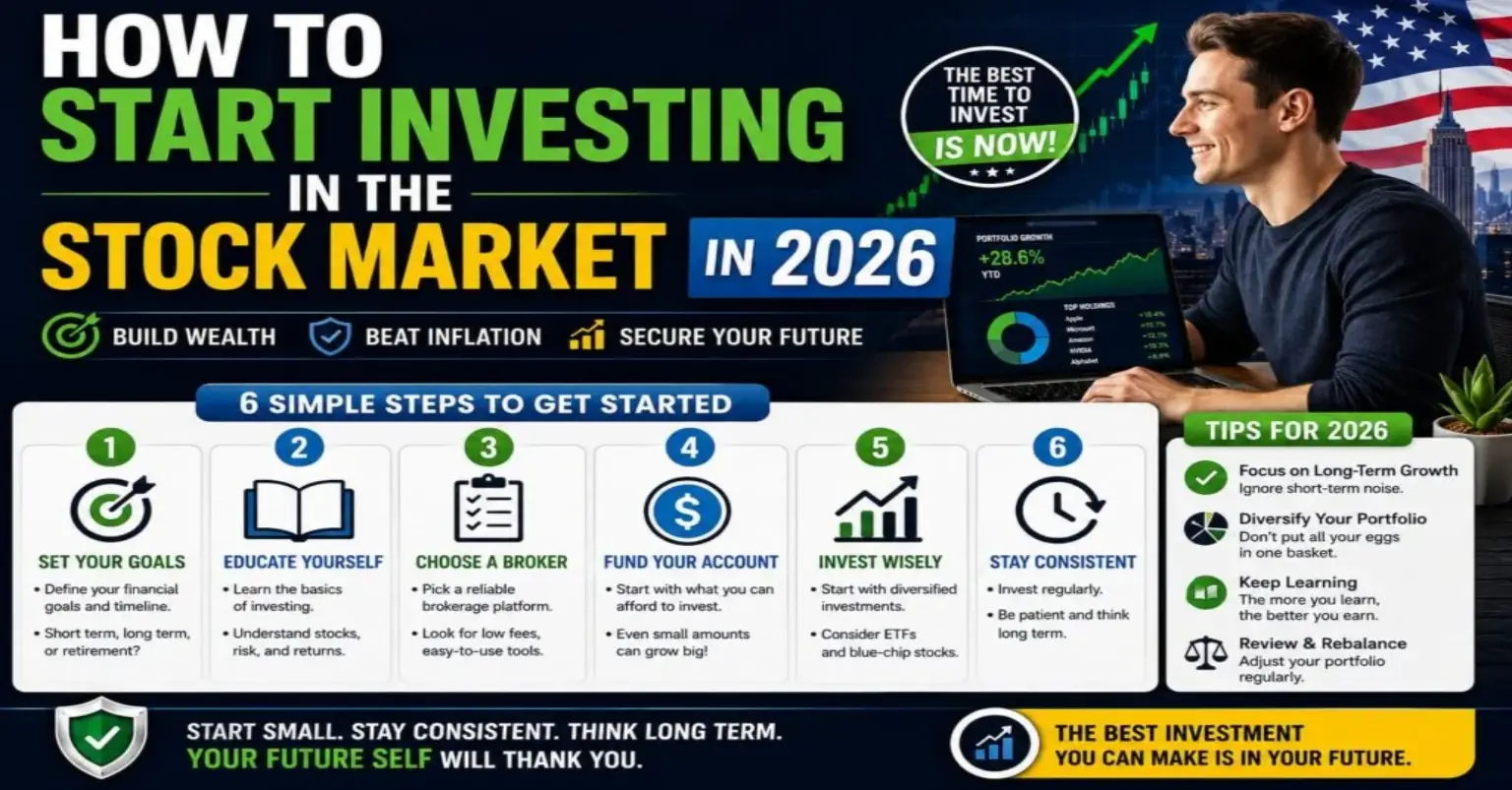
A Simple Beginner Investment Strategy
If you’re unsure where to start, consider this basic approach:
How Much Money Can Investing Really Grow?
Let’s look at a simple example.
If you invest:
- $100 per month
- For 30 years
- At an average annual return of 8%
You could accumulate more than $140,000.
Increase the monthly contribution to $300, and the total could exceed $400,000 over the same period.
While returns are never guaranteed, this example demonstrates the power of long-term investing and compound growth.
Final Thoughts
So, how much money do you need to start investing?
For most people, the answer is far less than they think.
You can start investing with as little as $10, $50, or $100. The key isn’t having a huge amount of money upfront—it’s developing the habit of investing consistently over time.
Whether you’re saving for retirement, financial freedom, or long-term wealth, the best time to start investing is often today. Small investments made consistently can grow into significant wealth over the years.
Remember: successful investing isn’t about how much money you start with. It’s about how long your money stays invested and how consistently you contribute to your future.