 MOHAMMAD ABUBAKR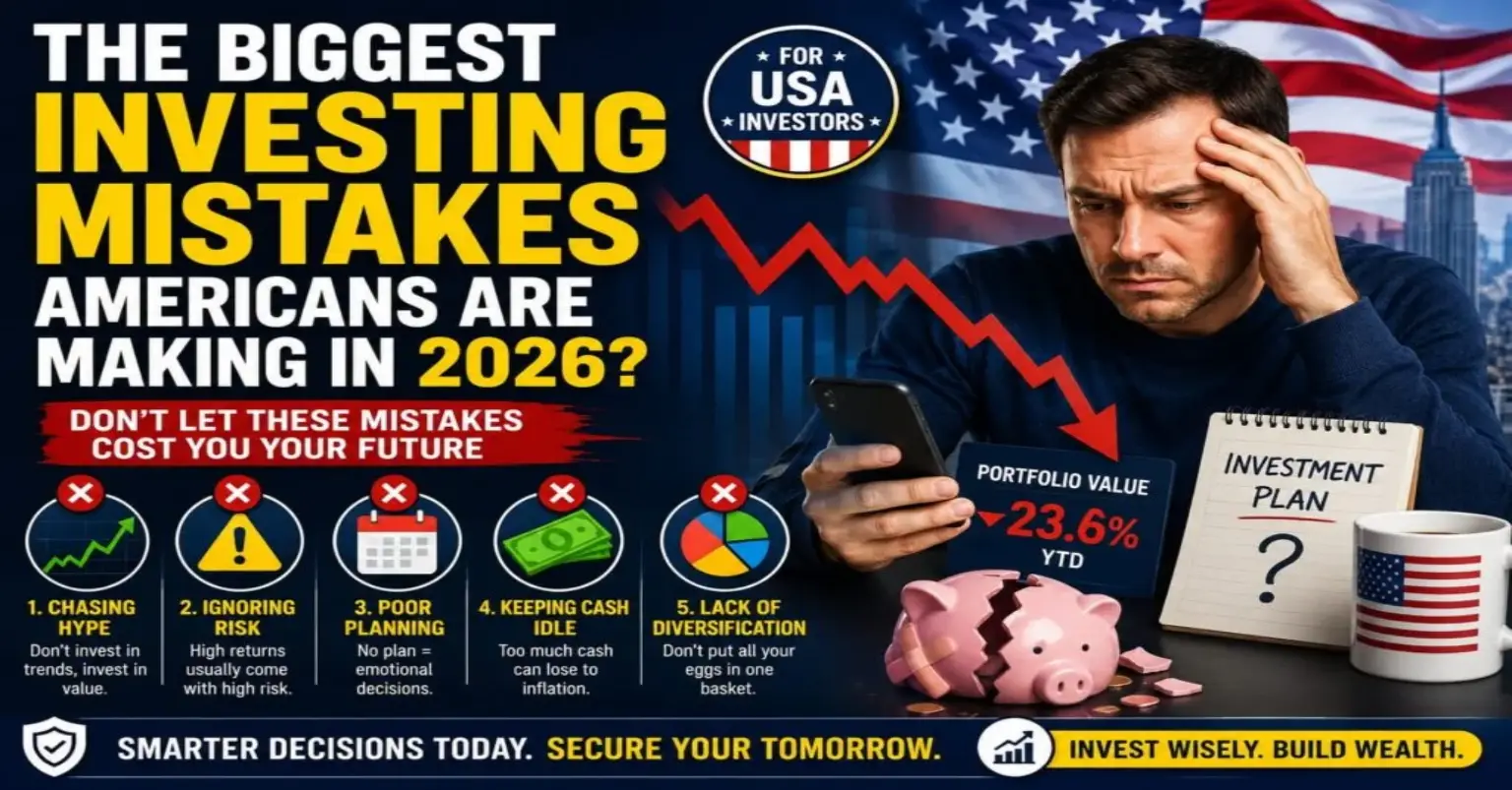
The biggest investing mistakes 2026 investors are making often have little to do with market knowledge and more to do with emotions, poor planning, and chasing trends. Investing has never been more accessible. In 2026, Americans can buy stocks, ETFs, cryptocurrencies, bonds, and alternative assets with just a few taps on their smartphones. Yet despite unprecedented access to financial information, many investors continue to make costly mistakes that can significantly reduce long-term wealth.
From chasing artificial intelligence stocks to reacting emotionally to market headlines, today’s investing environment presents unique challenges. Understanding these mistakes can help investors build stronger portfolios, protect their retirement savings, and achieve their financial goals.
- Chasing Market Hype Instead of Following a Strategy
One of the most common investing mistakes in 2026 is chasing whatever sector is currently generating excitement.
Whether it’s artificial intelligence, quantum computing, renewable energy, robotics, or the latest cryptocurrency trend, many investors buy assets after massive price increases rather than before.
The problem is simple: by the time a trend becomes popular on social media and financial news outlets, much of the growth may already be priced in.
Successful investors focus on:
- Long-term investment goals
- Diversification
- Risk management
- Consistent contributions
Instead of asking, “What’s the hottest stock right now?” ask, “Does this investment fit my long-term plan?”
- Letting Emotions Control Investment Decisions
Fear and greed remain two of the biggest enemies of wealth creation.
When markets decline, some investors panic and sell quality assets at a loss. When markets rally, others become overly confident and take excessive risks.
In 2026, real-time notifications, financial influencers, and 24/7 market coverage make emotional investing even more dangerous.
Signs of emotional investing include:
- Selling after sharp market drops
- Buying because of FOMO (Fear of Missing Out)
- Constantly checking portfolio values
- Changing strategies every few months
History shows that disciplined investors often outperform those who react emotionally to short-term market movements.
Many investors also ignore critical market signals, which can be just as damaging as emotional decision-making.
- Ignoring Diversification
Many Americans continue to concentrate too much of their wealth in a small number of investments.
This often happens when investors:
- Own only technology stocks
- Hold large amounts of employer stock
- Invest heavily in one sector
- Put too much money into cryptocurrency
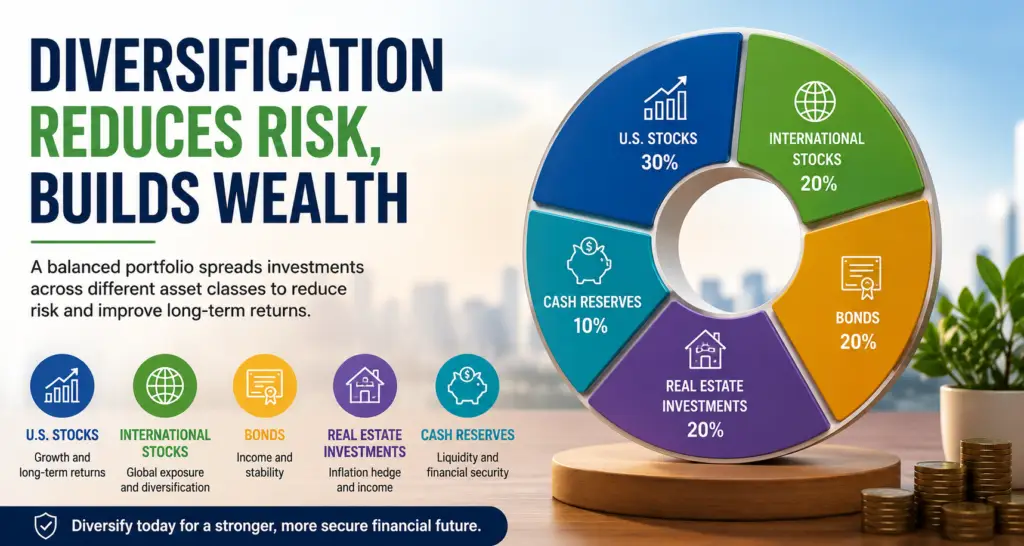
Diversification doesn’t eliminate risk, but it can help reduce the impact of major losses in any single asset class.
- Trying to Time the Market
Research has repeatedly shown that time in the market is generally more important than timing the market. Learn more about long-term investing principles through the Vanguard Investment Education guide.
Market timing sounds attractive in theory.
Buy low. Sell high.
In reality, predicting short-term market movements consistently is extremely difficult, even for professional investors.
Many people wait for the “perfect” entry point and end up missing years of market growth.
This is especially common among people who are unsure how much capital they actually need before getting started.
Research has repeatedly shown that time in the market is generally more important than timing the market.
Investors who contribute regularly through strategies such as dollar-cost averaging often benefit from market volatility rather than fearing it.
- Neglecting Retirement Accounts
Despite growing awareness about retirement planning, many Americans still fail to maximize tax-advantaged accounts.
These accounts can offer powerful long-term benefits:
- Tax-deferred growth
- Potential employer matching
- Lower taxable income
- Tax-free withdrawals in certain cases
Common mistakes include:
- Not contributing enough to receive employer matching
- Withdrawing retirement funds early
- Holding excessive cash inside retirement accounts
- Failing to increase contributions over time
Retirement planning remains one of the most important components of financial security.
- Following Financial Influencers Blindly
Financial content has exploded across YouTube, TikTok, Instagram, and podcasts.
While some creators provide valuable education, others prioritize engagement over accuracy.
Investors should remember that:
- Social media is not personalized financial advice
- Influencers may have undisclosed conflicts of interest
- Past performance does not guarantee future results
- Viral content often oversimplifies complex financial topics
Always verify information from multiple reputable sources before making investment decisions.
- Underestimating Inflation
Inflation remains a major concern for households across the United States.
Many investors still keep excessive amounts of money in low-yield savings accounts that fail to keep pace with rising costs.
While emergency funds are essential, long-term wealth typically requires investments capable of outpacing inflation over decades.
Investors should regularly review whether their portfolios are positioned to maintain purchasing power over time.
- Overlooking Investment Fees
Small fees may seem insignificant, but they can have a substantial impact on long-term returns.
Examples include:
- High expense ratios
- Advisory fees
- Trading costs
- Fund management charges
Even a difference of 1% annually can translate into thousands—or even hundreds of thousands—of dollars over a lifetime.
Investors should understand exactly what they are paying and whether those costs provide meaningful value.
- Failing to Rebalance Portfolios
Strong-performing investments naturally grow into larger portions of a portfolio.
Without periodic rebalancing, investors may unknowingly take on more risk than intended.
For example, a portfolio originally allocated:
- 60% stocks
- 40% bonds
may become:
- 80% stocks
- 20% bonds
after a prolonged market rally.
Regular portfolio reviews help ensure investments remain aligned with personal risk tolerance and financial objectives.
- Investing Without Clear Goals
Many Americans invest without defining what they are investing for.
Successful investing begins with clear objectives such as:
- Retirement
- Buying a home
- College savings
- Financial independence
- Wealth preservation
- Retirement remains one of the most important goals, yet many Americans underestimate how much they will actually need.
Different goals require different strategies, timelines, and risk levels.
Without a destination, it’s difficult to create an effective investment roadmap.
What Smart Investors Are Doing Differently in 2026
The most successful investors aren’t necessarily finding secret stocks or predicting market crashes.
Instead, they are:
- Investing consistently
- Maintaining diversified portfolios
- Managing risk carefully
- Keeping costs low
- Ignoring short-term noise
- Focusing on long-term wealth building
They understand that investing is less about making perfect decisions and more about avoiding major mistakes.
Final Thoughts
The biggest investing mistakes Americans are making in 2026 are not new. Emotional decisions, poor diversification, market timing, and chasing trends have hurt investors for generations.
What has changed is the speed at which misinformation, hype, and fear can spread online.
Investors who remain disciplined, stay focused on long-term goals, and follow evidence-based strategies are often in the best position to build lasting wealth.
In an era of constant market noise, patience may be the most valuable investment skill of all.