
 MOHAMMAD ABUBAKR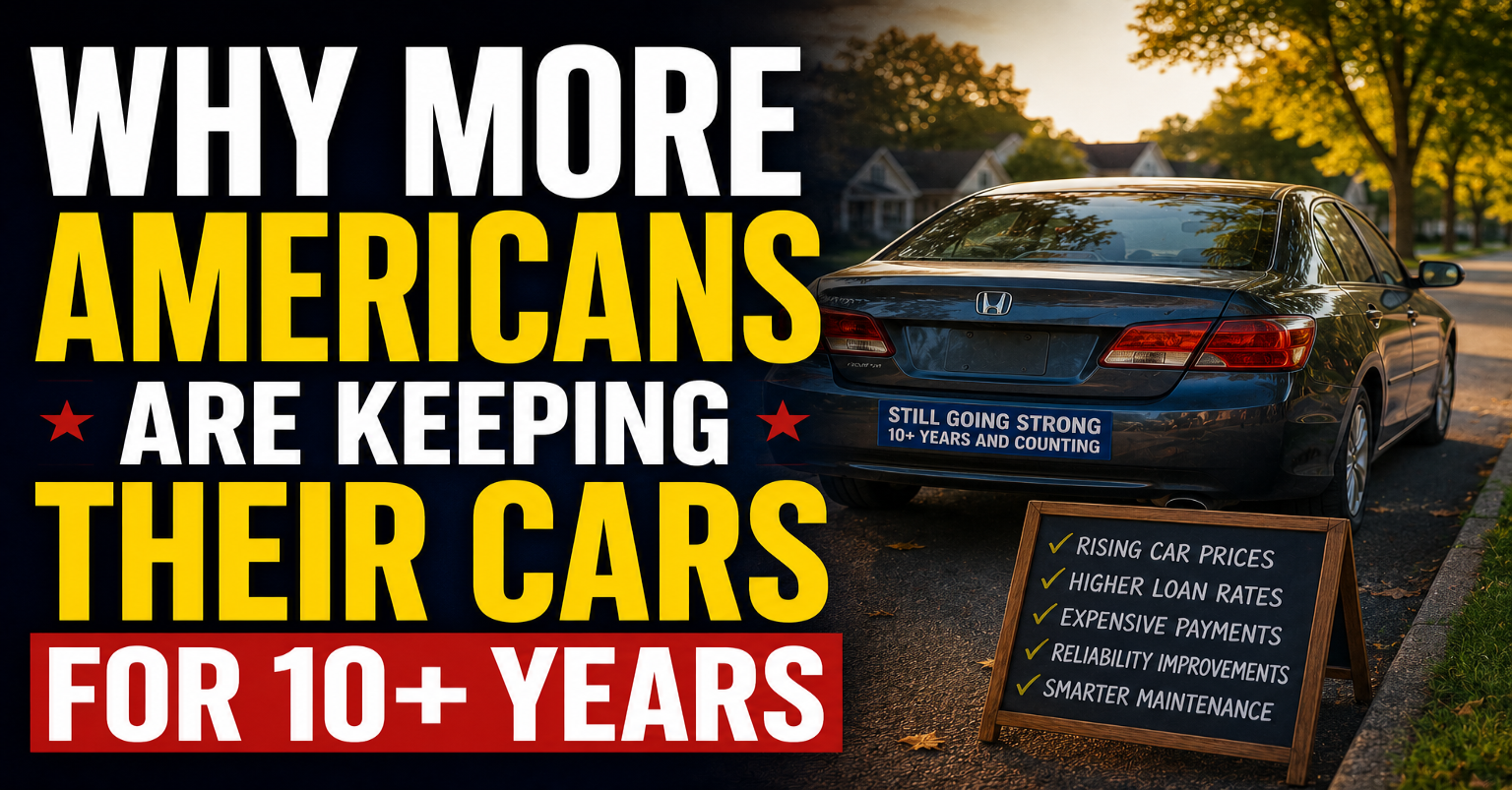
For decades, Americans were known for trading in their vehicles every few years. A new car often symbolized success, convenience, and the latest technology. However, that trend is changing.
Today, more Americans are holding onto their vehicles for 10 years or longer. In fact, many drivers are choosing to keep their cars well beyond the traditional ownership period. This shift is happening across different income levels and age groups.
So, what is driving this change?
The answer involves rising vehicle prices, higher interest rates, improved reliability, and changing consumer priorities. As a result, keeping a car longer has become a smart financial decision for millions of households.
Let’s explore why more Americans are extending the life of their vehicles in 2026.
New Cars Have Become Much More Expensive
One of the biggest reasons is simple: new vehicles cost a lot more than they used to.
Over the last several years, average new car prices have climbed significantly. Many popular SUVs and trucks now cost well over $40,000. Luxury models can easily exceed $60,000 or even $80,000.
As a result, many consumers are experiencing sticker shock.
Instead of taking on a large monthly payment, drivers are choosing to keep their current vehicles longer. Consequently, they can avoid adding another major expense to their household budget.
For many families, that decision makes financial sense.
Higher Interest Rates Make Financing Less Attractive
Vehicle prices are not the only concern.
Auto loan rates have also increased. Even buyers with good credit scores often face higher borrowing costs than they did a few years ago.
Understanding the common mistakes buyers make when financing vehicles can help reduce borrowing costs and avoid expensive loan terms
A larger loan combined with a higher interest rate can create a monthly payment that strains a budget.
Therefore, many Americans are asking a simple question:
“Why replace a car that still works?”
By keeping an existing vehicle, drivers can avoid years of new loan payments. Moreover, they gain greater financial flexibility.
Cars Are Built to Last Longer
Modern vehicles are more reliable than ever.
Years ago, reaching 100,000 miles was considered impressive. Today, many vehicles can easily surpass 200,000 miles with proper maintenance.
Drivers can review vehicle reliability studies and ownership data from J.D. Power to better understand long-term vehicle durability.
Manufacturers have improved engine technology, transmission durability, and overall build quality. Consequently, consumers have greater confidence in older vehicles.
A well-maintained car can remain dependable for more than a decade.
Because of this, many owners no longer feel pressured to replace their vehicles simply because they are getting older.
Inflation Has Changed Consumer Priorities
Inflation continues to affect household budgets across America.
Food, housing, insurance, healthcare, and utility costs have increased. Therefore, consumers are paying closer attention to every financial decision.
Buying a new vehicle may not be a top priority when other expenses continue to rise.
Instead, many families focus on maximizing the value of assets they already own.
Keeping a vehicle for 10 years or longer helps reduce overall transportation costs. As a result, drivers can direct more money toward savings, retirement accounts, or emergency funds.
Technology Improvements Have Slowed Down
There was a time when each new vehicle generation introduced dramatic improvements.
Drivers gained major upgrades in fuel economy, safety features, and entertainment systems.
Today, the pace of change feels less dramatic for many consumers.
Most vehicles already include features such as:
- Backup cameras
- Bluetooth connectivity
- Touchscreen displays
- Lane departure warnings
- Automatic emergency braking
- Smartphone integration
Because many older vehicles already offer modern conveniences, drivers may see fewer reasons to upgrade.
As a result, they feel comfortable keeping their cars longer.
Vehicle Reliability Has Improved Significantly
Reliability remains a major factor.
Many popular brands now produce vehicles designed to last for hundreds of thousands of miles.
Routine maintenance is often less expensive than replacing an entire vehicle.
For example, replacing brakes, tires, or batteries typically costs far less than purchasing a new car.
Therefore, many consumers choose maintenance over replacement.
This mindset has become increasingly common among financially conscious Americans.
Used Car Values Have Changed Consumer Behavior
The used car market has experienced unusual price swings in recent years.
Many drivers watched used vehicle values rise dramatically. Consequently, they became more aware of how expensive replacement vehicles had become.
Even if someone sells a vehicle for a good price, the replacement vehicle may still cost substantially more.
As a result, keeping a current vehicle often feels like the better financial move.
Consumers increasingly evaluate the total cost of ownership rather than focusing solely on resale value.
Americans Are Becoming More Financially Conscious
Personal finance content is more popular than ever.
Millions of Americans now follow budgeting experts, financial planners, and money-saving influencers.
Many financial educators encourage people to avoid unnecessary debt and maximize the value of existing assets.
Keeping a paid-off vehicle aligns perfectly with those principles.
Instead of sending hundreds of dollars each month to a lender, drivers can invest that money elsewhere.
Over time, those savings can become significant.
Consequently, long-term vehicle ownership has become part of a broader financial strategy.
Supply Chain Issues Changed Buying Habits
The vehicle shortages experienced during recent years also affected consumer behavior.
Many buyers struggled to find the exact model they wanted. Others faced dealer markups and limited inventory.
Those experiences encouraged consumers to reconsider frequent vehicle replacement.
Some drivers delayed purchases temporarily. However, many later discovered that keeping their current vehicles worked just fine.
As a result, longer ownership periods became more common.
Even after inventory conditions improved, many consumers maintained those habits.
Environmental Concerns Play a Role
Some Americans are also thinking about sustainability.
Manufacturing a new vehicle requires energy, raw materials, and transportation resources.
Keeping a vehicle longer can reduce the environmental impact associated with frequent replacements.
While electric vehicles continue gaining popularity, many consumers believe extending the life of an existing vehicle is also a responsible choice.
Therefore, environmental considerations influence ownership decisions for some drivers.
The Rise of Remote and Hybrid Work
Work habits have changed significantly.
Many Americans now work remotely or follow hybrid schedules.
As a result, annual mileage has decreased for some households.
Vehicles that accumulate fewer miles often remain in good condition for longer periods.
Because wear and tear happens more slowly, drivers feel less urgency to replace their cars.
Consequently, ownership periods continue to extend.
Paying Off a Car Feels Better Than Ever
Few financial milestones feel as satisfying as making the final car payment.
Once a vehicle is paid off, transportation costs can drop dramatically.
Many drivers experience a sense of freedom after eliminating that monthly obligation.
Therefore, they become reluctant to start a new five- or six-year loan.
Instead, they continue driving the vehicle while enjoying years without payments.
For many households, this is one of the strongest reasons for keeping a car longer.
Is Keeping a Car for 10+ Years the Right Move?
In many situations, yes.
If a vehicle remains reliable, safe, and affordable to maintain, extending ownership can be financially beneficial.
However, every situation is different.
A vehicle with constant repair problems may eventually cost more than it is worth. Likewise, changing family needs may require a larger or different type of vehicle.
The key is balancing repair costs against replacement costs.
When maintenance remains reasonable, keeping a vehicle longer often delivers substantial savings.
Final Thoughts
More Americans are keeping their cars for 10 years or longer because the economics make sense. New vehicle prices remain high. Interest rates have increased. Meanwhile, modern vehicles are lasting longer than ever before.
In addition, consumers are becoming more financially aware. They are prioritizing savings, reducing debt, and maximizing the value of assets they already own.
As a result, the era of frequent vehicle replacement is fading.
For many households, holding onto a reliable car is no longer a sign of financial limitation. Instead, it has become a smart financial strategy.
And in 2026, that trend shows no signs of slowing down.