
 MOHAMMAD ABUBAKR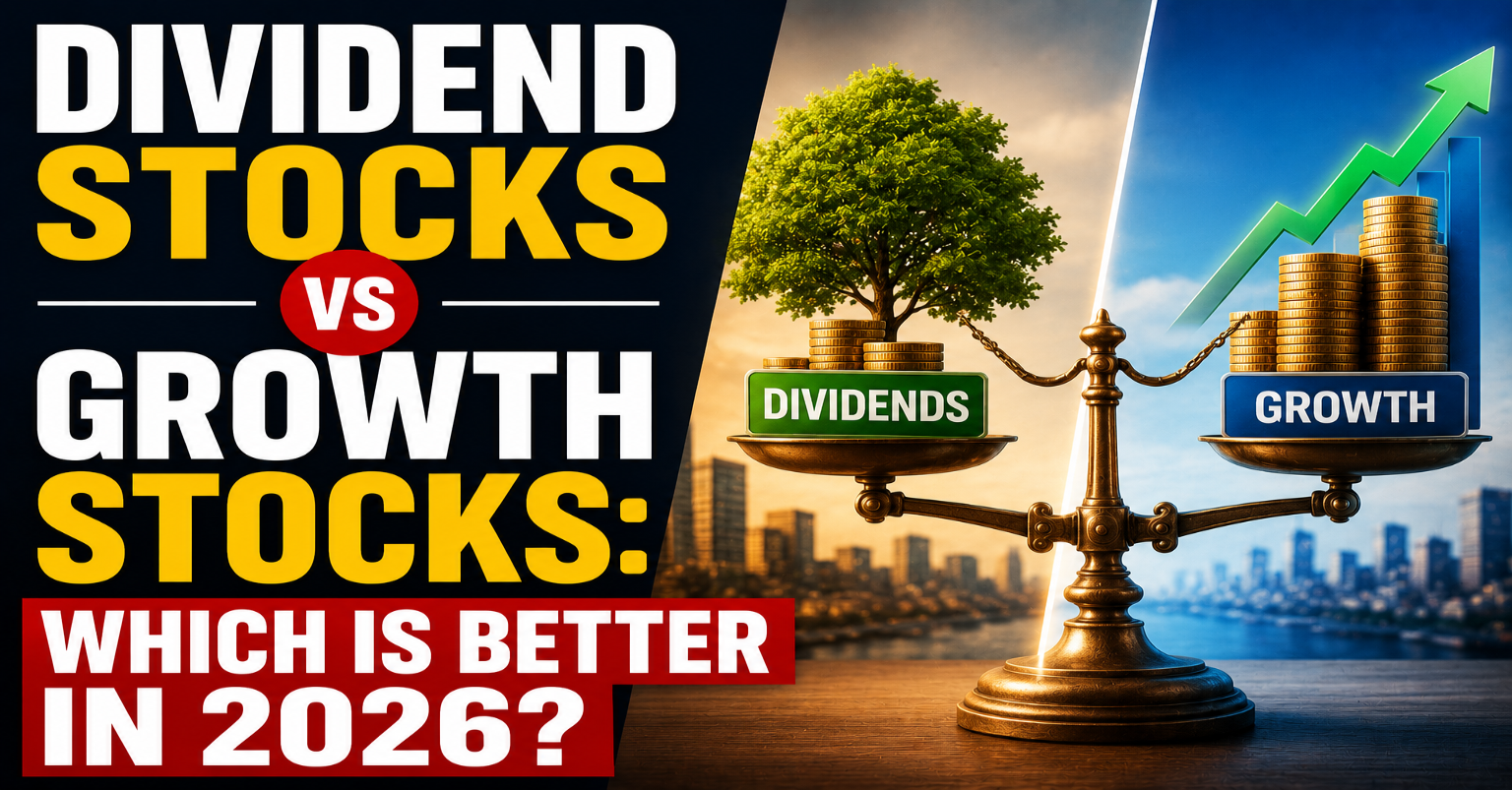
Investing in the stock market is one of the best ways to build long-term wealth. However, choosing the right type of investment can be challenging, especially when markets are unpredictable. In 2026, investors continue to face changing interest rates, economic uncertainty, and evolving market trends.
Because of these conditions, many Americans are comparing dividend stocks vs growth stocks to determine which strategy offers better returns.
The truth is that both investment styles have advantages. Nevertheless, they serve different financial goals. While dividend stocks provide regular income, growth stocks focus on increasing your portfolio’s value over time.
Understanding how each strategy works can help you make a smarter investment decision.
What Are Dividend Stocks?
Dividend stocks are shares of companies that distribute a portion of their profits to shareholders through regular dividend payments.
These businesses are often well-established companies with consistent earnings and strong cash flow.
Common sectors include:
- Utilities
- Consumer staples
- Healthcare
- Telecommunications
- Financial services
Many investors choose dividend stocks because they generate passive income while still offering long-term growth potential.
What Are Growth Stocks?
Growth stocks belong to companies expected to increase their revenue and earnings faster than the overall market.
Instead of paying dividends, these companies usually reinvest their profits to expand operations, launch new products, or enter new markets.
Growth stocks are commonly found in industries such as:
- Artificial Intelligence
- Technology
- Cloud Computing
- Cybersecurity
- Biotechnology
Although growth stocks can deliver impressive returns, they also carry greater risk.
Dividend Stocks Provide Consistent Income
One of the biggest benefits of dividend investing is predictable cash flow.
Investors receive dividend payments quarterly or annually, depending on the company.
Consequently, dividend stocks are popular among retirees and investors seeking passive income.
Even during market volatility, many established companies continue paying dividends.
That consistency provides financial stability when markets fluctuate.
Growth Stocks Focus on Higher Returns
Growth stocks generally aim to increase shareholder value through capital appreciation.
Instead of distributing profits, companies invest in future expansion.
As a result, successful growth businesses can generate substantial stock price gains.
However, these companies may also experience significant price swings.
Therefore, investors should expect greater volatility.
Risk Comparison
Every investment carries risk.
Nevertheless, dividend stocks and growth stocks react differently to changing market conditions.
Dividend stocks often experience lower volatility because they belong to mature businesses with stable earnings.
Growth stocks, on the other hand, are more sensitive to interest rate changes, economic news, and investor sentiment.
Because of this, growth investing usually requires greater patience.
Performance During Different Market Conditions
No investment performs best in every market.
During periods of economic expansion, growth stocks often outperform because investors are willing to pay more for future earnings.
Meanwhile, dividend stocks frequently perform better during uncertain markets because investors value reliable income.
Therefore, market conditions can influence which strategy delivers stronger returns.
Inflation and Interest Rates Matter
Inflation affects both dividend and growth stocks.
Higher interest rates often reduce the appeal of growth companies because borrowing becomes more expensive.
Meanwhile, established dividend-paying businesses may continue generating stable profits.
As a result, many investors shift toward dividend stocks during periods of rising rates.
However, every company responds differently.
Which Strategy Fits Your Goals?
Choosing between dividend stocks and growth stocks depends on your financial objectives.
Dividend investing may be suitable if you:
- Want regular income
- Prefer lower volatility
- Are nearing retirement
- Value financial stability
Growth investing may be better if you:
- Have a long investment horizon
- Can tolerate market fluctuations
- Want maximum portfolio growth
- Don’t need immediate income
Your investment goals should always guide your strategy.
Why Diversification Still Wins
Fortunately, you don’t have to choose one strategy exclusively.
Many successful investors combine dividend stocks with growth stocks.
This balanced approach provides income while also allowing for long-term capital appreciation.
Additionally, diversification reduces portfolio risk.
If one sector underperforms, another may help offset losses.
Consequently, your investment portfolio becomes more resilient.
Avoid Emotional Investing
Many investors chase whatever is performing best at the moment.
Unfortunately, buying after prices have already surged often leads to disappointment.
Instead, focus on building a diversified portfolio and investing consistently.
Learning from common investing mistakes can also improve your long-term performance.
Tips for Investing in 2026
If you’re deciding between dividend stocks and growth stocks, keep these tips in mind:
- Define your financial goals.
- Diversify your investments.
- Invest regularly instead of timing the market.
- Reinvest dividends when possible.
- Review your portfolio annually.
- Focus on long-term performance.
- Avoid emotional decisions.
- Understand each company’s fundamentals before investing.
Following these habits can help you build wealth regardless of market conditions.
Which Is Better in 2026?
There isn’t a single answer.
Dividend stocks may outperform during uncertain economic periods because they provide reliable income and lower volatility.
Growth stocks, however, may deliver stronger long-term returns if the economy expands and corporate earnings accelerate.
Therefore, the best strategy depends on your financial goals, risk tolerance, and investment timeline.
For many Americans, combining both dividend and growth stocks creates the most balanced portfolio.
Final Thoughts
The debate over dividend stocks vs growth stocks isn’t about choosing a winner. Instead, it’s about selecting the strategy that aligns with your financial objectives.
If you’re seeking passive income and stability, dividend stocks may be the better choice.
On the other hand, if you’re focused on maximizing long-term growth, growth stocks may deserve a larger place in your portfolio.
Many experienced investors own both because diversification can improve returns while reducing overall risk.
For additional investing education and free financial resources, visit the U.S. Securities and Exchange Commission – Investor.gov. This official U.S. government website provides unbiased guidance on investing, diversification, and long-term wealth building.