
 MOHAMMAD ABUBAKR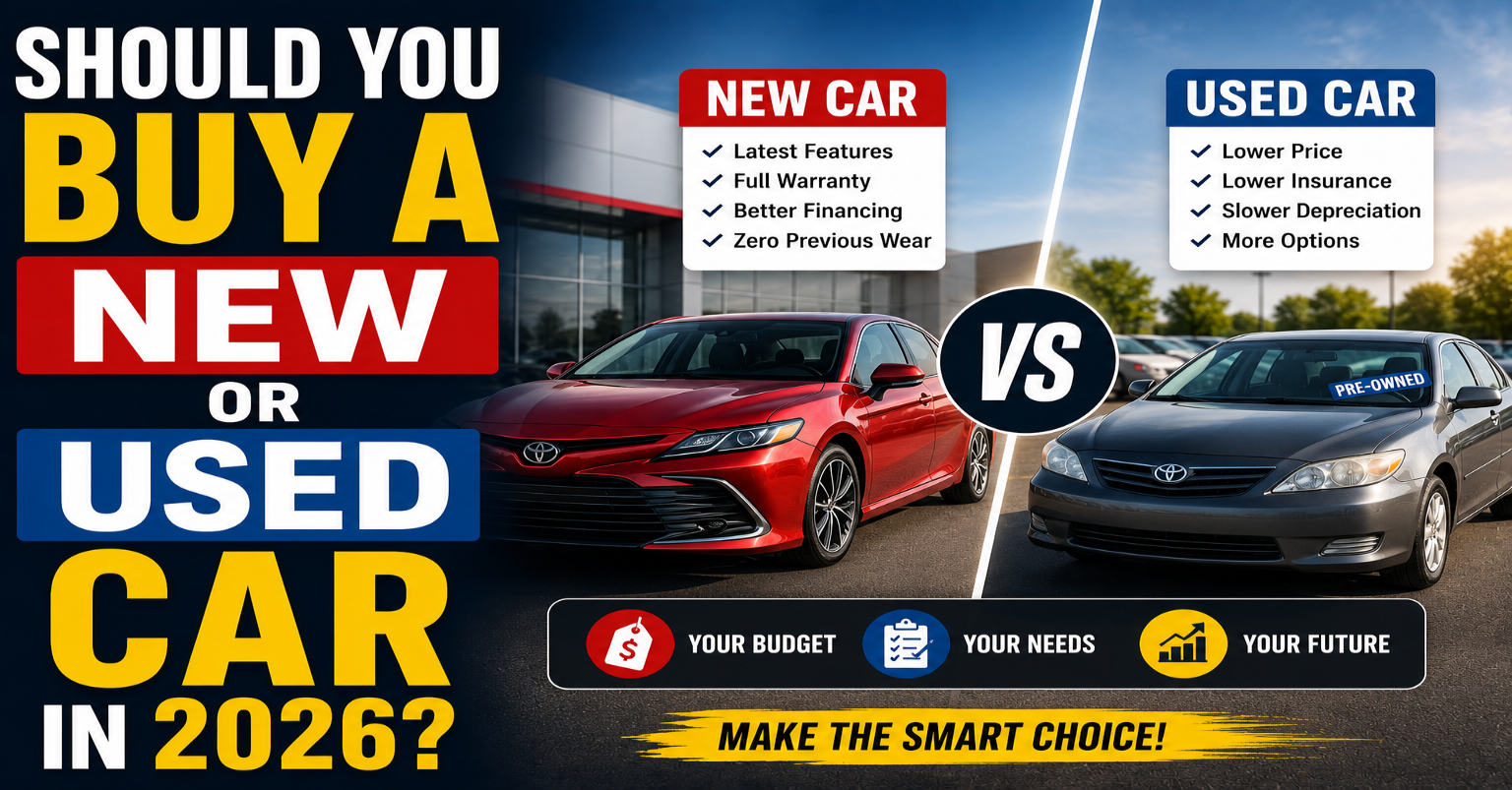
Buying a car is one of the biggest purchases most Americans make. However, deciding between a new or used vehicle isn’t as simple as it once was. Rising vehicle prices, higher interest rates, and changing inventory levels have made the decision more complicated in 2026.
While a new car offers the latest technology and warranty protection, a used car can save you thousands of dollars. Nevertheless, each option comes with its own advantages and drawbacks.
If you’re planning to finance your purchase, read our guide on 7 Auto Loan Mistakes First-Time Car Buyers Make to avoid costly financing errors.
In this guide, we’ll compare new and used cars, explain the true cost of ownership, and help you determine which option makes the most financial sense in 2026.
Why This Decision Matters More in 2026
The automotive market continues to evolve.
Although new car inventory has improved compared to previous years, prices remain relatively high. At the same time, used vehicle prices have started to stabilize but are still above historical averages in many markets.
Because financing costs remain elevated, choosing the right vehicle can have a major impact on your monthly budget.
Instead of focusing only on the purchase price, buyers should consider the total cost of ownership.
Buying a New Car
A new vehicle comes directly from the dealership with no previous owner.
Many buyers prefer new cars because they offer the latest safety features, improved fuel efficiency, and manufacturer warranties.
Advantages of Buying New
- Full manufacturer warranty.
- Latest safety technology.
- Better fuel economy.
- Lower maintenance costs during the first few years.
- Access to promotional financing offers.
- Greater customization options.
Disadvantages of Buying New
- Higher purchase price.
- Faster depreciation.
- Higher insurance premiums.
- Larger monthly payments.
- Higher registration fees in some states.
For many buyers, depreciation is the biggest disadvantage.
A new car often loses a significant portion of its value during the first few years of ownership.
Buying a Used Car
Used cars have become increasingly popular among budget-conscious buyers.
Since the first owner absorbs most of the depreciation, purchasing a used vehicle often provides better overall value.
Advantages of Buying Used
- Lower purchase price.
- Slower depreciation.
- Lower insurance costs.
- Reduced registration fees.
- More affordable financing amounts.
Disadvantages of Buying Used
- Limited warranty coverage.
- Higher maintenance costs.
- Unknown maintenance history.
- Older technology.
- Fewer financing incentives.
Buying from a reputable dealer and obtaining a vehicle history report can reduce many of these risks.
Cost Comparison: New vs Used
| Expense | New Car | Used Car |
|---|---|---|
| Purchase Price | Higher | Lower |
| Monthly Payment | Higher | Lower |
| Insurance | Higher | Lower |
| Depreciation | Highest | Lower |
| Maintenance | Lower (Initially) | Higher (Over Time) |
| Warranty | Full Coverage | Limited or None |
Although used cars generally cost less overall, the right choice depends on your financial goals and driving needs.
Depreciation: The Hidden Cost
Depreciation is one of the largest expenses of owning a new vehicle.
As soon as a new car leaves the dealership, its market value begins to decline.
Meanwhile, used cars typically depreciate at a slower rate because much of the value loss has already occurred.
For buyers focused on long-term value, depreciation is an important factor to consider.
Financing Considerations
Loan terms vary depending on the age of the vehicle.
New cars often qualify for:
- Lower interest rates.
- Manufacturer financing promotions.
- Longer loan terms.
Used vehicles may have slightly higher interest rates.
However, because the purchase price is usually lower, monthly payments often remain more affordable.
Always compare financing offers from multiple lenders before making a decision.
Insurance Costs
Insurance companies generally charge higher premiums for new vehicles because replacement costs are higher.
Used vehicles often cost less to insure.
Before buying, request insurance quotes for both vehicles you’re considering.
Doing so may reveal significant differences in your total ownership costs.
Which Buyers Should Choose a New Car?
A new vehicle may be the better option if you:
- Plan to keep the car for many years.
- Want the latest safety features.
- Prefer warranty protection.
- Can comfortably afford the monthly payment.
- Drive many miles each year.
For long-term ownership, buying new can still provide excellent value.
Which Buyers Should Choose a Used Car?
A used vehicle may be the smarter choice if you:
- Have a limited budget.
- Want lower monthly payments.
- Want to avoid rapid depreciation.
- Don’t need the latest technology.
- Prefer maximizing value.
Many financial experts recommend buying a quality used vehicle that’s only a few years old.
Tips Before Buying Any Car
Whether you buy new or used, follow these best practices:
- Set a realistic budget.
- Compare financing offers.
- Check insurance costs.
- Review the vehicle history report.
- Schedule a professional inspection for used cars.
- Avoid focusing only on the monthly payment.
- Consider long-term maintenance expenses.
Taking these steps can help you avoid costly mistakes.
Before purchasing a vehicle, review consumer vehicle ratings, ownership costs, and safety information from Consumer Reports to help you compare different models.
Common Car Buying Mistakes
Many buyers make expensive errors during the purchase process.
Avoid these common mistakes:
- Buying more car than you can afford.
- Skipping the vehicle inspection.
- Ignoring insurance costs.
- Financing for an excessively long term.
- Not negotiating the purchase price.
- Forgetting maintenance expenses.
A little preparation can save thousands of dollars over the life of your vehicle.
Final Thoughts
There isn’t a one-size-fits-all answer to whether you should buy a new or used car in 2026.
A new car offers warranty protection, advanced technology, and greater reliability. On the other hand, a used car typically provides better value, lower depreciation, and more affordable monthly costs.
Before making a decision, evaluate your budget, financing options, driving habits, and long-term goals. The best vehicle isn’t necessarily the newest one—it’s the one that fits comfortably within your financial plan.
Making a smart purchase today can help you enjoy reliable transportation while protecting your long-term financial health.
Frequently Asked Questions
Is it better to buy a new or used car in 2026?
It depends on your budget and priorities. New cars offer warranties and modern features, while used cars usually cost less and depreciate more slowly.
Are used car prices still high in 2026?
Although prices have moderated compared to previous years, many used vehicles remain more expensive than historical averages.
Do new cars have lower interest rates?
Often, yes. Manufacturers frequently offer promotional financing on new vehicles.
Which option saves more money?
For many buyers, a well-maintained used car provides the best overall value because of its lower purchase price and slower depreciation.