 MOHAMMAD ABUBAKR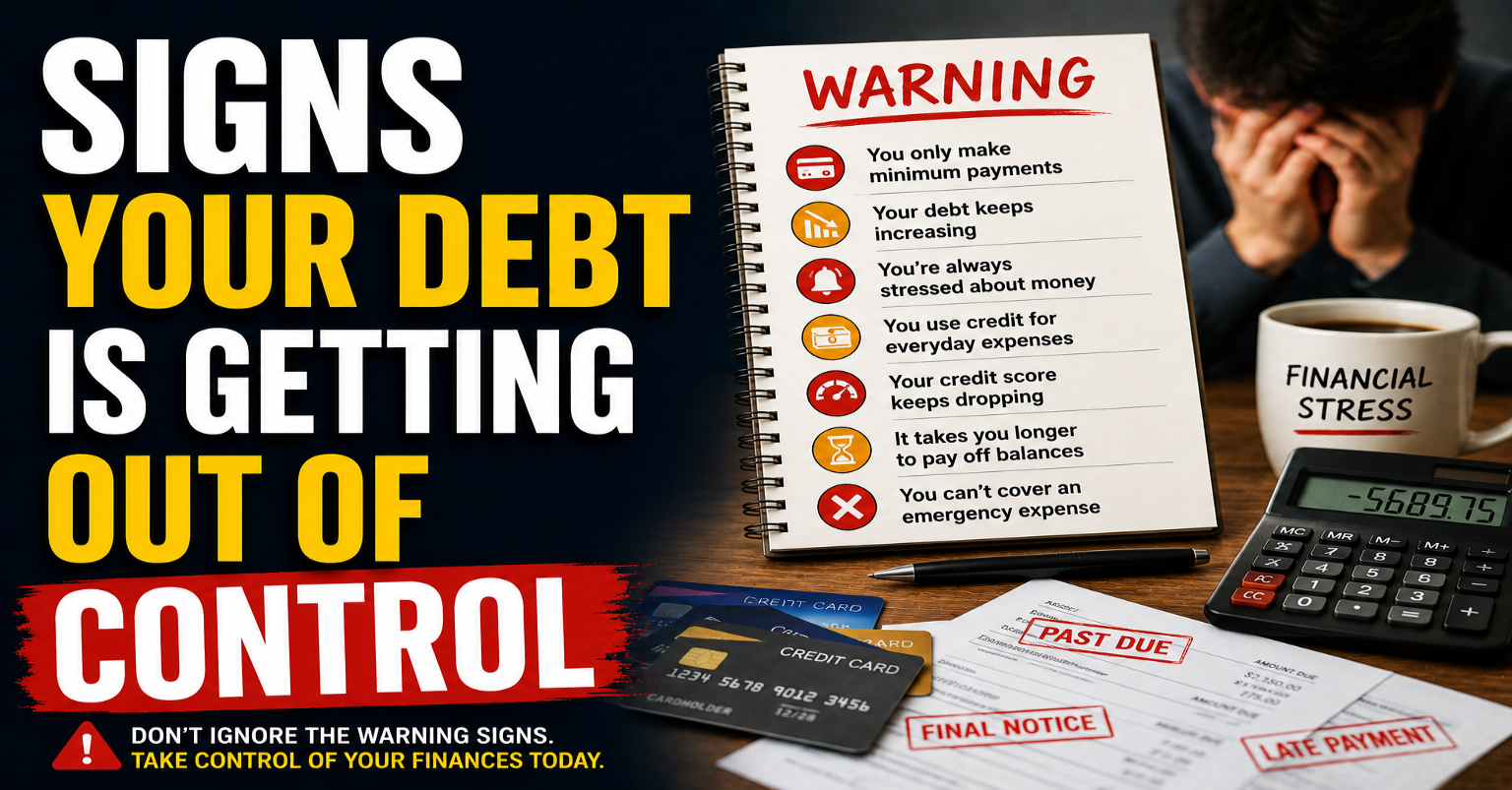
Debt is a normal part of life for many Americans. Mortgages, student loans, auto loans, and credit cards can all help people reach important financial goals. However, debt becomes a problem when it starts affecting your ability to pay bills, save money, or enjoy financial peace of mind.
The challenge is that debt usually doesn’t become overwhelming overnight. Instead, it builds gradually through missed payments, rising balances, and increasing interest charges. Recognizing the warning signs early gives you the opportunity to take action before your financial situation becomes more difficult.
Fortunately, there are practical steps you can take to regain control. By identifying these common warning signs and making small financial changes, you can reduce debt and strengthen your financial future.
Best Ways to Become Debt-Free Faster
Why It’s Important to Recognize Debt Problems Early
Ignoring debt rarely makes it disappear.
Instead, unpaid balances often grow because of interest charges and late fees. Over time, debt may begin affecting your credit score, borrowing ability, and long-term financial goals.
Recognizing problems early allows you to:
- Reduce interest costs.
- Protect your credit score.
- Avoid late fees.
- Lower financial stress.
- Build healthier money habits.
- Improve long-term financial security.
The sooner you address debt, the easier it usually becomes to manage.
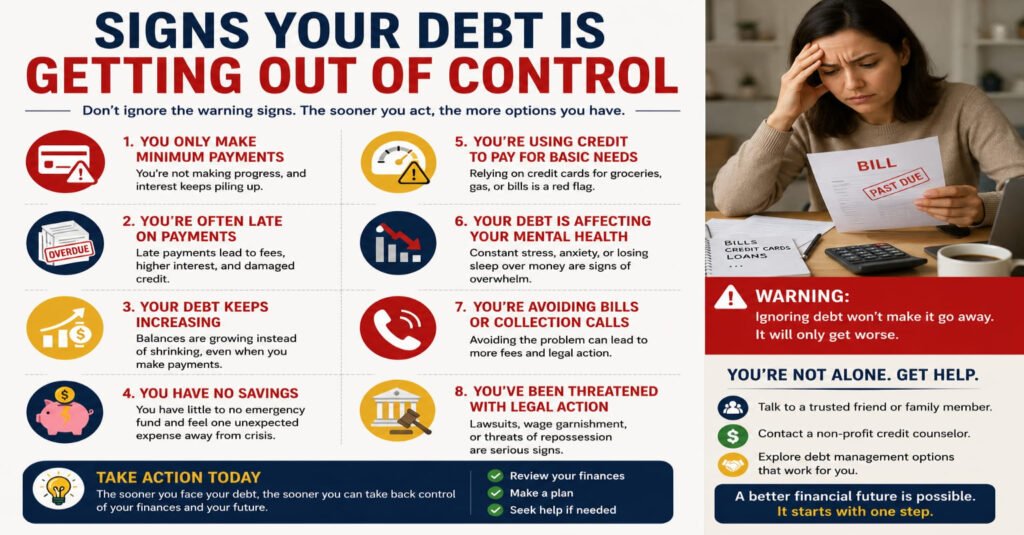
10 Signs Your Debt Is Getting Out of Control
1. You’re Only Making Minimum Payments
Making the minimum payment keeps your account current.
However, it often does very little to reduce the principal balance.
As a result:
- Interest continues accumulating.
- Debt takes years to repay.
- Total borrowing costs increase.
If you’re consistently paying only the minimum, it’s a sign your debt may be becoming difficult to manage.
2. Your Credit Card Balances Keep Growing
Occasional credit card use isn’t necessarily a problem.
However, if your balances increase every month without meaningful repayment, debt can quickly become expensive.
Ask yourself:
- Are balances higher than six months ago?
- Am I relying on credit for everyday purchases?
- Am I struggling to reduce what I owe?
Answering “yes” to these questions may indicate growing financial pressure.
3. You’re Using One Credit Card to Pay Another
Using new credit to manage existing debt is a major warning sign.
Although balance transfers can sometimes be part of a structured repayment strategy, regularly borrowing to make payments often creates a cycle that’s difficult to escape.
Long-term financial stability comes from reducing debt—not moving it around.
4. You’re Missing Payment Due Dates
Late payments often happen when debt becomes difficult to manage.
Missing due dates may lead to:
- Late fees
- Higher interest rates
- Lower credit scores
- Collection activity
Setting automatic payments or calendar reminders can help prevent missed payments.
5. You Don’t Know How Much You Owe
Many people avoid checking account balances because debt feels overwhelming.
Unfortunately, avoiding the numbers usually makes the problem worse.
Create a complete list of:
- Credit cards
- Personal loans
- Student loans
- Auto loans
- Medical bills
- Other outstanding debts
Understanding your total debt is the first step toward creating a repayment plan.
6. You’re Living Paycheck to Paycheck
If nearly every paycheck goes toward bills and debt payments, your finances may be under pressure.
Warning signs include:
- No money left at month-end.
- Difficulty paying routine expenses.
- Constant financial stress.
- Little or no savings.
Improving your budget and reducing unnecessary expenses can help create more breathing room.
7. You Have Little or No Emergency Savings
Unexpected expenses are part of life.
Without emergency savings, many people rely on credit cards for:
- Car repairs
- Medical bills
- Home maintenance
- Emergency travel
This can increase debt even further.
Building a small emergency fund helps reduce future borrowing.
8. Your Debt Is Causing Stress
Financial stress affects more than your bank account.
It may also impact:
- Sleep
- Relationships
- Mental well-being
- Workplace performance
- Physical health
If debt occupies your thoughts every day, it’s worth reviewing your financial situation and creating a repayment strategy.
9. Your Credit Score Is Falling
A declining credit score may indicate growing debt problems.
Common causes include:
- High credit utilization.
- Missed payments.
- New borrowing.
- Delinquent accounts.
Reviewing your credit reports regularly helps identify issues before they become more serious.
10. You’re Delaying Financial Goals
Debt becomes especially problematic when it prevents you from moving forward financially.
You may postpone:
- Buying a home.
- Saving for retirement.
- Building an emergency fund.
- Investing.
- Taking family vacations.
If debt consistently delays important life goals, it’s time to reassess your financial plan.
How to Regain Control of Your Debt
Recognizing the problem is only the beginning.
These practical steps can help improve your financial situation.
Create a Monthly Budget
Know exactly where your income goes each month.
Track spending carefully and identify areas where you can reduce expenses.
Prioritize High-Interest Debt
Pay extra toward accounts with the highest interest rates while continuing minimum payments on other debts.
This strategy can reduce total interest costs over time.
Increase Your Monthly Payments
Whenever possible, pay more than the required minimum.
Even small additional payments can shorten your repayment timeline.
Stop Adding New Debt
Avoid unnecessary borrowing while paying down existing balances.
Using cash or debit cards for discretionary spending can help.
Build an Emergency Fund
Saving even a small emergency fund can prevent additional borrowing when unexpected expenses arise.
Common Mistakes People Make
Avoid these habits if you’re trying to improve your financial situation.
Ignoring Monthly Statements
Review every account regularly.
Understanding your balances helps you make informed decisions.
Continuing Lifestyle Inflation
As income grows, avoid increasing spending at the same pace.
Instead, use raises and bonuses to reduce debt faster.
Waiting Too Long to Act
Debt rarely becomes easier to manage without a plan.
Taking action early often leads to better financial outcomes.
Not Tracking Spending
Without tracking expenses, it’s difficult to know where your money is going.
A simple monthly budget can reveal opportunities to save.
Tips to Stay Out of Debt
Once you’ve reduced your debt, focus on building healthy financial habits.
- Live below your means.
- Pay your bills on time.
- Build emergency savings.
- Avoid unnecessary borrowing.
- Review your budget every month.
- Increase savings whenever your income rises.
- Monitor your credit reports regularly.
Consistency is one of the most effective ways to maintain long-term financial health.
Frequently Asked Questions
What is considered too much debt?
Debt becomes problematic when monthly payments make it difficult to cover essential expenses, save money, or meet your financial goals.
How do I know if I’m living beyond my means?
If you’re regularly using credit cards to pay for everyday expenses or struggling to pay bills on time, your spending may exceed your income.
Can debt hurt my credit score?
Yes. High balances, missed payments, and excessive borrowing can all lower your credit score over time.
Should I pay off debt or build savings first?
Many financial experts recommend building a small emergency fund while also paying down high-interest debt.
How often should I review my debt?
Review your balances and repayment progress at least once each month to stay on track.
Final Thoughts
Debt doesn’t become overwhelming overnight, and it usually won’t disappear overnight either. The good news is that recognizing the warning signs early gives you the opportunity to make positive financial changes before the situation worsens. Small improvements, such as creating a budget, increasing your monthly payments, and avoiding new debt, can lead to meaningful progress over time.
Remember that financial success isn’t about perfection. It’s about consistently making better decisions. By addressing debt proactively and following a realistic repayment plan, you can reduce financial stress, improve your credit health, and move closer to lasting financial freedom.
Consumer Financial Protection Bureau – Managing Debt