 MOHAMMAD ABUBAKR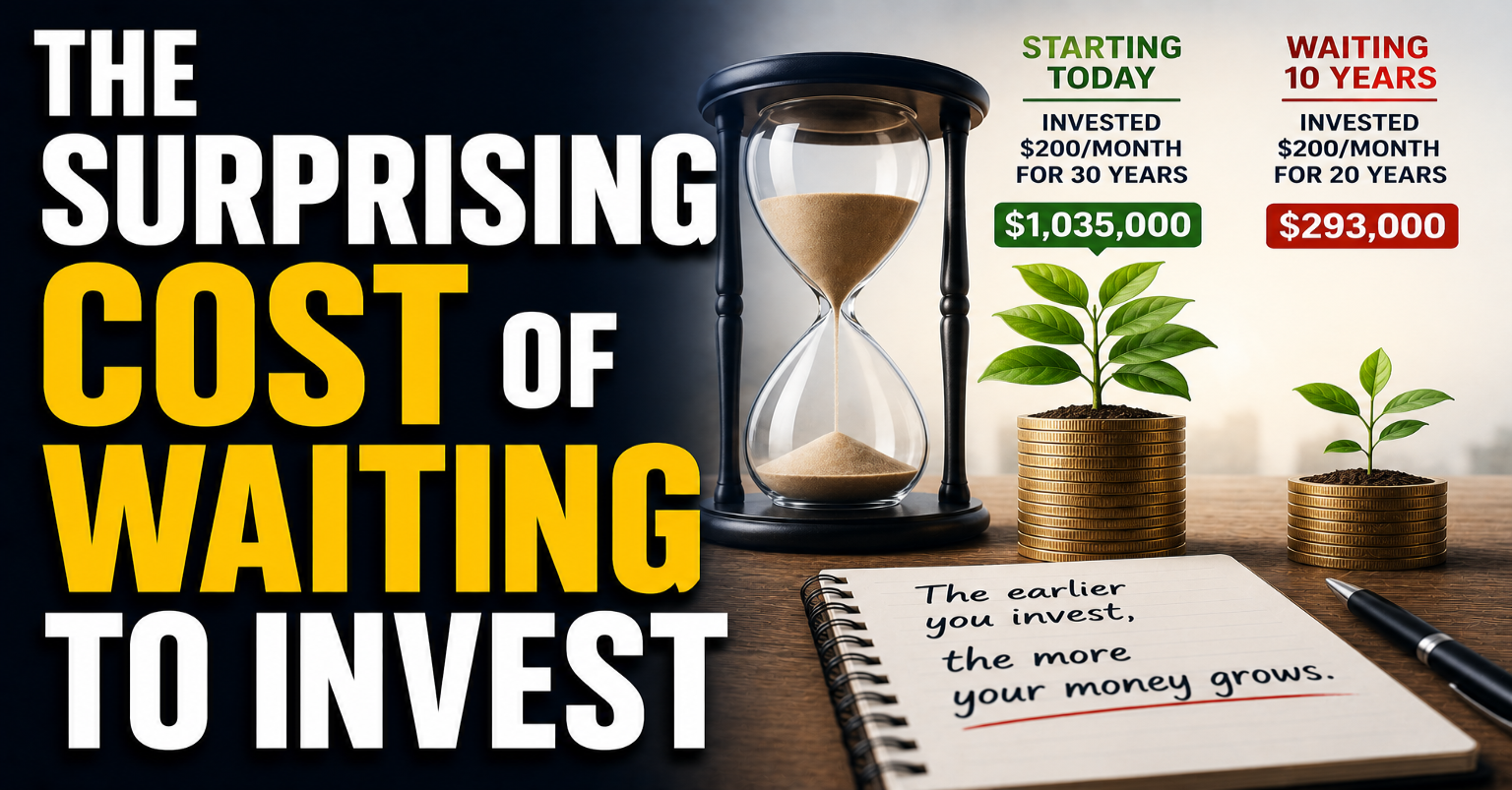
Many people believe they need a high income or perfect timing before they begin investing. Others wait until they finish paying off debt, receive a promotion, or feel more confident about the stock market. While these reasons may seem reasonable, delaying your first investment can quietly become one of the most expensive financial decisions you make.
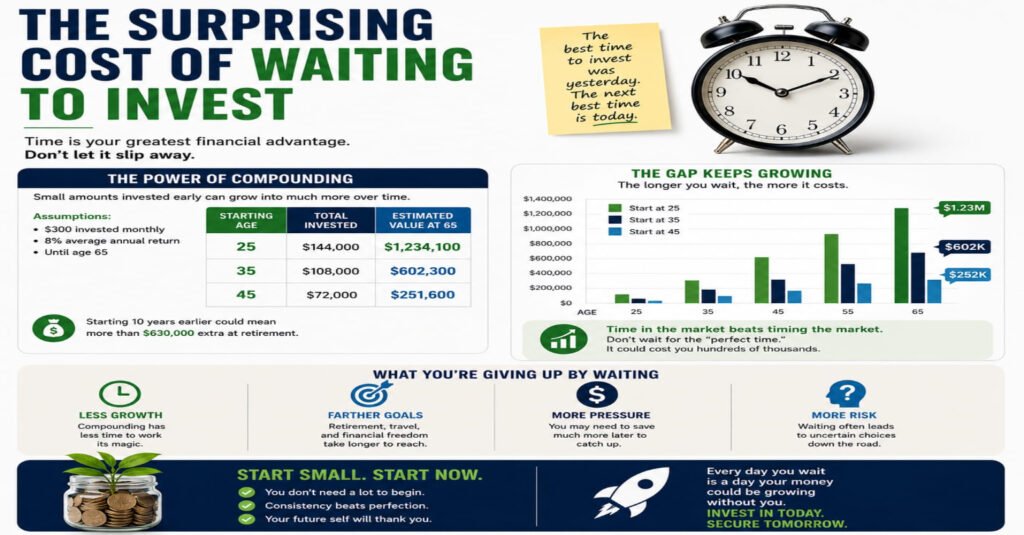
The biggest cost of waiting isn’t simply missing a few months of market gains. Instead, it’s losing valuable years of compound growth that can dramatically increase your wealth over time. Even small, consistent investments made early often outperform larger contributions started much later.
In 2026, with inflation continuing to affect purchasing power and retirement becoming more expensive, investing early has never been more important. Fortunately, you don’t need thousands of dollars to get started. The most valuable asset in investing is often time—not money.
How Much Should You Invest Every Month?
This guide explains the surprising cost of waiting to invest, why time matters more than perfect timing, and how you can start building wealth today.
Why Time Is Your Greatest Investment Advantage
Successful investing isn’t only about choosing the right stocks or funds.
It’s also about giving your investments enough time to grow.
When you invest consistently over many years, your earnings begin generating additional earnings. This process is known as compound growth.
The longer your money remains invested, the greater its potential to grow.
That’s why starting early can make a remarkable difference—even if you invest smaller amounts.
Understanding Compound Growth
Compound growth occurs when your investment returns begin earning returns of their own.
Imagine investing a small amount every month.
Over time:
- Your original investment grows.
- Investment earnings accumulate.
- Future returns are earned on both your original money and previous gains.
As the years pass, growth often accelerates.
Although market performance varies, long-term investing has historically rewarded patient investors.
What Waiting Really Costs
Many people focus on finding the “perfect” time to invest.
However, waiting has hidden costs.
You may lose:
- Years of compound growth.
- Potential market gains.
- Future retirement income.
- Opportunities to build wealth gradually.
Even delaying by five or ten years can require much larger monthly investments later to reach the same financial goal.
Time cannot be replaced once it’s gone.
Common Reasons People Delay Investing
Many future investors postpone getting started.
Some of the most common reasons include:
“I Don’t Have Enough Money.”
Many brokerage firms now allow investing with relatively small amounts.
Consistency often matters more than the size of your first investment.
“I’ll Start After I Get a Raise.”
Waiting for higher income can become a habit.
Instead, consider starting with what you can afford today and increasing contributions over time.
“The Market Feels Too Risky.”
Market volatility is normal.
Long-term investors typically focus on decades rather than short-term price movements.
Regular investing can reduce the pressure of trying to predict market highs and lows.
“I’m Waiting for the Perfect Time.”
Perfect market timing is extremely difficult.
Many investors who wait for the “right moment” end up investing later at even higher prices or miss years of potential growth.
Time in the market has historically mattered more than timing the market.
Benefits of Investing Early
Starting sooner offers several long-term advantages.
More Compound Growth
Your investments have additional years to earn returns.
Smaller Monthly Contributions
Starting early often means you don’t need to invest as much each month to reach your goals.
Greater Flexibility
Beginning early allows more time to recover from market downturns.
Better Financial Habits
Regular investing builds discipline and encourages long-term thinking.
Reduced Financial Stress
Knowing you’re making steady progress toward retirement and other financial goals can provide peace of mind.
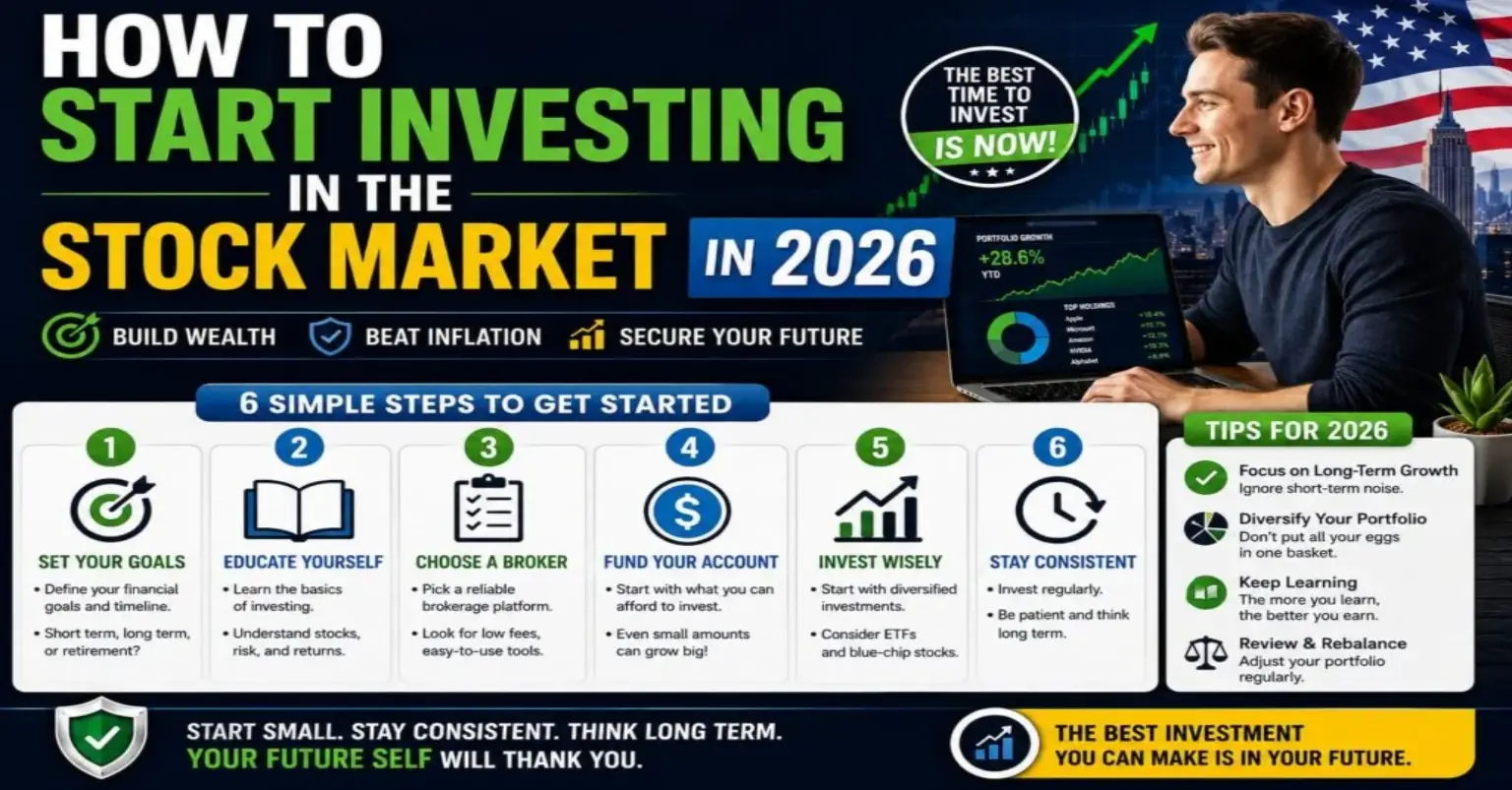
How to Start Investing Today
You don’t need to be an expert.
Simple steps can help you begin.
Set Clear Financial Goals
Ask yourself what you’re investing for.
Examples include:
- Retirement
- Buying a home
- College savings
- Financial independence
- Long-term wealth building
Your goals help determine your investment strategy.
Start With a Comfortable Amount
Many successful investors begin with modest monthly contributions.
The important part is creating a consistent habit.
You can increase your investment amount as your income grows.
Diversify Your Portfolio
Rather than relying on a single stock, consider spreading investments across different asset classes.
Diversification can help reduce investment risk over the long term.
Invest Consistently
Regular investing helps remove emotion from the process.
Automatic monthly contributions make staying consistent much easier.
Stay Focused on the Long Term
Short-term market movements are normal.
Successful investors often remain focused on long-term financial goals rather than daily headlines.
Mistakes That Delay Wealth Building
Avoid these common investing mistakes.
Waiting for Perfect Market Conditions
Markets are constantly changing.
Delaying investments while searching for certainty may reduce long-term growth opportunities.
Trying to Predict Every Market Move
Even professional investors struggle to consistently time the market.
Long-term discipline often produces better outcomes.
Investing Only After Paying Off Every Debt
While high-interest debt deserves attention, many people can balance debt repayment with consistent investing.
Every financial situation is different.
Ignoring Retirement Accounts
Tax-advantaged retirement accounts can play an important role in long-term wealth building.
Understand the options available through your employer or financial institution.
Tips to Build Long-Term Wealth
These habits can help support your financial future.
- Start investing as early as possible.
- Increase contributions after salary raises.
- Reinvest investment earnings when appropriate.
- Maintain a diversified portfolio.
- Avoid emotional investing.
- Review your investments annually.
- Stay focused on long-term goals.
Small, consistent actions often create significant financial results over time.
Frequently Asked Questions
Is it too late to start investing?
It’s never too late to begin investing. However, starting earlier provides more time for compound growth to work in your favor.
How much should I invest each month?
The ideal amount depends on your income, financial goals, and budget. Consistency is generally more important than investing a large amount immediately.
Should I wait until the stock market falls?
Predicting market movements is extremely difficult. Many long-term investors choose to invest consistently rather than waiting for a specific market condition.
Why is compound growth so important?
Compound growth allows your investment earnings to generate additional earnings over time, helping your portfolio grow faster the longer you remain invested.
What’s the biggest mistake new investors make?
One of the most common mistakes is delaying investments while waiting for the “perfect” time to start.
Final Thoughts
Waiting to invest may seem harmless, but the hidden cost can be substantial over the long run. Every year you postpone investing is another year your money misses the opportunity to benefit from compound growth. While no one can predict short-term market performance, history has shown that patience and consistency often reward long-term investors.
The good news is that you don’t need perfect timing or a large amount of money to begin. Starting with a realistic monthly contribution, staying invested, and gradually increasing your savings can make a meaningful difference over the years. When it comes to investing, time is one of the few advantages you can never recover once it’s lost—so the best time to begin is when you’re financially ready to start.
Investor.gov – The Power of Compound Interest