
 MOHAMMAD ABUBAKR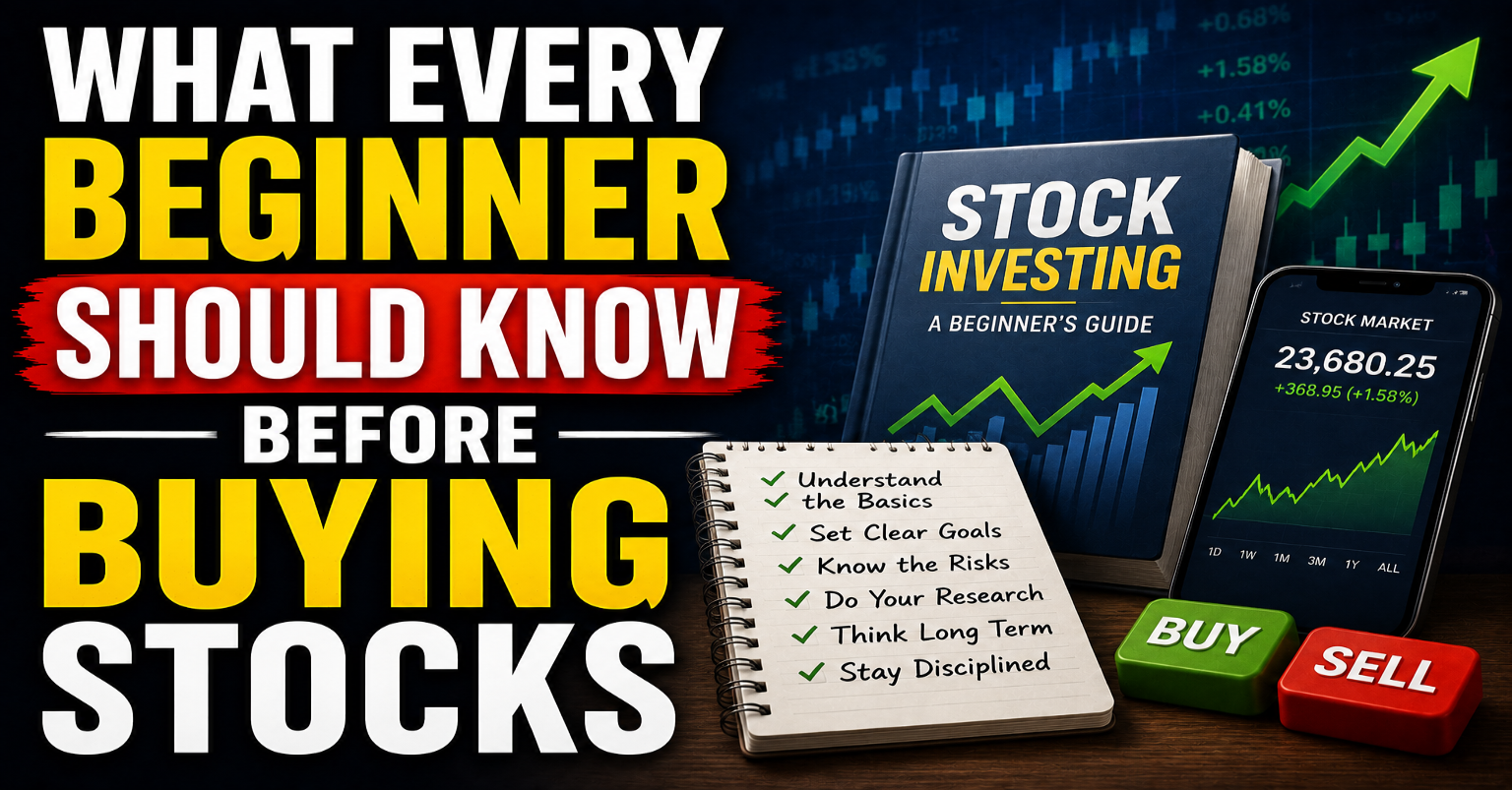
Introduction
Buying your first stock is an exciting milestone. However, it can also feel overwhelming.
Thousands of companies trade on the stock market every day. As a result, many beginners struggle to decide where to start.
The good news is that successful investing does not require predicting the next big winner. Instead, it begins with understanding the basics and making informed decisions.
Before investing your hard-earned money, you should learn how the stock market works, understand the risks involved, and create a plan that matches your financial goals.
In this guide, you’ll discover what every beginner should know before buying stocks and how to build confidence as a new investor.
Why Learning First Matters
Many new investors rush into the market after hearing about popular stocks on social media or in the news.
Unfortunately, investing without knowledge often leads to expensive mistakes.
Learning the basics first can help you:
- Make informed decisions
- Reduce emotional investing
- Manage investment risk
- Build long-term wealth
- Stay focused during market volatility
Knowledge may not eliminate risk, but it can improve your confidence and decision-making.
1. Understand What a Stock Represents
A stock represents partial ownership in a company.
When you buy shares, you become a shareholder.
If the company grows, the value of your investment may increase.
Some companies also pay dividends, which provide investors with regular income.
However, stock prices can also decline.
Because of this, every investment carries some level of risk.
Understanding this simple concept is the foundation of successful investing.
2. Know Your Financial Goals
Every investor has different objectives.
Some invest for retirement.
Others save for a home, college expenses, or financial independence.
Before buying stocks, ask yourself:
- Why am I investing?
- When will I need this money?
- How much risk can I accept?
- What return am I hoping to achieve?
Clear goals help you choose investments that match your timeline and financial needs.
3. Build an Emergency Fund First
Investing should not replace financial security.
Before buying stocks, set aside money for unexpected expenses.
Many financial experts recommend maintaining several months of essential living expenses in an emergency fund.
This financial cushion reduces the chance of selling investments during difficult times.
As a result, you can stay invested even when markets become volatile.
4. Diversification Is Essential
Many beginners invest too much money in one company.
Although that company may perform well, concentrating your portfolio increases risk.
Diversification spreads investments across multiple companies and industries.
For example, your portfolio may include:
- Large-cap stocks
- Small-cap stocks
- International stocks
- Index funds
- ETFs
A diversified portfolio helps reduce the impact of one poor-performing investment.
While diversification cannot prevent losses, it can improve long-term stability.
5. Think Long Term
The stock market moves up and down every year.
Short-term price swings are completely normal.
Successful investors understand this reality.
Instead of reacting to daily headlines, they focus on long-term growth.
Patience often becomes one of the biggest advantages for investors.
The longer your investment timeline, the more opportunity your portfolio has to recover from temporary market declines.
6. Avoid Trying to Time the Market
Many beginners wait for the “perfect” time to invest.
Unfortunately, predicting market highs and lows is extremely difficult.
Even experienced professionals struggle to do it consistently.
Instead of waiting for perfect conditions, consider investing regularly over time.
This strategy reduces emotional decision-making and encourages consistency.
Many investors use dollar-cost averaging to build wealth gradually.
Market fluctuations are normal, especially for long-term investors. Read our Should You Invest During Market Volatility? guide to learn how to stay confident during uncertain market conditions.
7. Research Before You Invest
Buying a stock simply because it is popular can be a costly mistake.
Instead, spend time researching every company before investing.
Start by looking at:
- Revenue growth
- Profitability
- Debt levels
- Competitive advantages
- Industry trends
- Future growth potential
You do not need to become a financial expert overnight.
However, understanding the basics can help you make better investment decisions.
The more informed you are, the more confident you will become.
8. Keep Investment Costs Low
Investment costs may seem small at first.
Over many years, they can reduce your overall returns.
Before opening an investment account, compare:
- Brokerage fees
- Fund expense ratios
- Trading commissions
- Account maintenance fees
Fortunately, many U.S. brokers now offer commission-free stock trading.
Low-cost investing allows more of your money to remain invested and grow over time.
9. Control Your Emotions
Successful investing is not only about choosing good stocks.
It is also about managing your emotions.
When markets rise sharply, excitement can lead to risky decisions.
Likewise, falling markets often trigger fear.
Instead of reacting emotionally, follow your investment plan.
Staying disciplined can help you avoid unnecessary mistakes and remain focused on your long-term goals.
10. Continue Learning
The stock market constantly changes.
New industries emerge, economic conditions shift, and companies evolve.
Therefore, continue improving your investing knowledge.
Read financial news from reliable sources.
Learn about different investment strategies.
Review your portfolio periodically.
Most importantly, remember that investing is a lifelong learning process.
Common Beginner Mistakes to Avoid
Many new investors make similar mistakes.
Fortunately, recognizing them early can save both time and money.
Avoid these common errors:
- Investing without clear goals.
- Putting all your money into one stock.
- Trying to get rich quickly.
- Following social media investment trends.
- Selling during temporary market declines.
- Ignoring diversification.
- Expecting immediate profits.
Avoiding these habits can improve your long-term investing experience.
Investor.gov, the official investor education website of the U.S. Securities and Exchange Commission (SEC), offers free educational resources on buying stocks, understanding investment risk, diversification, and long-term investing. Reviewing these materials can help beginners make informed investment decisions.
Frequently Asked Questions
How much money do I need to start buying stocks?
Many brokerage firms allow investors to start with very small amounts.
Some even offer fractional shares, making investing more accessible.
Is buying individual stocks risky?
Yes.
Individual stocks can experience significant price changes.
Diversifying your investments may help reduce overall portfolio risk.
Should beginners buy stocks or index funds?
Many beginners choose index funds because they provide instant diversification and lower investment costs.
Individual stocks may become part of a portfolio as investors gain more experience.
How long should I hold stocks?
Your investment timeline depends on your financial goals.
Many long-term investors hold quality investments for several years or even decades.
Final Thoughts
Buying your first stocks can be the beginning of a rewarding financial journey.
However, investing successfully requires preparation, patience, and discipline.
Learn the basics before making your first investment.
Build an emergency fund.
Diversify your portfolio.
Focus on long-term goals instead of short-term market movements.
Most importantly, continue learning as you gain experience.
Small, informed decisions made today can help create lasting financial success in the future.