
 MOHAMMAD ABUBAKR
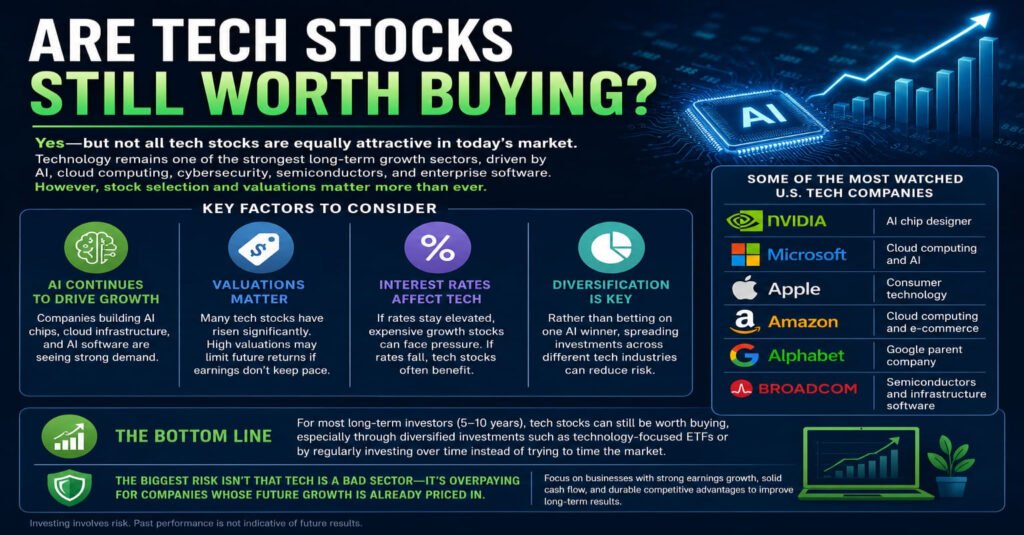
Technology stocks have been among the biggest wealth creators over the past two decades. Companies involved in artificial intelligence (AI), cloud computing, cybersecurity, semiconductors, and software have transformed industries and rewarded long-term investors. However, after years of strong gains and periods of sharp volatility, many investors are asking the same question in 2026: Are tech stocks still worth buying?
The answer depends on your investment goals, time horizon, and risk tolerance. While the technology sector still offers significant growth potential, it also faces challenges such as higher valuations, changing interest rates, increased competition, and evolving regulations.
Rather than trying to predict the next market move, investors should understand both the opportunities and the risks before investing in technology companies.
Best Low-Risk Investments for 2026
This guide explores whether tech stocks still deserve a place in your investment portfolio and how to invest wisely in the sector.
Why Tech Stocks Have Been So Popular
Technology has become a major driver of the global economy.
Many businesses now rely on:
- Artificial intelligence (AI)
- Cloud computing
- Digital payments
- E-commerce
- Cybersecurity
- Data analytics
As these industries continue to expand, many technology companies have experienced rapid revenue and earnings growth.
This long-term innovation has made tech stocks attractive to investors seeking capital appreciation.
Reasons Tech Stocks May Still Be Worth Buying
1. Artificial Intelligence Continues to Grow
Artificial intelligence remains one of the biggest technology trends.
Businesses across healthcare, finance, manufacturing, and retail continue investing in AI solutions to improve efficiency and reduce costs.
As AI adoption expands, companies developing AI software, hardware, and infrastructure may continue benefiting from long-term demand.
2. Cloud Computing Still Has Room to Expand
Many organizations continue moving data and applications to cloud-based platforms.
Cloud services help businesses:
- Reduce operating costs.
- Improve flexibility.
- Increase security.
- Scale operations efficiently.
Although cloud adoption has matured, long-term growth opportunities still exist.
3. Cybersecurity Spending Remains Essential
Cybersecurity has become a necessity rather than an option.
As cyber threats increase, organizations continue investing in:
- Network protection
- Data security
- Identity management
- Threat detection
Demand for cybersecurity services is expected to remain strong regardless of broader economic conditions.
4. Innovation Drives Long-Term Growth
Technology companies often invest heavily in research and development.
New products and services can create additional revenue opportunities.
Innovation has historically been one of the strongest competitive advantages within the technology sector.
5. Digital Transformation Continues
Businesses continue modernizing operations through technology.
Areas such as automation, digital banking, online commerce, and enterprise software remain important drivers of future growth.
This trend may continue supporting technology companies for years to come.
Risks of Investing in Tech Stocks
While technology offers growth potential, investors should also recognize the risks.
Higher Valuations
Some technology stocks trade at higher price-to-earnings ratios than companies in other sectors.
Higher valuations may increase price volatility if earnings fail to meet expectations.
Market Volatility
Technology shares often experience larger price swings than defensive sectors.
Investors should be prepared for short-term fluctuations.
Maintaining a long-term perspective is important.
Rising Competition
Technology evolves rapidly.
New competitors regularly enter the market, making it difficult for companies to maintain leadership indefinitely.
Innovation must continue for businesses to remain competitive.
Regulatory Changes
Governments continue reviewing issues related to:
- Privacy
- Artificial intelligence
- Data protection
- Market competition
New regulations may affect certain technology companies over time.
How to Invest in Tech Stocks Wisely
Diversify Your Portfolio
Avoid concentrating all your investments in one sector.
Instead, balance technology holdings with investments in other industries.
Diversification helps reduce overall portfolio risk.
Focus on Quality Companies
Look for businesses with:
- Consistent revenue growth
- Strong balance sheets
- Positive cash flow
- Competitive advantages
- Experienced leadership
High-quality companies are often better positioned to navigate changing market conditions.
Think Long Term
Technology investing often rewards patience.
Daily market movements matter far less than long-term business performance.
Avoid making investment decisions based solely on short-term headlines.
Consider Technology ETFs
If selecting individual companies feels challenging, technology-focused exchange-traded funds (ETFs) provide exposure to many businesses through a single investment.
This approach offers broader diversification within the sector.
Invest Consistently
Regular investing through dollar-cost averaging can reduce the impact of market volatility.
Making consistent contributions over time removes much of the emotion from investing.
Common Mistakes Investors Make
Avoid these common investing errors.
Chasing Popular Stocks
Buying companies simply because they’re trending on social media may increase investment risk.
Research should always come before investing.
Ignoring Valuations
A great company isn’t always a great investment at every price.
Understanding valuation helps investors make more informed decisions.
Trying to Time the Market
Predicting short-term market movements is extremely difficult.
Many long-term investors benefit from staying invested rather than waiting for the perfect buying opportunity.
Overconcentrating in One Company
Even strong businesses face unexpected challenges.
Owning a diversified portfolio helps reduce company-specific risk.
Who Should Consider Tech Stocks?
Technology investments may be suitable for investors who:
- Have a long-term investment horizon.
- Can tolerate market volatility.
- Want exposure to innovation.
- Seek long-term capital appreciation.
- Maintain a diversified portfolio.
Every investor’s financial situation is different.
Consider your overall investment strategy before increasing exposure to any single sector.
Tips Before Buying Tech Stocks
Keep these principles in mind.
- Invest according to your financial goals.
- Diversify across industries.
- Review company fundamentals.
- Invest consistently.
- Avoid emotional decisions.
- Rebalance your portfolio periodically.
- Stay informed about long-term industry trends.
Disciplined investing often produces better results than reacting to short-term market news.
Frequently Asked Questions
Are tech stocks still a good investment in 2026?
Technology continues to offer long-term growth opportunities, but investors should also consider valuation, diversification, and market volatility before investing.
Are tech stocks risky?
Technology stocks can experience greater price fluctuations than some other sectors. A diversified portfolio may help reduce overall investment risk.
Should beginners invest in technology ETFs?
Many new investors prefer technology ETFs because they provide exposure to multiple companies instead of relying on the performance of a single stock.
Is artificial intelligence driving technology stocks?
Artificial intelligence remains an important growth area for many technology companies, although future performance will depend on business execution and market conditions.
How much of my portfolio should be invested in technology?
The appropriate allocation depends on your financial goals, investment timeline, and risk tolerance. Diversification remains important for most investors.
Final Thoughts
Technology continues to shape the future of the global economy, making tech stocks an important consideration for many long-term investors. While the sector still offers exciting opportunities through artificial intelligence, cloud computing, cybersecurity, and digital transformation, it also comes with higher volatility and valuation risks.
Instead of chasing the latest trends, focus on building a diversified portfolio that includes high-quality companies and aligns with your long-term financial goals. Consistent investing, careful research, and patience are often more valuable than trying to predict short-term market movements. For many investors, tech stocks can still play an important role in wealth building—provided they are approached with discipline and a long-term mindset.
U.S. Securities and Exchange Commission – Beginner’s Guide to Investing