 MOHAMMAD ABUBAKR
Economic uncertainty can make even experienced investors feel uneasy. News about inflation, changing interest rates, slowing economic growth, or stock market volatility often leads many people to question whether they should continue investing or move their money to safer assets.
While uncertain markets can be stressful, they also present opportunities for disciplined investors. History has shown that markets experience periods of volatility, yet they have also demonstrated resilience over the long term. Instead of reacting emotionally, successful investors usually focus on protecting their portfolios while remaining committed to their financial goals.
The key isn’t trying to predict every market movement. Rather, it’s building a strategy that balances growth with risk management. By diversifying investments and maintaining a long-term perspective, you can navigate uncertain times with greater confidence.
Best Low-Risk Investments for 2026
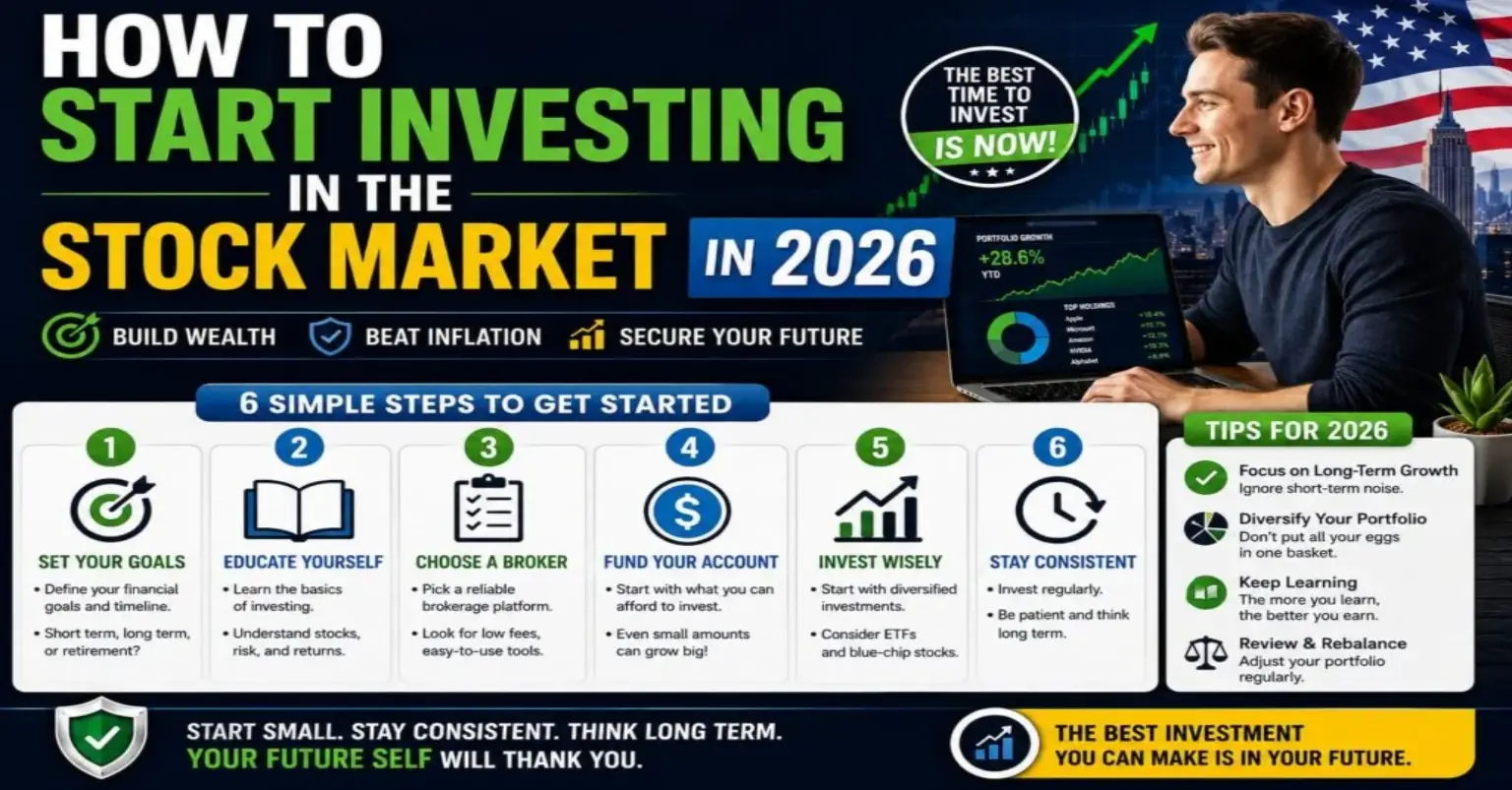
This guide explores safe investment strategies that can help protect your money while positioning your portfolio for long-term success.
Why Economic Uncertainty Affects Investors
Periods of uncertainty often increase market volatility.
Common factors include:
- Inflation
- Higher interest rates
- Economic slowdowns
- Geopolitical events
- Corporate earnings uncertainty
- Changes in government policy
Although these events may influence short-term market performance, they don’t necessarily change long-term investment principles.
Staying focused on your financial plan often leads to better decisions than reacting to daily headlines.
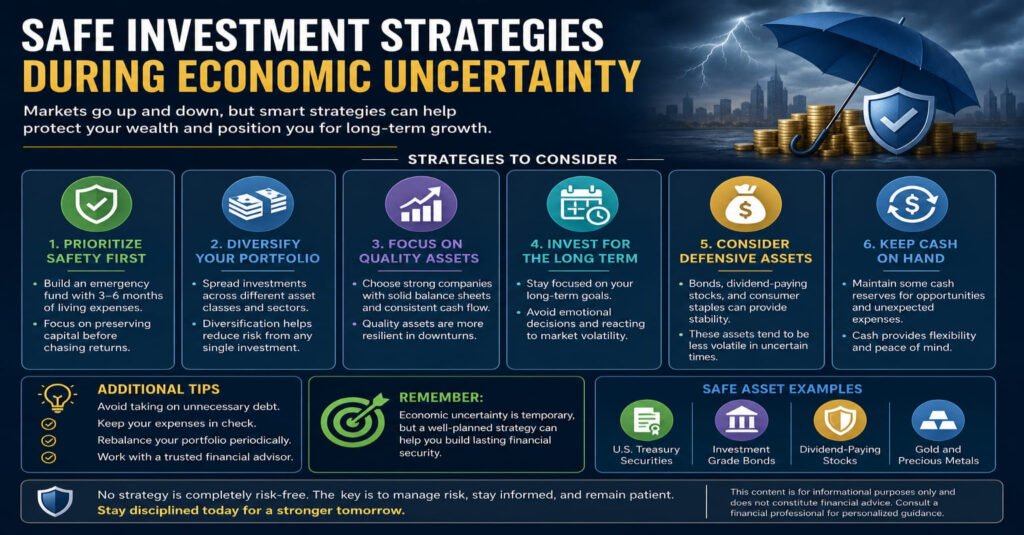
1. Diversify Your Investment Portfolio
Diversification is one of the most effective ways to reduce investment risk.
Instead of concentrating your money in one company or sector, spread investments across different asset classes.
A diversified portfolio may include:
- U.S. stocks
- International stocks
- Bonds
- Cash equivalents
- Real estate investments
- Broad-market ETFs
Diversification won’t eliminate losses, but it can help reduce the impact of poor performance in a single investment.
2. Focus on High-Quality Investments
During uncertain markets, financially strong companies often prove more resilient.
Look for businesses with:
- Consistent earnings
- Healthy cash flow
- Manageable debt
- Established market positions
- Experienced leadership
Companies with solid fundamentals may be better equipped to navigate challenging economic conditions.
3. Continue Investing Consistently
One of the biggest mistakes investors make is stopping investments during market declines.
Instead, consider maintaining regular contributions through dollar-cost averaging.
This strategy involves investing a fixed amount at regular intervals regardless of market conditions.
Benefits include:
- Reducing emotional investing
- Purchasing shares at different price levels
- Building long-term discipline
Consistency often matters more than perfect timing.
4. Maintain an Emergency Fund
Investments are designed for long-term growth.
Emergency savings serve a different purpose.
Having three to six months of essential living expenses in a readily accessible account may reduce the need to sell investments during market downturns.
An emergency fund provides valuable financial flexibility.
5. Include Defensive Investments
Some sectors have historically been less affected by economic slowdowns because consumers continue purchasing essential goods and services.
Examples include businesses involved in:
- Healthcare
- Utilities
- Consumer staples
While no investment is risk-free, defensive sectors may experience less volatility than more cyclical industries.
6. Consider High-Quality Bonds
Bonds can help balance the risk of stock investments.
Although bond prices also fluctuate, high-quality bonds have traditionally played an important role in diversified portfolios.
Potential benefits include:
- Lower overall portfolio volatility
- Regular interest income
- Greater stability during certain market conditions
Your appropriate bond allocation depends on your goals, timeline, and risk tolerance.
7. Avoid Emotional Investment Decisions
Market headlines often trigger fear or excitement.
Making investment decisions based solely on emotions may lead to poor long-term outcomes.
Instead:
- Review your financial goals.
- Follow your investment plan.
- Avoid frequent trading.
- Focus on long-term progress.
Discipline often outperforms emotional reactions.
8. Rebalance Your Portfolio Regularly
Over time, market performance changes your investment allocation.
Rebalancing involves adjusting your portfolio to maintain your desired mix of investments.
Benefits include:
- Maintaining your target risk level
- Preventing overexposure to one asset class
- Encouraging disciplined investing
Many investors review their portfolios once or twice each year.
9. Keep Investment Costs Low
Investment fees reduce long-term returns.
When evaluating investment options, consider:
- Expense ratios
- Trading fees
- Advisory fees
- Fund management costs
Lower costs allow more of your investment returns to remain invested over time.
10. Stay Focused on Long-Term Goals
Short-term uncertainty is a normal part of investing.
Whether you’re saving for retirement, college, or financial independence, your investment strategy should reflect your long-term objectives rather than daily market movements.
Patience has historically rewarded disciplined investors.
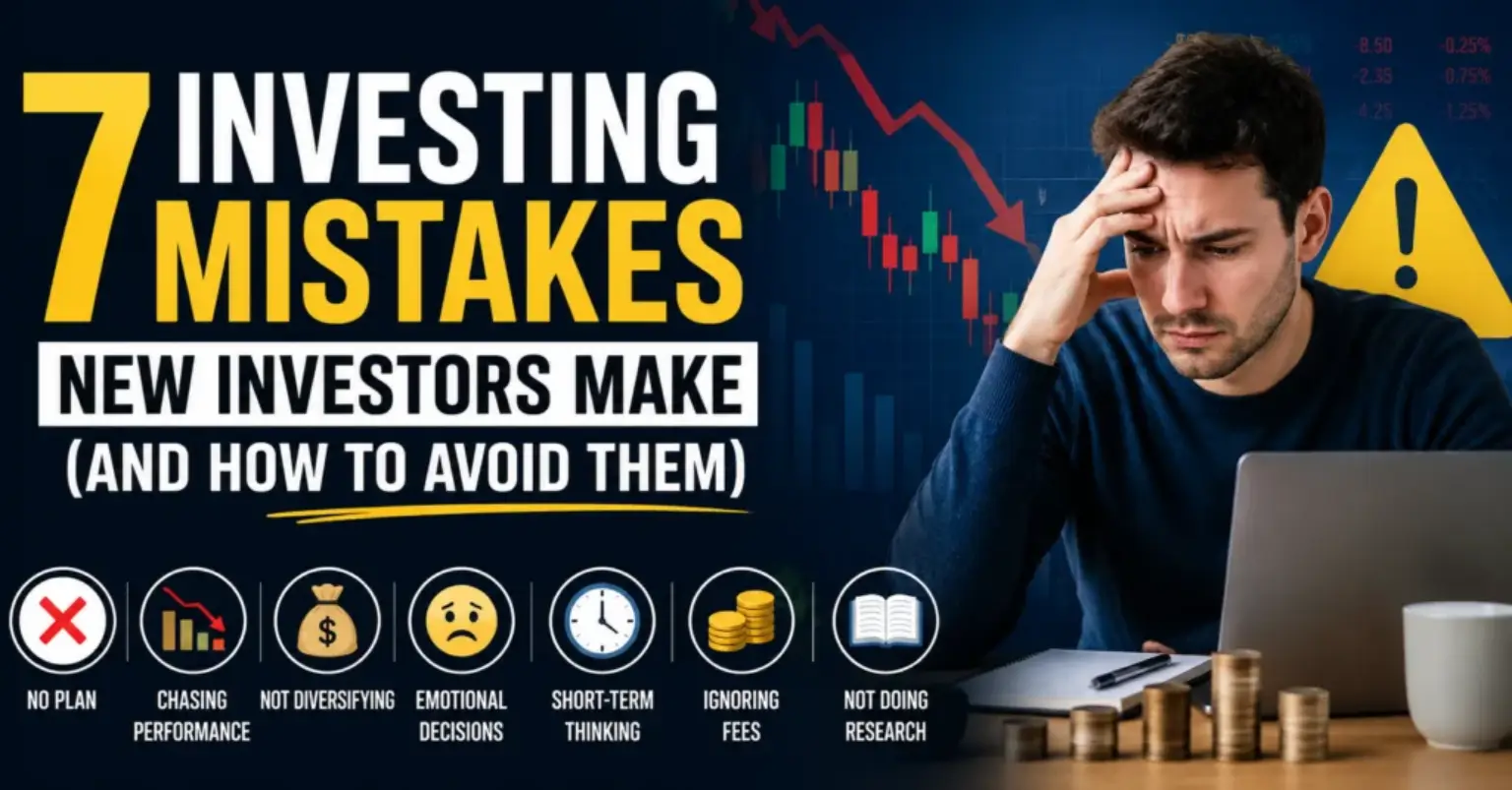
Common Mistakes During Economic Uncertainty
Avoid these common investing errors.
Selling After Markets Decline
Selling during downturns may lock in losses and reduce your ability to benefit from future recoveries.
Trying to Predict Market Bottoms
Even experienced professionals struggle to consistently identify the perfect time to buy or sell.
Long-term investing usually proves more effective than frequent market timing.
Ignoring Diversification
Concentrating investments in one sector increases portfolio risk.
Balanced diversification supports greater financial resilience.
Forgetting Your Investment Plan
Temporary market volatility shouldn’t automatically change long-term financial goals.
Review your strategy before making significant investment decisions.
Tips for Building a Resilient Portfolio
Strengthen your investment approach by following these habits.
- Invest regularly.
- Diversify across asset classes.
- Review your portfolio annually.
- Keep investment costs low.
- Maintain emergency savings.
- Avoid emotional decisions.
- Rebalance when necessary.
Small, consistent actions often produce meaningful long-term results.
Frequently Asked Questions
What’s the safest investment during economic uncertainty?
No investment is completely risk-free. Many investors consider diversified portfolios that include high-quality bonds, cash reserves, and financially strong companies to be relatively more resilient during uncertain periods.
Should I stop investing during market volatility?
Many long-term investors continue investing despite short-term volatility. Consistent investing may help reduce the impact of trying to time the market.
Is cash a good investment during uncertain times?
Holding some cash for emergencies can provide financial flexibility. However, keeping excessive amounts in cash for long periods may reduce long-term growth potential due to inflation.
Why is diversification important?
Diversification spreads investment risk across multiple assets, reducing the impact of poor performance from any single investment.
How often should I rebalance my portfolio?
Many investors review and rebalance their portfolios once or twice a year or whenever allocations drift significantly from their target percentages.
Final Thoughts
Economic uncertainty is an unavoidable part of investing, but it doesn’t have to derail your financial plans. Rather than reacting to every market headline, focus on building a diversified portfolio, investing consistently, and maintaining a long-term perspective. These principles have helped investors navigate many different economic environments over the years.
Remember that protecting your wealth isn’t about avoiding all risk—it’s about managing risk wisely. By maintaining an emergency fund, investing in quality assets, rebalancing your portfolio, and staying disciplined, you can improve your chances of reaching your financial goals regardless of short-term market conditions.
Investor.gov – Diversification