 MOHAMMAD ABUBAKR
Modern life is built around convenience. With just a few taps on your phone, you can order groceries, have dinner delivered, stream entertainment, book a ride, or shop online. These services save time and make daily life easier. However, convenience often comes with a hidden price.
Many Americans don’t notice how small convenience expenses slowly add up over months and years. A delivery fee here, a subscription there, and an impulse purchase during online shopping may seem insignificant on their own. Together, though, they can quietly cost thousands of dollars every year.
That doesn’t mean you should eliminate every convenience from your life. Instead, it’s about understanding where your money is going and deciding which conveniences truly provide value. By making a few intentional changes, you can keep more of your income without sacrificing your quality of life.
Simple Budgeting Tips That Actually Work
In this guide, we’ll explore the hidden cost of everyday convenience and share practical strategies to spend smarter while still enjoying modern life.
Why Convenience Costs More Than You Think
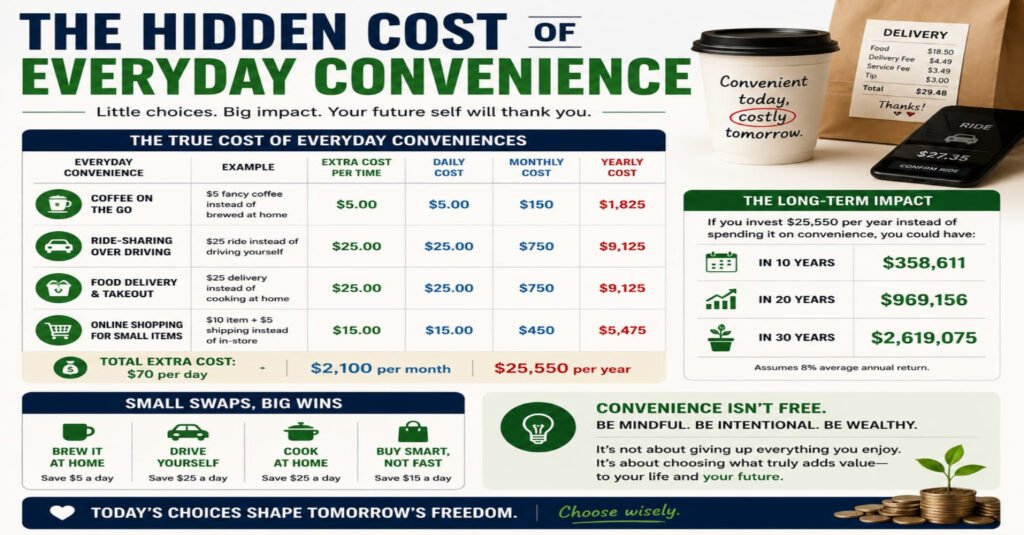
Convenience services often feel affordable because each purchase is relatively small.
For example:
- A $6 food delivery fee.
- A $12 monthly subscription.
- A $5 coffee purchased every workday.
- A same-day shipping upgrade.
Individually, these expenses may not seem important. However, repeated spending can significantly affect your annual budget.
Small purchases become expensive when they turn into habits.
Everyday Convenience Habits That Cost More Than You Realize
1. Food Delivery Apps
Ordering meals through delivery apps saves time, especially after a busy day.
However, the total cost often includes:
- Delivery fees
- Service charges
- Higher menu prices
- Driver tips
As a result, a meal that costs $15 at a restaurant could easily exceed $25 when delivered.
Cooking at home a few extra nights each week can lead to meaningful savings over the course of a year.
2. Daily Coffee Purchases
Buying coffee every morning may seem harmless.
Yet spending $5 each weekday adds up quickly.
Making coffee at home doesn’t mean giving up your favorite drink. Instead, it allows you to enjoy a similar routine while spending much less.
Even reducing coffee shop visits by a few days each week can make a noticeable difference.
3. Multiple Streaming Subscriptions
Streaming services have replaced many traditional cable packages.
Still, subscribing to several platforms at once can quietly increase monthly expenses.
Review your subscriptions regularly and ask yourself:
- Do I use this service every month?
- Could I rotate subscriptions instead?
- Am I paying for duplicate content?
Canceling unused subscriptions is one of the easiest ways to lower recurring expenses.
4. Grocery Delivery and Pickup Fees
Online grocery shopping can reduce impulse purchases.
However, delivery fees, service charges, and optional tips increase the total cost.
If you live close to a grocery store, occasional in-person shopping may help reduce expenses while giving you more control over your purchases.
Choose the option that offers the best balance of convenience and value.
5. Ride-Sharing Instead of Driving
Ride-sharing services provide flexibility and convenience.
However, frequent rides can become expensive compared with driving, public transportation, or carpooling.
If possible, compare transportation options before booking your next ride.
Small changes in travel habits can lower monthly transportation costs.
6. Online Impulse Shopping
Online shopping makes purchasing almost effortless.
Features like one-click checkout and saved payment methods encourage quick buying decisions.
Before completing a purchase, ask yourself:
- Do I truly need this item?
- Can I wait 24 hours?
- Have I compared prices?
A short pause often prevents unnecessary spending.
7. Convenience Store Purchases
Convenience stores are exactly what their name suggests.
Unfortunately, convenience often comes with higher prices.
Everyday items such as snacks, bottled drinks, and household essentials usually cost more than they do at supermarkets or warehouse clubs.
Planning ahead can help you avoid these higher prices.
8. ATM Fees
Using an out-of-network ATM may only cost a few dollars per transaction.
However, repeated fees throughout the year can become surprisingly expensive.
Whenever possible:
- Use your bank’s ATM network.
- Withdraw enough cash to reduce future transactions.
- Choose cash-back options during purchases if available.
Avoiding unnecessary fees keeps more money in your pocket.
9. Premium Shipping Options
Fast shipping is convenient, especially when you need an item quickly.
However, paying for expedited delivery on routine purchases increases your overall spending.
Whenever timing isn’t critical, standard shipping can provide meaningful savings.
Planning purchases in advance reduces the need for rush delivery.
10. Paying for Time Instead of Planning
Many convenience costs result from poor planning rather than actual necessity.
Examples include:
- Buying lunch because you didn’t prepare meals.
- Paying late fees because bills weren’t scheduled.
- Ordering last-minute gifts with overnight shipping.
Developing simple planning habits can reduce many of these expenses without making life less enjoyable.
How Small Purchases Add Up
One of the biggest financial mistakes is ignoring small recurring expenses.
Consider this example:
- Daily coffee
- Food delivery twice a week
- Several streaming subscriptions
- Weekly convenience store purchases
Individually, each expense seems manageable.
Combined over a year, they can total hundreds or even thousands of dollars.
Tracking these purchases often reveals opportunities to save without making major sacrifices.
Smart Ways to Enjoy Convenience Without Overspending
Convenience doesn’t have to disappear from your budget.
Instead, use it strategically.
Set a Monthly Convenience Budget
Allocate a specific amount each month for delivery, coffee, entertainment, and other convenience purchases.
Once you reach your limit, wait until the following month.
Plan Meals Ahead
Meal planning reduces the temptation to order expensive takeout after busy workdays.
Preparing meals in advance also saves time during the week.
Review Recurring Expenses
Every few months, review:
- Streaming subscriptions
- Mobile apps
- Memberships
- Delivery services
Cancel anything you no longer use regularly.
Compare Prices Before Buying
Many online retailers offer the same products at different prices.
Taking a few extra minutes to compare costs may lead to significant savings.
Focus on Value
Not every convenience expense is wasteful.
Some services genuinely save time and improve quality of life.
The goal is to spend intentionally rather than automatically.
Common Mistakes to Avoid
When trying to reduce convenience spending, avoid these mistakes.
Eliminating Everything at Once
Extreme budgeting often isn’t sustainable.
Instead, reduce expenses gradually.
Ignoring Small Purchases
Small expenses may seem insignificant, but they often have the greatest long-term impact.
Tracking them provides valuable insight.
Forgetting Your Financial Goals
Keeping your savings goals visible can make it easier to say no to unnecessary purchases.
Think about the bigger picture before spending.
Frequently Asked Questions
Are convenience services always a bad financial choice?
No. Many convenience services provide real value by saving time or reducing stress. The key is using them intentionally and within your budget.
How can I identify unnecessary convenience spending?
Review your bank and credit card statements for recurring subscriptions, delivery fees, premium shipping charges, and impulse purchases.
How much can small purchases really cost?
Small recurring expenses can add up to hundreds or even thousands of dollars annually, depending on your spending habits.
Should I stop using delivery services completely?
Not necessarily. Using delivery occasionally for convenience is reasonable. Reducing frequent use can help lower monthly expenses without eliminating the service entirely.
What’s the easiest way to reduce convenience spending?
Start by canceling unused subscriptions, planning meals in advance, and tracking small daily purchases. These changes often produce noticeable savings.
Final Thoughts
Convenience has become a normal part of everyday life, but it’s important to recognize the financial trade-offs that come with it. While individual fees and small purchases may seem harmless, they can quietly reduce your ability to save, invest, and achieve long-term financial goals.
The solution isn’t to eliminate every convenience. Instead, focus on making intentional spending decisions that align with your priorities. By reviewing recurring expenses, planning ahead, and questioning impulse purchases, you can enjoy modern conveniences while keeping your budget under control. Over time, these small adjustments can lead to significant financial improvements.
External Link (Authoritative)
Consumer Financial Protection Bureau – Managing Your Money