 MOHAMMAD ABUBAKR
Planning for retirement doesn’t have to be complicated. Many Americans believe they need to pick winning stocks or constantly monitor the market to build wealth. However, Exchange-Traded Funds (ETFs) offer a simpler approach that has become increasingly popular among long-term investors.
ETFs allow you to invest in hundreds or even thousands of companies through a single fund. This built-in diversification can help reduce risk while providing exposure to the long-term growth of the stock market. Whether you’re just starting your career or you’re approaching retirement, ETFs can play an important role in your retirement strategy.
The key to successful retirement investing isn’t finding the perfect investment. Instead, it’s creating a diversified portfolio, investing consistently, and allowing compound growth to work over time.
Monthly ETF Investing Strategy for Beginners
This guide explains how ETF investing works for retirement, its advantages and risks, and how beginners can build a long-term investment strategy.
What Is an ETF?
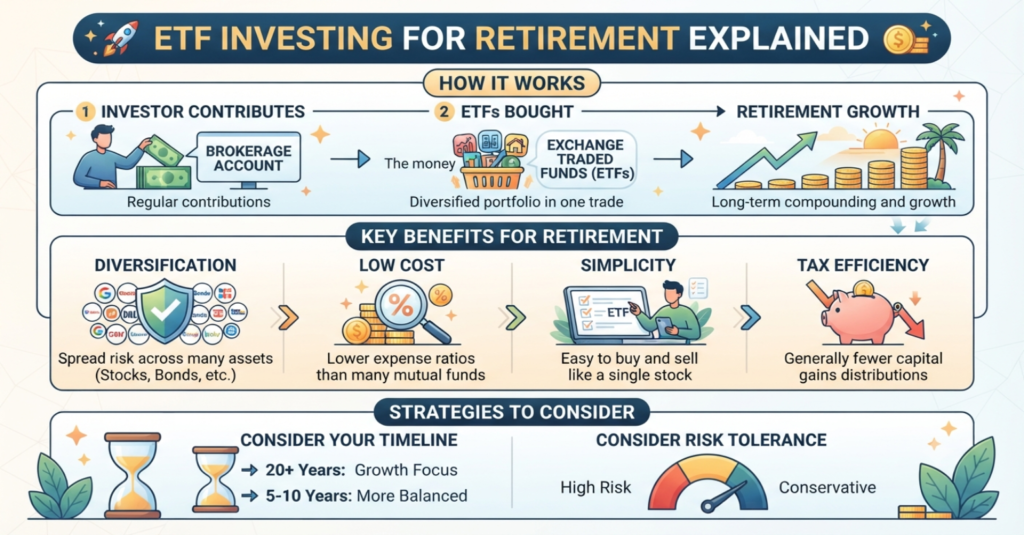
An Exchange-Traded Fund (ETF) is an investment fund that holds a collection of assets.
Depending on the ETF, it may include:
- U.S. stocks
- International stocks
- Bonds
- Real estate investments
- Dividend-paying companies
- Commodities
- Sector-specific companies
Instead of buying shares in one company, an ETF gives you exposure to many investments through a single purchase.
This diversification makes ETFs attractive for retirement investors.
Why ETFs Are Popular for Retirement
Retirement investing focuses on long-term growth rather than short-term market movements.
ETFs support this goal because they offer:
- Broad diversification
- Low expense ratios
- Easy portfolio management
- Daily trading flexibility
- Long-term growth potential
Many retirement portfolios use ETFs as core investments because they provide exposure to large portions of the market.
Benefits of ETF Investing for Retirement
1. Diversification
Diversification helps reduce investment risk.
Rather than depending on one company’s performance, ETFs spread your investment across many businesses.
This may reduce the impact of poor performance from any single stock.
2. Lower Investment Costs
Many ETFs have relatively low expense ratios compared with actively managed mutual funds.
Lower fees allow more of your investment returns to remain invested.
Over several decades, small cost differences can have a meaningful impact on retirement savings.
3. Simple Portfolio Management
Many retirement investors prefer straightforward investment strategies.
A small number of diversified ETFs can provide exposure to:
- U.S. stocks
- International stocks
- Bonds
Managing fewer investments often makes retirement planning easier.
4. Long-Term Growth Potential
Historically, diversified stock investments have provided long-term growth, although past performance does not guarantee future results.
Because retirement investing usually spans decades, investors often have time to benefit from long-term market growth.
5. Flexibility
ETFs trade throughout the market day like stocks.
Investors can buy or sell shares whenever markets are open.
This flexibility allows retirement portfolios to adapt as financial goals change.
Choosing ETFs for Retirement
Not every ETF serves the same purpose.
When selecting retirement investments, consider factors such as:
Broad Diversification
Many investors begin with funds that track broad stock market indexes.
These funds provide exposure to hundreds or thousands of companies.
Expense Ratio
Lower expenses leave more money invested over time.
Always compare ETF costs before investing.
Investment Objective
Choose ETFs that align with your retirement goals.
Some focus on growth.
Others emphasize income or stability.
Asset Allocation
A balanced retirement portfolio may include:
- Stock ETFs
- Bond ETFs
- International ETFs
Your allocation should reflect your age, financial goals, and risk tolerance.
How Much Should You Invest?
The amount depends on your income, budget, and retirement goals.
Many investors contribute a fixed amount every month.
Regular investing offers several advantages.
It helps you:
- Build consistent habits.
- Reduce emotional investing.
- Take advantage of dollar-cost averaging.
- Grow retirement savings gradually.
Even modest monthly investments can grow significantly over time through compounding.
The Power of Compound Growth
One of the biggest advantages of starting early is compound growth.
As your investments generate returns, those returns can also begin earning returns over time.
The longer your money remains invested, the greater the potential impact of compounding.
This simple concept illustrates why starting early and staying invested can make a meaningful difference in retirement savings.
Common ETF Investing Mistakes
Trying to Time the Market
Waiting for the perfect buying opportunity often delays investing.
Many successful retirement investors focus on consistency instead of prediction.
Owning Too Many ETFs
Buying numerous ETFs may create overlapping investments.
A simple, diversified portfolio is often easier to manage.
Ignoring Risk Tolerance
Your portfolio should match your comfort level with market fluctuations.
Avoid copying someone else’s investment strategy.
Selling During Market Declines
Market downturns are normal.
Selling during periods of fear may lock in losses and reduce long-term growth potential.
Many long-term investors stay focused on their retirement goals instead of reacting to short-term volatility.
Sample Retirement ETF Portfolio
Every investor’s situation is different, but many retirement portfolios include:
- Broad U.S. stock ETF
- International stock ETF
- Bond ETF
Some investors also add:
- Dividend ETF
- Real estate ETF
- Inflation-protected bond ETF
The appropriate mix depends on your financial objectives and investment timeline.
Tips for Successful ETF Retirement Investing
Build stronger retirement habits with these simple practices.
- Invest every month.
- Increase contributions after pay raises.
- Keep investment costs low.
- Stay diversified.
- Reinvest dividends when appropriate.
- Review your portfolio annually.
- Rebalance when necessary.
- Focus on long-term goals.
Small, consistent actions often produce meaningful long-term results.
Frequently Asked Questions
Are ETFs good for retirement?
Many investors use ETFs for retirement because they offer diversification, relatively low costs, and exposure to long-term market growth.
How many ETFs should I own for retirement?
The ideal number depends on your financial goals and asset allocation. Many investors build diversified retirement portfolios using three to five carefully selected ETFs.
Should beginners invest in ETFs?
ETFs are often considered beginner-friendly because they provide broad diversification and require less ongoing management than selecting individual stocks.
Can I lose money investing in ETFs?
Yes. Like all market investments, ETFs can rise or fall in value. Diversification helps manage risk but cannot eliminate it.
How often should I review my retirement portfolio?
Many long-term investors review their portfolios once or twice each year and rebalance when necessary.
Final Thoughts
ETF investing has become one of the simplest and most effective ways to prepare for retirement. By offering broad diversification, lower investment costs, and long-term growth potential, ETFs make it easier for investors to build wealth without constantly managing individual stocks. Whether you’re just beginning your career or already saving for retirement, a disciplined ETF strategy can provide a strong foundation for your financial future.
The most important step is to start and remain consistent. Invest regularly, keep your portfolio diversified, review it periodically, and avoid making emotional decisions during market fluctuations. Over time, patience, compounding, and disciplined investing can help move you closer to a more secure retirement.
Investor.gov – Exchange-Traded Funds (ETFs)