
 MOHAMMAD ABUBAKR
Investing doesn’t have to be complicated. Many people believe they need extensive financial knowledge or thousands of dollars before they can start building wealth. In reality, a simple investment plan is often more effective than an overly complicated strategy.
A well-designed investment plan gives your money a clear purpose. Instead of making random investment decisions based on market news or emotions, you’ll have a roadmap that keeps you focused on your long-term financial goals. Whether you’re saving for retirement, a home, or financial independence, having a plan can help you stay disciplined through both good and bad markets.
In 2026, with inflation, changing interest rates, and ongoing market volatility, creating a simple investment plan is one of the smartest financial decisions you can make.
How Much Should You Invest Every Month?
This guide explains how to create a simple investment plan that is easy to follow, flexible enough to adapt over time, and designed to support your long-term financial success.
Why You Need an Investment Plan
Without a plan, it’s easy to make emotional decisions.
Many investors buy when prices are rising and sell during market declines.
An investment plan helps you:
- Stay focused on long-term goals.
- Reduce emotional investing.
- Manage investment risk.
- Track financial progress.
- Build wealth consistently.
A written plan also makes it easier to remain disciplined during periods of market uncertainty.
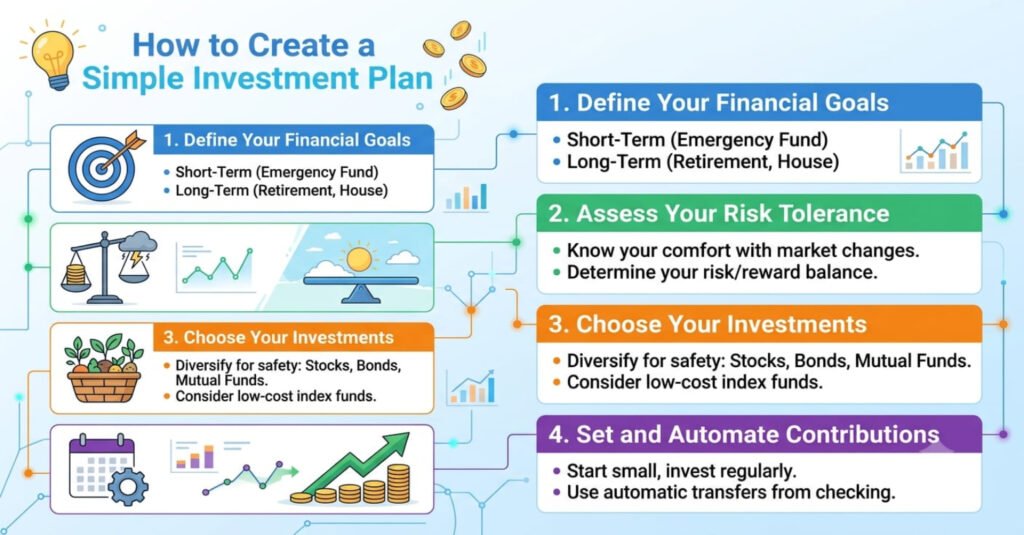
Step 1: Define Your Financial Goals
Every investment plan begins with clear objectives.
Ask yourself what you’re investing for.
Examples include:
- Retirement
- Buying a home
- College education
- Building long-term wealth
- Financial independence
- Starting a business
Each goal may require a different investment strategy.
The clearer your goals, the easier it becomes to make informed investment decisions.
Step 2: Determine Your Time Horizon
Your investment timeline influences how much risk you may be comfortable taking.
For example:
Short-Term Goals
Money needed within the next few years generally requires a more conservative approach.
Long-Term Goals
Goals that are ten years or more away often allow more time to recover from market fluctuations.
Understanding your timeline helps guide your investment choices.
Step 3: Understand Your Risk Tolerance
Every investor responds differently to market volatility.
Ask yourself:
- How would I react if my investments temporarily declined?
- Can I remain invested during market downturns?
- Am I comfortable accepting higher risk for potential long-term growth?
Knowing your comfort level helps create a portfolio you can stick with over time.
Step 4: Create a Diversified Portfolio
Diversification spreads your investments across different asset classes.
Instead of relying on one investment, consider including:
- U.S. stocks
- International stocks
- Bonds
- Broad-market ETFs
- Cash equivalents
Diversification helps reduce overall portfolio risk because different investments may perform differently under changing market conditions.
Step 5: Decide How Much to Invest
One of the biggest misconceptions is that investing requires a large amount of money.
Many investors begin with modest monthly contributions.
Choose an amount that comfortably fits your budget.
As your income increases, consider increasing your investment contributions as well.
Consistency is often more important than investing large sums all at once.
Step 6: Invest Regularly
Regular investing builds discipline.
Many investors automate monthly contributions to remove emotion from the process.
This strategy also supports dollar-cost averaging, which involves investing the same amount at regular intervals regardless of market conditions.
Benefits include:
- Consistent saving habits.
- Reduced market timing pressure.
- Long-term portfolio growth potential.
Step 7: Review Your Portfolio Periodically
Your investment plan should evolve as your life changes.
Review your portfolio at least once or twice each year.
Consider:
- Has your risk tolerance changed?
- Are you closer to your financial goals?
- Has your investment allocation shifted significantly?
Regular reviews help ensure your portfolio remains aligned with your objectives.
Step 8: Rebalance When Necessary
Over time, some investments may grow faster than others.
As a result, your portfolio allocation may drift away from your original target.
Rebalancing restores your desired mix of investments.
This process helps maintain your intended level of risk.
Common Investment Planning Mistakes
Avoid these common errors.
Investing Without Goals
Buying investments without a clear purpose often leads to inconsistent decision-making.
Always connect your investments to specific financial objectives.
Trying to Time the Market
Waiting for the perfect moment to invest may delay long-term wealth building.
Many successful investors focus on consistency rather than prediction.
Ignoring Diversification
Concentrating investments in one stock or sector increases risk.
Balanced portfolios generally provide greater stability over time.
Making Emotional Decisions
Fear and excitement often influence investment choices.
Following your written investment plan can reduce emotional reactions.
Tips for Long-Term Investment Success
Develop these habits to strengthen your investment strategy.
- Invest consistently.
- Increase contributions after raises.
- Keep investment costs low.
- Stay diversified.
- Avoid reacting to daily market news.
- Maintain emergency savings.
- Focus on long-term progress.
These simple habits often outperform complicated investment strategies.
Benefits of Having an Investment Plan
A well-structured investment plan offers several advantages.
These include:
- Greater financial confidence.
- Better decision-making.
- Reduced emotional investing.
- Improved portfolio discipline.
- Clear progress toward financial goals.
- Better long-term wealth-building potential.
A simple plan is often easier to follow consistently than a complicated one.
Frequently Asked Questions
How do I start an investment plan?
Begin by defining your financial goals, determining your investment timeline, understanding your risk tolerance, and creating a diversified portfolio that matches your objectives.
How much money do I need to start investing?
Many investment platforms allow investors to begin with relatively small amounts. Consistency is generally more important than the size of your initial investment.
Should beginners invest every month?
Many long-term investors choose regular monthly investing because it builds discipline and reduces the pressure of trying to time the market.
How often should I review my investment plan?
Review your investment plan at least once or twice a year or whenever your financial situation changes significantly.
Why is diversification important?
Diversification helps reduce investment risk by spreading your money across different asset classes instead of relying on a single investment.
Final Thoughts
Creating a simple investment plan is one of the most effective ways to build long-term wealth while reducing emotional decision-making. You don’t need to predict the market or create a complicated strategy. Instead, focus on setting clear financial goals, investing consistently, maintaining a diversified portfolio, and reviewing your progress regularly.
Remember that successful investing is usually driven by discipline rather than perfection. By following a straightforward investment plan and staying committed during both rising and falling markets, you can improve your chances of achieving your financial goals over time.
Investor.gov – Investing Basics