 MOHAMMAD ABUBAKR
When the stock market reaches new all-time highs, many investors become nervous. It’s common to wonder whether stocks have become too expensive or if a major market correction is just around the corner. As a result, some people delay investing while waiting for prices to fall.
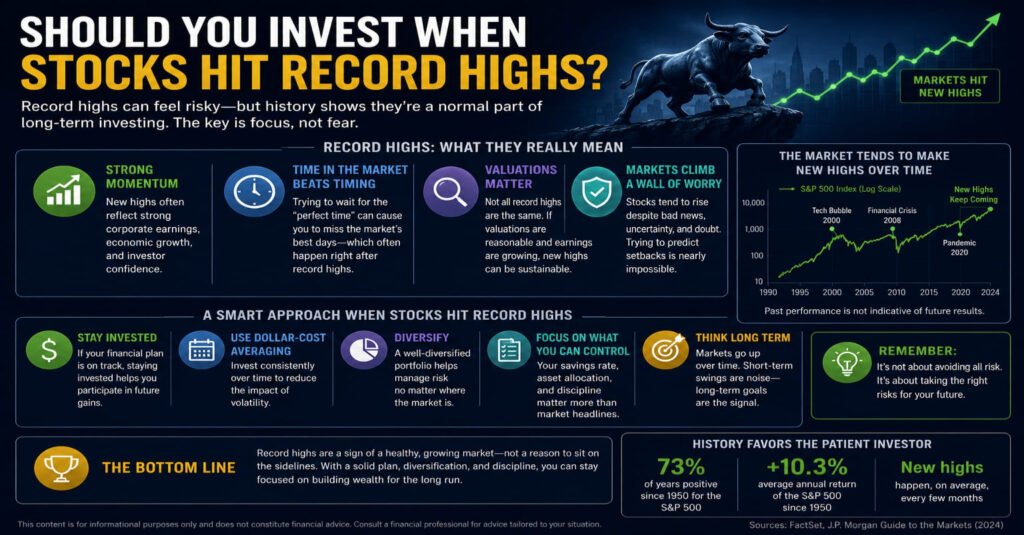
Although those concerns are understandable, history shows that record highs are a normal part of long-term market growth. In fact, many of the strongest bull markets have continued reaching new highs before moving even higher over time. Waiting for the “perfect” opportunity can sometimes mean missing years of potential growth.
The real question isn’t whether the market is at a record high. Instead, it’s whether your investment strategy aligns with your financial goals, time horizon, and risk tolerance.
What Happens If the Stock Market Drops 20%?
This guide explains whether you should invest when stocks hit record highs and how to make smart investment decisions regardless of current market conditions.
Why Stocks Reach Record Highs
Many investors assume record highs signal that a market decline is imminent.
However, markets often reach new highs because businesses continue to grow over time.
Several factors can contribute to rising stock prices, including:
- Strong corporate earnings
- Economic growth
- Technological innovation
- Rising consumer spending
- Increased productivity
- Investor confidence
Healthy economic conditions often support higher company profits, which can drive stock prices upward.
Are Record Highs a Warning Sign?
Not necessarily.
A market reaching a new high doesn’t automatically mean it’s overvalued.
Markets have historically spent much of their time near record levels because economies generally expand over the long term.
Although corrections can happen at any time, predicting exactly when they will occur is extremely difficult.
Making investment decisions based solely on headlines may lead to missed opportunities.
Reasons to Keep Investing
1. Long-Term Markets Tend to Grow
While markets experience temporary declines, they have historically moved higher over long periods.
Investors with long time horizons often benefit more from staying invested than trying to predict short-term movements.
Patience has rewarded disciplined investors throughout many market cycles.
2. Waiting Can Be Expensive
Many people delay investing because they expect prices to fall.
Unfortunately, markets don’t always provide the pullback investors hope for.
Waiting months—or even years—may cause you to miss valuable compound growth.
Time in the market has often been more important than timing the market.
3. Dollar-Cost Averaging Reduces Timing Risk
Instead of investing one large amount all at once, many investors contribute a fixed amount on a regular schedule.
This approach is known as dollar-cost averaging.
Benefits include:
- Reducing emotional investing
- Buying shares at different prices
- Avoiding the pressure of finding the perfect entry point
- Building long-term investing discipline
Consistency often matters more than perfect timing.
4. Strong Companies Continue Growing
High-quality businesses don’t stop growing simply because their stock prices reach new highs.
Many successful companies have repeatedly reached record prices while continuing to expand revenue, profits, and market share.
Focus on business fundamentals rather than short-term price movements.
Risks of Investing at Market Highs
Although investing during record highs isn’t necessarily a mistake, investors should still understand potential risks.
Short-Term Volatility
Markets rarely move in a straight line.
Even during long bull markets, temporary pullbacks are common.
Be prepared for short-term fluctuations after investing.
Higher Valuations
Some companies may become expensive relative to their earnings.
Paying excessive prices can reduce future investment returns.
Research company fundamentals before investing.
Emotional Decision-Making
Fear of missing out (FOMO) often encourages investors to buy simply because prices keep rising.
Investment decisions should always be based on research and long-term goals—not emotions.
Smart Strategies When Markets Are at Record Highs
Continue Investing Regularly
Maintaining consistent investments helps remove much of the uncertainty around market timing.
Automatic monthly contributions can simplify the process.
Diversify Your Portfolio
Avoid concentrating your investments in one company or industry.
Consider spreading your investments across:
- U.S. stocks
- International stocks
- Bonds
- Broad-market ETFs
- Other diversified assets
Diversification helps reduce overall portfolio risk.
Review Your Asset Allocation
If recent market gains have significantly increased your stock allocation, it may be time to rebalance your portfolio.
Rebalancing helps maintain your intended level of investment risk.
Focus on Long-Term Goals
Ask yourself:
- Are you investing for retirement?
- Are your goals five, ten, or twenty years away?
- Can you tolerate short-term market fluctuations?
Your answers matter more than today’s market level.
Maintain an Emergency Fund
Having cash available for unexpected expenses reduces the likelihood of selling investments during temporary market declines.
Emergency savings complement long-term investing.
Common Mistakes Investors Make
Waiting Forever for a Market Crash
Many investors postpone investing while waiting for a correction that may not happen for years.
This delay may reduce long-term wealth accumulation.
Investing Based on Headlines
Financial news often focuses on short-term events.
Successful investing typically requires looking beyond daily market stories.
Chasing Popular Stocks
Buying stocks simply because they’ve recently risen can increase risk.
Evaluate companies based on their financial strength rather than recent performance.
Ignoring Diversification
Putting too much money into one stock or sector increases exposure to company-specific risks.
Balanced portfolios are generally more resilient.
Who Should Invest When Markets Are High?
Investing during record highs may be appropriate for individuals who:
- Have long-term financial goals.
- Maintain diversified portfolios.
- Can tolerate short-term market volatility.
- Invest consistently.
- Follow a disciplined financial plan.
Every investor’s circumstances are unique.
Your strategy should reflect your personal goals and financial situation.
Tips for Investing with Confidence
Follow these best practices regardless of market conditions.
- Invest consistently.
- Diversify across asset classes.
- Focus on quality investments.
- Avoid emotional decisions.
- Review your portfolio regularly.
- Rebalance when necessary.
- Think long term rather than reacting to daily news.
These habits can help improve investment discipline over time.
Frequently Asked Questions
Should I wait for the stock market to fall before investing?
Many investors choose to invest consistently instead of waiting for a market decline because accurately predicting corrections is extremely difficult.
Is investing at record highs risky?
Short-term volatility is always possible. However, record highs alone don’t necessarily indicate that a major decline is imminent.
What is dollar-cost averaging?
Dollar-cost averaging involves investing a fixed amount at regular intervals, regardless of market conditions. This strategy helps reduce the impact of market timing.
Should I invest all my money at once?
The best approach depends on your financial situation and risk tolerance. Some investors prefer gradual investing, while others invest lump sums based on their long-term plans.
How can I reduce investment risk?
Diversifying your portfolio, maintaining an emergency fund, investing consistently, and focusing on long-term goals can help manage investment risk.
Final Thoughts
Seeing the stock market reach record highs can make investing feel intimidating, but history suggests that new highs are a normal part of long-term market growth. While short-term pullbacks are always possible, waiting indefinitely for lower prices can result in missed opportunities and slower wealth accumulation.
Instead of trying to predict the next market move, focus on building a diversified portfolio, investing consistently, and aligning your strategy with your long-term financial goals. By staying disciplined and avoiding emotional decisions, you can navigate both record highs and market downturns with greater confidence.
Investor.gov – Investing Basics