
 MOHAMMAD ABUBAKR
A 20% decline in the stock market can be unsettling for investors. Headlines often become more negative, market volatility increases, and many people begin questioning whether they should sell their investments. While a significant market drop may feel alarming, it’s important to understand what it actually means and how it can affect your financial future.
A market decline of 20% from a recent high is commonly referred to as a bear market. Although bear markets can be challenging, they are also a normal part of long-term investing. History has shown that markets experience corrections and downturns before eventually recovering over time.
Rather than reacting emotionally, successful investors typically focus on maintaining a disciplined investment strategy. Understanding what happens during a market decline can help you make informed financial decisions instead of panic-driven ones.
Safe Investment Strategies During Economic Uncertainty
This guide explains what happens when the stock market drops 20%, how it affects your portfolio, and what smart investors often do during periods of market uncertainty.
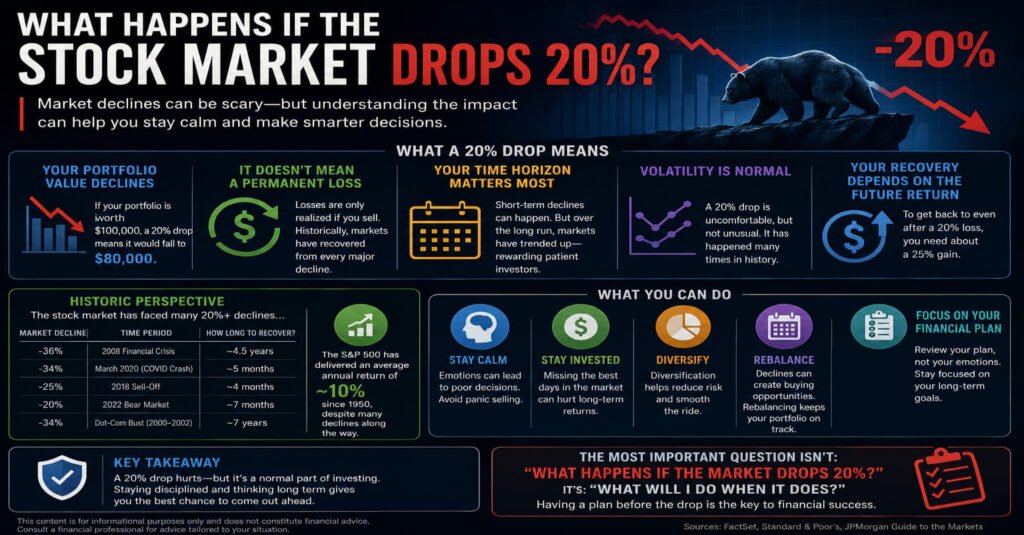
What Does a 20% Market Drop Mean?
A stock market decline of 20% generally signals that investor confidence has weakened.
Several factors can contribute to a major decline, including:
- Economic slowdowns
- Rising interest rates
- High inflation
- Weak corporate earnings
- Global geopolitical events
- Unexpected financial crises
Although these events can trigger market declines, they don’t necessarily indicate that every company or the broader economy will perform poorly over the long term.
How a 20% Market Drop Affects Investors
1. Portfolio Values Decline
The most immediate effect is a reduction in the value of investment portfolios.
If your investments are heavily weighted toward stocks, you may notice significant short-term losses.
However, these losses generally remain unrealized unless you sell your investments.
Long-term investors often focus on future recovery rather than temporary price changes.
2. Market Volatility Increases
During bear markets, stock prices often fluctuate more dramatically.
Large daily gains and losses become more common.
Although volatility can feel uncomfortable, it’s a normal feature of uncertain markets.
Maintaining perspective is important during these periods.
3. Investor Emotions Take Over
Fear often becomes one of the biggest challenges.
Some investors panic and sell after prices have already fallen.
Others stop investing altogether.
Emotional decisions may reduce long-term investment returns because they often involve selling low and buying back after prices have already recovered.
4. Retirement Accounts May Lose Value
Retirement accounts invested in stocks can temporarily decline during a bear market.
Examples include:
- 401(k) plans
- Individual Retirement Accounts (IRAs)
- Brokerage accounts
For investors with many years before retirement, market downturns are often viewed as temporary events within a long investment journey.
5. Investment Opportunities May Increase
Lower stock prices may allow long-term investors to purchase quality companies at more attractive valuations.
Although no one can predict market bottoms, periods of decline have historically created opportunities for disciplined investors.
This doesn’t guarantee future returns, but it highlights why patience can be valuable.
Common Mistakes During a Market Decline
Selling Out of Fear
Selling investments after a large decline locks in losses.
Many investors later struggle to determine when to re-enter the market.
Missing the recovery can reduce long-term returns.
Trying to Time the Market
Predicting exactly when markets will bottom is extremely difficult.
Even professional investors rarely do it consistently.
Long-term investing generally proves more successful than frequent market timing.
Ignoring Diversification
Investors concentrated in one industry or company may experience larger losses during market declines.
Diversification helps spread investment risk across multiple assets.
Stopping Regular Investments
Some investors pause contributions during downturns.
However, continuing regular investments may allow you to purchase shares at lower prices through dollar-cost averaging.
Smart Strategies If the Market Drops 20%
Stay Calm
Market declines are uncomfortable, but panic rarely improves investment outcomes.
Review your long-term financial goals before making major decisions.
Review Your Portfolio
Ask yourself:
- Is my portfolio diversified?
- Has my risk tolerance changed?
- Do my investments still align with my goals?
Making thoughtful adjustments is often better than emotional reactions.
Continue Investing
If your financial situation remains stable, continuing regular investments may support long-term growth.
Buying consistently during different market conditions removes much of the emotion from investing.
Rebalance Your Portfolio
A major market decline may shift your investment allocation.
Rebalancing helps restore your desired mix of stocks, bonds, and other assets.
This strategy also encourages disciplined investing.
Maintain an Emergency Fund
Having emergency savings reduces the likelihood that you’ll need to sell investments during market declines to cover unexpected expenses.
Financial flexibility is especially valuable during uncertain periods.
How Long Do Bear Markets Last?
Every bear market is different.
Some last only a few months.
Others continue for longer periods.
The exact timing of market recoveries cannot be predicted.
However, history has shown that markets have recovered from previous downturns over the long term, although past performance does not guarantee future results.
Patience has often been one of the most valuable qualities for long-term investors.
Should You Buy When the Market Falls?
Some investors view market declines as buying opportunities.
Lower prices may allow investors to purchase assets at reduced valuations.
However, it’s important to:
- Invest according to your financial plan.
- Avoid investing money you’ll need soon.
- Maintain diversification.
- Continue investing gradually rather than trying to predict the bottom.
Consistency often proves more effective than attempting perfect market timing.
Ways to Prepare Before a Market Decline
Preparation is often more important than prediction.
Build a stronger portfolio by:
- Diversifying investments.
- Maintaining emergency savings.
- Investing regularly.
- Avoiding excessive debt.
- Reviewing your portfolio annually.
- Keeping long-term goals in focus.
These habits improve financial resilience regardless of market conditions.
Frequently Asked Questions
Is a 20% market drop considered a bear market?
Yes. A decline of approximately 20% from recent market highs is commonly referred to as a bear market.
Should I sell my investments if the market falls 20%?
Selling based solely on market declines may not support long-term financial goals. Many investors review their investment strategy before making significant changes.
Do all stocks fall during a bear market?
Not necessarily. Different industries and companies may perform differently depending on economic conditions.
Can markets recover after major declines?
Historically, stock markets have recovered from previous bear markets over time. However, future market performance cannot be guaranteed.
Is continuing to invest during a market decline a good idea?
Many long-term investors continue making regular contributions during market downturns as part of a disciplined investment strategy.
Final Thoughts
A 20% stock market decline can be unsettling, but it doesn’t necessarily mean your long-term financial plan is off track. Market downturns are a normal part of investing, and history has shown that periods of volatility are often followed by recovery. The key is to avoid emotional decisions that could undermine years of careful planning.
Instead of focusing on short-term market movements, concentrate on the factors you can control. Maintain a diversified portfolio, continue investing consistently when appropriate, keep an emergency fund, and review your financial goals regularly. By staying disciplined during challenging markets, you place yourself in a stronger position to benefit when conditions improve.
Investor.gov – Investing Basics