 MOHAMMAD ABUBAKR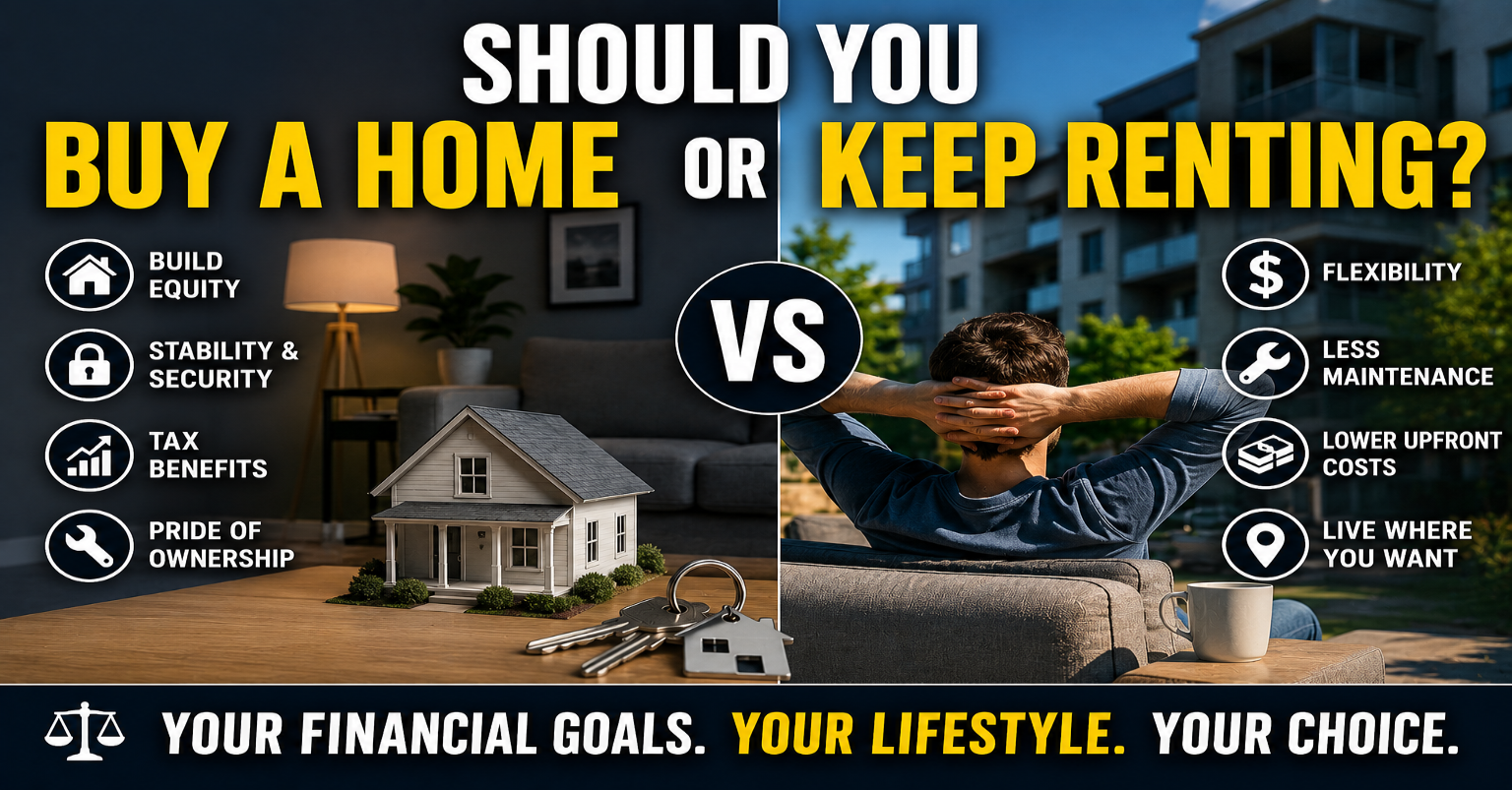
Deciding whether to buy a home or continue renting is one of the most important financial choices many Americans face. However, there is no single answer that works for everyone. Instead, the right decision depends on your income, lifestyle, financial goals, and long-term plans.
Although buying a home is often seen as a symbol of financial success, renting can also offer flexibility and lower upfront costs. Consequently, both options have advantages and trade-offs that deserve careful consideration.
Moreover, housing markets, interest rates, and personal circumstances change over time. Therefore, the best choice today may not be the same choice you would make in the future.
Understanding the real costs and benefits of both options can help you make a smarter, more confident decision.
Homeownership Expenses Most Buyers Forget
Let’s explore the key factors that can help you decide between buying and renting.
1. Upfront Costs Matter
One of the biggest differences between buying and renting is the upfront cost.
When buying a home, you typically need:
- A down payment
- Closing costs
- Inspection fees
- Moving expenses
However, renting usually requires:
- Security deposit
- First month’s rent
- Sometimes a small application fee
Furthermore, the upfront cost of buying is significantly higher in most cases.
As a result, renting may be more accessible if you have limited savings.
2. Monthly Payments Are Not Always Comparable
Many people assume mortgage payments are similar to rent.
However, that is not always true.
Homeownership costs often include:
- Mortgage payments
- Property taxes
- Homeowners insurance
- Maintenance costs
- HOA fees (if applicable)
Meanwhile, renting usually includes a single monthly payment with fewer surprise expenses.
Therefore, it’s important to compare total monthly costs rather than just rent versus mortgage.
3. Building Equity vs Flexibility
Buying a home allows you to build equity over time.
As you pay down your mortgage, you gradually increase your ownership in the property.
However, renting offers flexibility that homeownership does not.
For example, renters can:
- Move more easily for jobs
- Avoid repair responsibilities
- Adjust living situations quickly
Consequently, your long-term goals should play a major role in this decision.
4. Maintenance Responsibility
Homeowners are responsible for all repairs and maintenance.
This includes:
- Plumbing issues
- Roof repairs
- Appliance replacements
- Lawn care
- Structural maintenance
On the other hand, renters typically rely on landlords for repairs.
As a result, renting may reduce financial stress and unexpected costs.
However, homeowners gain more control over property improvements and customization.
5. Market Conditions Influence Your Decision
Housing markets can vary significantly across the United States.
In some areas, buying may be more affordable than renting.
In others, renting may be far cheaper than owning.
Moreover, interest rates and home prices fluctuate over time.
Therefore, timing can play an important role in affordability and long-term value.
6. Long-Term Stability vs Short-Term Flexibility
Homeownership often provides long-term stability.
Fixed-rate mortgages can create predictable monthly payments.
However, renting provides short-term flexibility.
This is especially useful for:
- Young professionals
- Students
- People changing jobs
- Individuals unsure about location
Consequently, your lifestyle stage can strongly influence your decision.
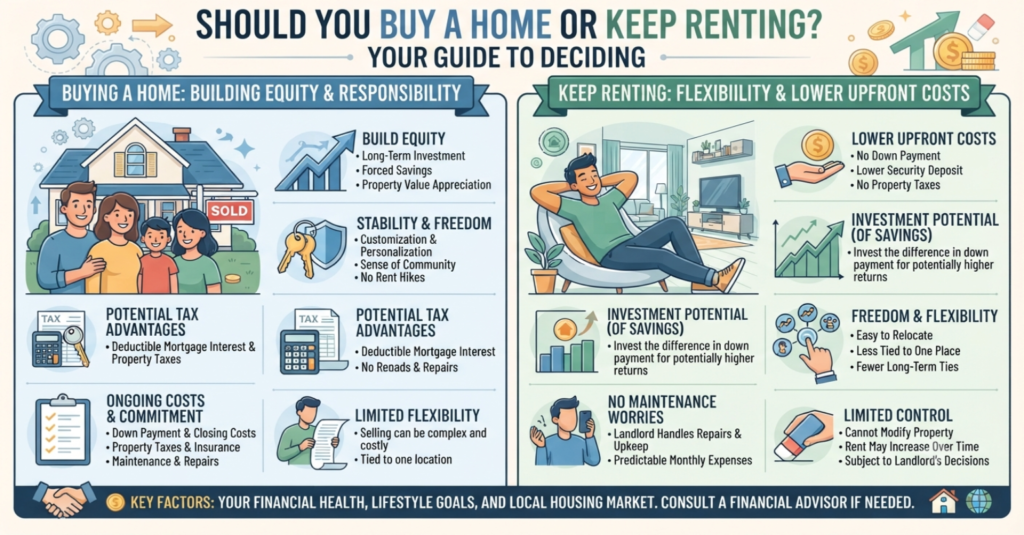
7. Financial Comparison: Buying vs Renting
A clear comparison can make the decision easier.
Although both options involve housing costs, the structure of those costs is very different.
Buying a Home Typically Includes:
- Down payment
- Monthly mortgage payment
- Property taxes
- Homeowners insurance
- Maintenance and repairs
- HOA fees (if applicable)
As a result, total monthly costs may vary over time.
Renting Typically Includes:
- Monthly rent
- Security deposit (initial only)
- Renter’s insurance (optional but recommended)
- Minimal maintenance costs
Therefore, renting usually provides more predictable monthly expenses.
Key Insight:
Buying builds long-term equity, while renting offers financial flexibility.
Consequently, your decision should depend on whether you value stability or flexibility more at this stage in life.
8. Hidden Costs of Homeownership
Many buyers focus only on mortgage payments.
However, several hidden costs can increase total housing expenses.
These may include:
- Unexpected repairs
- Appliance replacements
- Rising property taxes
- Insurance increases
- Utility fluctuations
- Landscaping and upkeep
Moreover, these costs often increase gradually over time.
Therefore, budgeting only for the mortgage can lead to financial stress later.
9. Renting Also Has Long-Term Trade-Offs
While renting feels simpler, it also has limitations.
For example:
- Rent payments do not build equity
- Monthly rent can increase over time
- Limited control over property changes
- Less long-term financial stability
Nevertheless, renting can still be a smart choice depending on your goals.
For instance, it works well for people who prioritize mobility or are not ready for long-term commitments.
10. A Simple Decision Checklist
Before deciding, ask yourself the following questions:
- Do I have enough savings for a down payment and emergency fund?
- Do I plan to stay in one location for at least 5–7 years?
- Can I afford all monthly housing costs comfortably?
- Am I ready for maintenance responsibilities?
- Do I prefer stability or flexibility right now?
Furthermore, your answers can guide your decision more clearly than market trends.
11. Common Mistakes to Avoid
Many people make emotional decisions when choosing between renting and buying.
Buying Too Soon
Some buyers rush into homeownership without financial readiness.
However, this can lead to stress if unexpected expenses arise.
Underestimating Total Costs
Focusing only on mortgage payments can be misleading.
Instead, always calculate full monthly ownership costs.
Ignoring Lifestyle Needs
Financial readiness is important.
However, lifestyle stability matters just as much.
Consequently, your job situation, family plans, and future goals should all be considered.
Assuming Buying Is Always Better
Homeownership is not automatically the best financial choice.
In some markets, renting and investing the difference may be more beneficial.
12. Final Decision Factors
Ultimately, the right choice depends on your personal situation.
Buying a home may be better if you want:
- Long-term stability
- Equity building
- Fixed housing payments
- Personal control over your space
On the other hand, renting may be better if you want:
- Flexibility to move
- Lower upfront costs
- Fewer maintenance responsibilities
- Short-term financial freedom
Therefore, there is no universal correct answer.
Instead, the best decision is the one that fits your financial goals and lifestyle.
Frequently Asked Questions
Is buying a home always cheaper than renting?
Not always. In many cities, renting can be cheaper in the short term when you include taxes, maintenance, and insurance costs.
How long should I stay in a home to make buying worth it?
Many experts suggest at least 5–7 years to help offset upfront costs like closing fees and down payment expenses.
What is the biggest hidden cost of owning a home?
Maintenance and repairs are often the most underestimated expenses for homeowners over time.
Is renting wasting money?
Not necessarily. Renting provides flexibility and lower responsibility, which can be valuable depending on your lifestyle.
Should I invest instead of buying a home?
In some cases, renting and investing the difference can build wealth, but it depends on market conditions and personal discipline.
Final Thoughts
Choosing between buying a home and continuing to rent is not just a financial decision—it is also a lifestyle decision. While homeownership builds equity and long-term stability, renting offers flexibility and fewer responsibilities.
Moreover, both options can support strong financial health when managed wisely. The key is understanding your current situation, future goals, and comfort level with risk and responsibility.
Above all, avoid rushing into a decision based on emotion or external pressure. Instead, compare full costs, evaluate your long-term plans, and choose the option that supports both your financial stability and personal lifestyle.
With careful planning, either path can lead to a secure financial future.
Consumer Financial Protection Bureau – Renting vs Buying