 MOHAMMAD ABUBAKR
Your credit habits affect much more than your ability to borrow money. In fact, a strong credit history can influence mortgage approvals, auto loan rates, credit card offers, insurance premiums, and even rental applications. Therefore, building healthy credit habits is one of the smartest financial decisions you can make.
Fortunately, improving your credit doesn’t require complicated strategies. Instead, small, consistent actions often produce the biggest long-term results. Consequently, developing responsible credit habits today can create more financial opportunities in the future.
Moreover, good credit is built over time. While there are no instant solutions, practicing smart financial behaviors consistently can strengthen your credit profile year after year. Whether you’re just starting to build credit or working to improve an existing credit history, these habits can help you stay on the right path.
How Your Credit Score Affects Car Loan Rates
Let’s explore the credit habits that can improve your financial life.
1. Always Pay Your Bills on Time
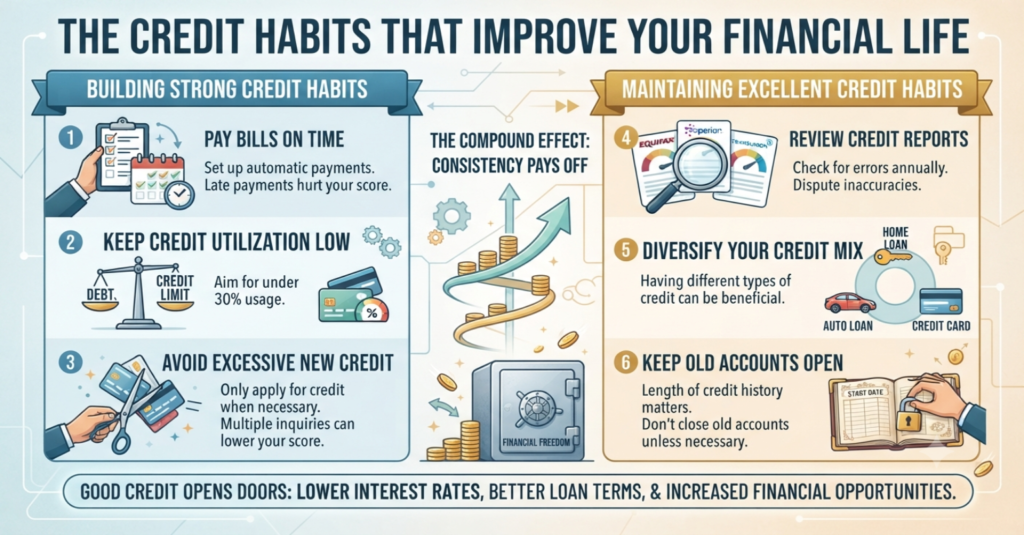
Your payment history is one of the most important factors that affects your credit profile.
Therefore, making every payment on or before its due date should become your top priority.
This includes:
- Credit cards
- Auto loans
- Student loans
- Personal loans
- Mortgage payments
Furthermore, setting up automatic payments or calendar reminders can help you avoid accidental late payments.
Over time, consistent on-time payments demonstrate responsible credit management.
2. Keep Credit Card Balances Low
Using credit responsibly doesn’t mean carrying large balances.
Instead, try to use only a portion of your available credit.
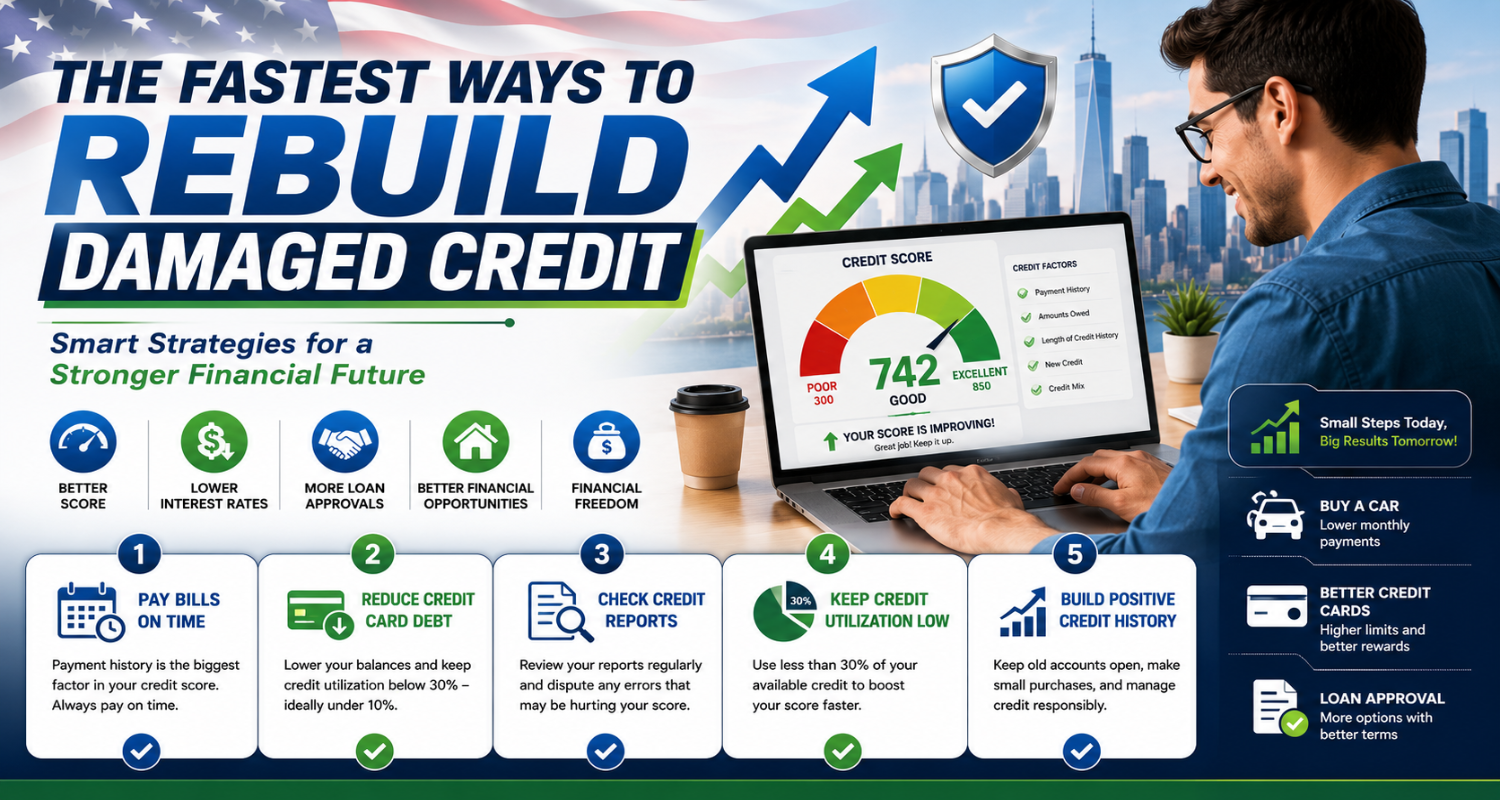
A lower credit utilization ratio generally reflects responsible borrowing habits.
For example:
- Pay balances before the due date.
- Avoid maxing out your credit cards.
- Spread purchases across multiple cards if appropriate.
Consequently, lower balances may support a healthier credit profile.
3. Review Your Credit Reports Regularly
Monitoring your credit reports helps you stay informed about your financial history.
Regular reviews can help you identify:
- Incorrect account information
- Reporting errors
- Unauthorized accounts
- Signs of identity theft
Moreover, correcting mistakes promptly may help prevent unnecessary damage to your credit history.
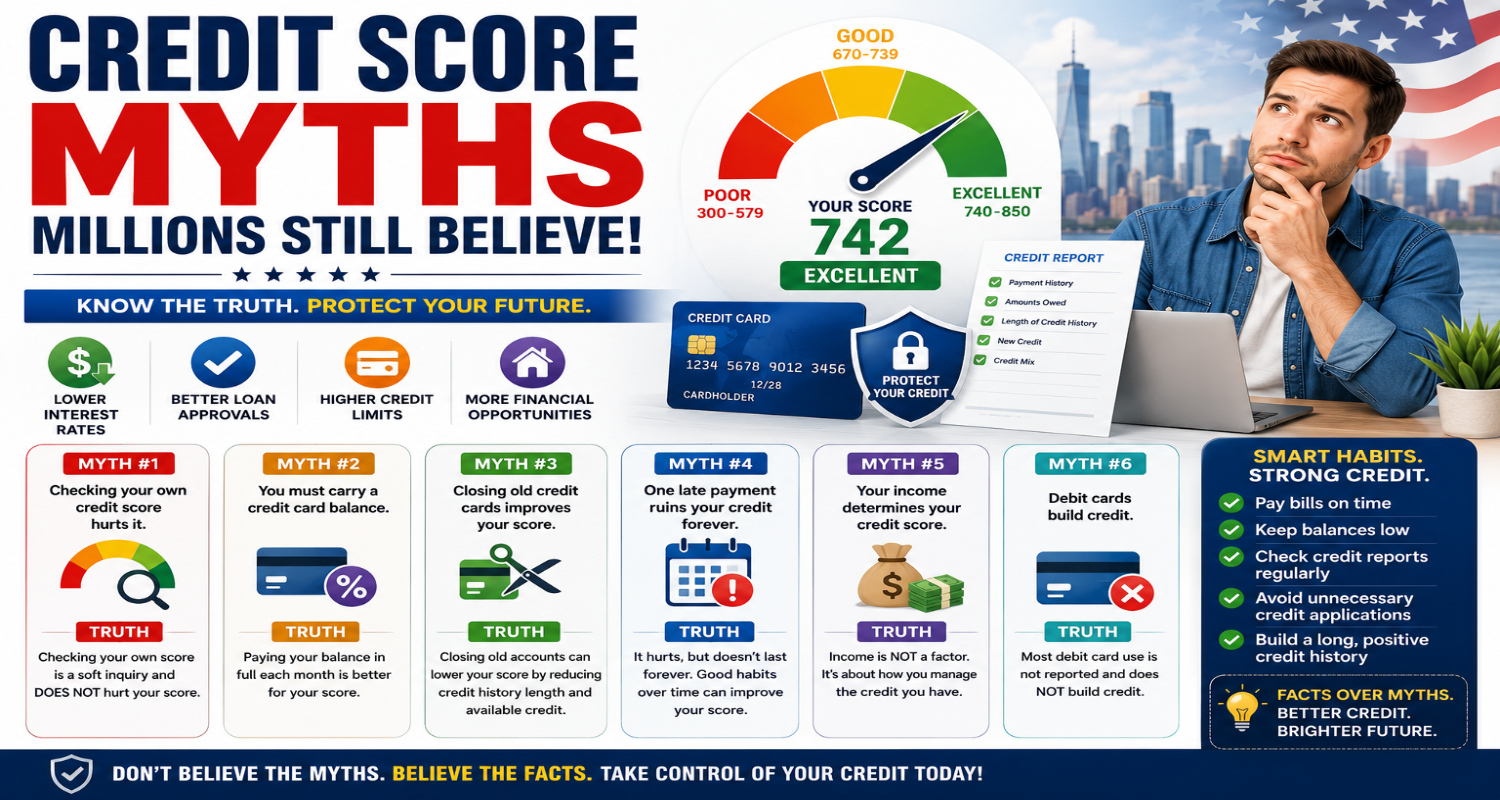
Checking your own credit reports does not lower your credit score.
4. Avoid Applying for Too Much Credit at Once
Applying for several credit accounts within a short period may raise concerns for lenders.
Therefore, apply for new credit only when you truly need it.
Before submitting an application, ask yourself:
- Do I really need this account?
- Will it improve my financial situation?
- Can I comfortably manage another payment?
Being selective about new credit applications helps support responsible borrowing habits.
5. Keep Older Credit Accounts Open
The length of your credit history can influence your overall credit profile.
Therefore, closing older accounts without a good reason may reduce the average age of your credit history.
If an account has no annual fee and still fits your financial needs, keeping it open may be beneficial.
However, always evaluate each account based on your personal financial situation.
6. Create a Monthly Budget
Strong credit habits begin with good money management.
A realistic budget helps ensure you have enough money available for your monthly payments.
Include categories such as:
- Housing
- Utilities
- Groceries
- Transportation
- Insurance
- Debt payments
- Savings
Consequently, budgeting reduces the risk of missed payments and unnecessary borrowing.
7. Build an Emergency Fund
Unexpected expenses can quickly lead to additional debt.
Therefore, maintaining emergency savings provides important financial protection.
Your emergency fund may help cover:
- Medical expenses
- Car repairs
- Home maintenance
- Temporary income loss
- Unexpected travel
As a result, you’re less likely to rely heavily on credit cards during emergencies.
8. Pay More Than the Minimum When Possible
Making only the minimum payment can keep debt around for a long time.
Instead, paying more than the minimum reduces your outstanding balance faster.
Furthermore, you’ll often pay less in interest over time.
Even small additional payments each month can help you reduce debt more quickly while improving your overall financial health.
9. Limit Unnecessary Debt
Using credit wisely doesn’t mean borrowing as much as possible.
Instead, borrow only when it supports your financial goals and fits comfortably within your budget.
Before taking on new debt, ask yourself:
- Can I comfortably afford the monthly payment?
- Is this purchase necessary?
- Will this loan improve my financial situation?
- Do I have a repayment plan?
Consequently, responsible borrowing can help protect both your budget and your credit profile.
10. Review Your Monthly Statements
Many people make payments without reviewing their statements.
However, checking your accounts every month helps you stay informed.
Look for:
- Unauthorized charges
- Billing errors
- Subscription renewals
- Interest charges
- Payment due dates
Furthermore, reviewing your statements regularly allows you to identify problems before they become more serious.
11. Keep Learning About Credit
Credit rules and financial products continue to evolve.
Therefore, improving your financial knowledge can help you make better borrowing decisions.
Spend time learning about:
- Credit scores
- Interest rates
- Loan terms
- Credit reports
- Debt management
- Fraud prevention
Moreover, understanding these topics can help you avoid costly financial mistakes.
12. Be Patient
Building excellent credit doesn’t happen overnight.
Instead, strong credit develops through consistent financial habits over time.
Continue making on-time payments, managing debt responsibly, and monitoring your credit regularly.
Although progress may seem slow at first, good habits often produce meaningful long-term results.
Common Credit Mistakes to Avoid
Avoiding poor credit habits can be just as important as developing good ones.
Missing Payment Due Dates
Late payments can remain on your credit history for years.
Therefore, use automatic payments or reminders to help ensure every payment is made on time.
Maxing Out Credit Cards
Using most or all of your available credit may increase your credit utilization ratio.
Instead, try to keep balances low whenever possible.
This habit demonstrates responsible credit management.
Ignoring Your Credit Report
Mistakes and fraudulent activity can sometimes appear on credit reports.
Reviewing your reports regularly allows you to identify and address issues quickly.
Applying for Too Much Credit
Opening several new accounts within a short period may affect your credit profile.
Instead, apply for new credit only when it aligns with your financial needs.
Daily Habits That Strengthen Your Credit
Healthy credit is often built through small, consistent actions.
Consider adopting these habits:
- Pay every bill on time.
- Review your monthly budget.
- Monitor your credit card balances.
- Save for unexpected expenses.
- Avoid unnecessary borrowing.
- Check your statements regularly.
- Keep older accounts in good standing.
- Track your financial goals.
- Continue learning about personal finance.
- Review your credit reports each year.
Although these habits seem simple, they can make a meaningful difference over time.
Frequently Asked Questions
How long does it take to build good credit?
Building strong credit usually takes time. Consistently paying bills on time and managing debt responsibly can improve your credit profile over the long term.
Does checking my own credit report lower my credit score?
No. Reviewing your own credit report is considered a soft inquiry and generally does not affect your credit score.
Should I close old credit cards I don’t use?
It depends on your financial situation. If an account has no annual fee and helps maintain a longer credit history, keeping it open may be beneficial. Review each account carefully before making a decision.
What’s the biggest factor in building good credit?
Payment history is widely considered one of the most important factors. Making every payment on time consistently is one of the best habits you can develop.
Can good credit save me money?
Yes. Strong credit may help you qualify for lower interest rates on loans and better financing options. Over time, this can reduce borrowing costs.
Final Thoughts
Strong credit isn’t built through shortcuts or quick fixes. Instead, it’s the result of consistent financial habits practiced over many years. Paying bills on time, keeping balances low, avoiding unnecessary debt, and monitoring your credit regularly can all strengthen your financial future.
Moreover, good credit creates opportunities beyond borrowing money. It can help you qualify for better loan terms, lower interest rates, and greater financial flexibility. Consequently, developing healthy credit habits today may lead to meaningful savings and increased financial confidence in the future.
Above all, focus on steady progress rather than perfection. Every on-time payment, every responsible borrowing decision, and every thoughtful financial choice contributes to a stronger credit profile. By staying disciplined and reviewing your finances regularly, you can build credit that supports your long-term financial goals.
Consumer Financial Protection Bureau – Credit Reports and Scores