 MOHAMMAD ABUBAKR
Many people believe saving money becomes easy once they earn a higher income. However, that’s not always true. Some high-income households struggle to save, while many families with modest incomes consistently build strong financial habits.
The difference often comes down to strategy rather than salary. Consequently, learning how to manage money wisely can be more valuable than simply earning more. Although income certainly affects how much you can save, your daily financial decisions have an even greater impact over time.
Fortunately, smart saving habits work at almost every income level. Whether you’re just starting your career, supporting a growing family, or preparing for retirement, practical strategies can help you save more without making extreme sacrifices.
Moreover, saving isn’t only about putting money aside. It’s also about creating financial security, reducing stress, and preparing for future opportunities. Therefore, building a consistent savings habit should remain a priority regardless of your paycheck.
Savings Challenges That Actually Work
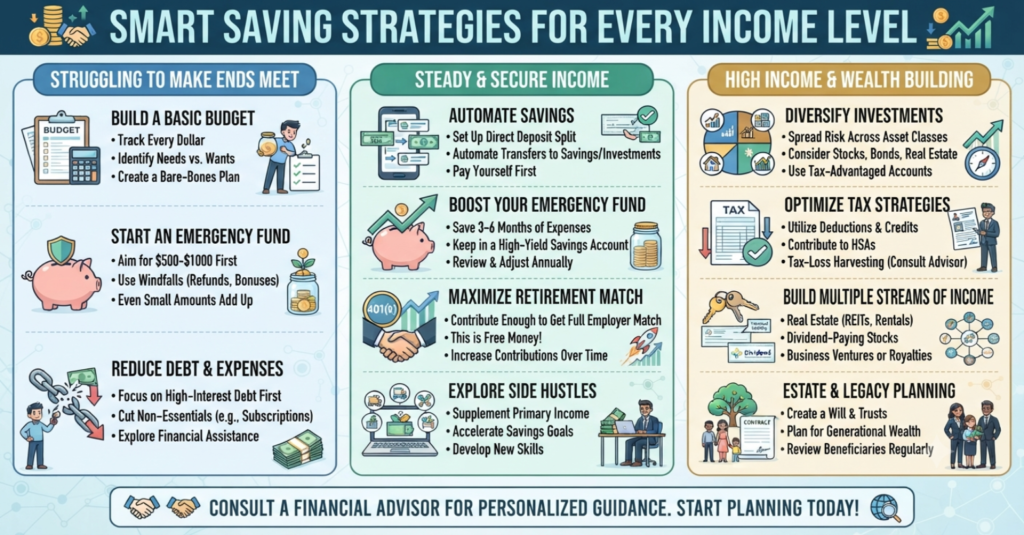
Let’s explore practical saving strategies that can work whether your income is modest, average, or well above the national average.
1. Create a Realistic Budget
Every successful savings plan starts with a budget.
Rather than tracking every penny perfectly, create a simple spending plan that reflects your actual lifestyle.
Divide your income into essential categories such as:
- Housing
- Utilities
- Groceries
- Transportation
- Insurance
- Savings
- Entertainment
Furthermore, review your budget every month.
As your income or expenses change, update your plan accordingly.
Consequently, you’ll have a better understanding of where your money is going and where you can save more.
2. Pay Yourself First
Many people save whatever remains at the end of the month.
Unfortunately, unexpected expenses often leave very little behind.
Instead, transfer money into savings immediately after receiving each paycheck.
You can direct funds into:
- Emergency savings
- Retirement accounts
- Investment accounts
- Vacation funds
- Home repair savings
Moreover, automating these transfers removes the temptation to spend the money first.
Over time, this simple habit can produce remarkable results.
3. Build an Emergency Fund
Unexpected expenses happen to everyone.
Therefore, an emergency fund should be one of your first financial priorities.
Aim to save enough money to cover several months of essential living expenses.
Your emergency fund may help pay for:
- Medical bills
- Car repairs
- Home maintenance
- Temporary job loss
- Unexpected travel
As a result, you’ll be less likely to rely on high-interest credit cards during financial emergencies.
4. Save More Every Time Your Income Increases
Raises, bonuses, tax refunds, and side income create valuable saving opportunities.
Instead of increasing your lifestyle immediately, save part of every additional dollar you receive.
For example, you could save:
- 25% of every raise
- 50% of every bonus
- Your tax refund
- Extra freelance earnings
Consequently, your savings can grow much faster without dramatically changing your current budget.
5. Reduce High-Interest Debt
Paying off expensive debt is another effective saving strategy.
High-interest credit cards and personal loans reduce the amount of money available for future savings.
Therefore, prioritize eliminating balances with the highest interest rates first.
Meanwhile, continue making minimum payments on your remaining debts.
Once those balances disappear, redirect those payments toward your savings goals.
6. Automate Your Savings
Consistency often matters more than the amount you save.
Fortunately, automation makes consistency much easier.
Schedule automatic transfers on payday.
Even small weekly deposits can grow steadily throughout the year.
Furthermore, automatic savings reduce the temptation to spend money impulsively.
As a result, saving becomes part of your routine instead of a monthly decision.
7. Control Lifestyle Inflation
Many people increase their spending every time their income grows.
This habit is known as lifestyle inflation.
Although enjoying financial success is important, spending every raise can slow long-term wealth building.
Instead, continue living comfortably while directing additional income toward:
- Investments
- Retirement accounts
- Emergency savings
- Debt repayment
Consequently, your financial security can improve much faster.
8. Find Small Ways to Cut Everyday Expenses
Saving doesn’t always require major sacrifices.
Instead, look for everyday opportunities to reduce spending.
Simple ideas include:
- Planning meals before grocery shopping
- Comparing insurance quotes
- Using cashback rewards responsibly
- Canceling unused subscriptions
- Buying store-brand products
- Cooking more meals at home
Although each change may seem small, the combined savings often become significant over time.
Moreover, these habits are easy to maintain once they become part of your daily routine.
9. Set Clear Savings Goals
Saving becomes much easier when you know exactly what you’re working toward.
Instead of saving without a purpose, create specific financial goals with realistic deadlines.
For example, you might save for:
- An emergency fund
- A home down payment
- A vacation
- Retirement
- A new vehicle
- Home improvements
- Your child’s education
Furthermore, divide large goals into smaller monthly targets.
As a result, your progress becomes easier to track and more motivating.
10. Review Your Spending Every Month
Financial habits change over time.
Therefore, review your monthly spending on a regular basis.
Look for categories where costs have gradually increased.
Common examples include:
- Dining out
- Entertainment
- Online shopping
- Subscription services
- Convenience purchases
Moreover, identifying these trends early allows you to adjust your budget before overspending becomes a long-term habit.
Even small reductions can free up more money for savings.
11. Take Advantage of Employer Benefits
Many employers offer financial benefits that can strengthen your savings plan.
If available, consider using benefits such as:
- Retirement plan matching
- Health Savings Accounts (HSAs)
- Flexible Spending Accounts (FSAs)
- Employee stock purchase plans
- Financial wellness programs
Furthermore, employer matching contributions can significantly increase your retirement savings over time.
Review your workplace benefits each year so you don’t miss valuable opportunities.
12. Keep Learning About Personal Finance
Financial knowledge can help you make better decisions at every income level.
Instead of relying on social media trends, focus on trusted educational resources.
Spend time learning about:
- Budgeting
- Investing
- Retirement planning
- Taxes
- Credit management
- Insurance
Moreover, improving your financial knowledge helps you avoid costly mistakes while making smarter long-term choices.
Common Mistakes That Make Saving Difficult
Even with a good income, certain habits can prevent meaningful progress.
Fortunately, avoiding these mistakes can make saving much easier.
Waiting Until the End of the Month
Many people save only after paying every bill and covering every expense.
However, there’s often very little money left.
Instead, save first and spend what’s left.
This simple habit helps make saving a consistent priority.
Ignoring Small Purchases
Daily coffee, food delivery, and impulse shopping may seem inexpensive.
Nevertheless, those costs can add up quickly over an entire year.
Tracking your spending can reveal where small adjustments may produce meaningful savings.
Not Increasing Savings After Raises
Higher income creates an opportunity to strengthen your financial future.
However, spending every raise immediately can slow wealth building.
Instead, direct a portion of every raise toward your savings or investment accounts.
Setting Unrealistic Expectations
Trying to save too much too quickly may become discouraging.
Therefore, choose achievable monthly savings goals.
Consistency usually produces better long-term results than occasional large deposits.
Habits of Successful Savers
Many financially successful people share similar saving habits regardless of their income.
Consider making these practices part of your routine:
- Save automatically every payday.
- Review your budget monthly.
- Track your financial goals.
- Build an emergency fund.
- Pay off high-interest debt.
- Avoid lifestyle inflation.
- Compare prices before making large purchases.
- Increase retirement contributions regularly.
- Invest consistently.
- Celebrate financial milestones.
Although these habits appear simple, they can create significant financial progress when practiced consistently over many years.
Frequently Asked Questions
Can I save money with a low income?
Yes. Saving may take longer with a lower income, but building a consistent habit is still possible. Even small weekly or monthly deposits can make a difference over time.
How much should I save each month?
The amount depends on your income, expenses, and financial goals. The most important step is saving consistently and increasing your savings whenever your financial situation improves.
Should I save or pay off debt first?
If you have high-interest debt, paying it down while building a small emergency fund is often a balanced approach. The right strategy depends on your overall financial situation.
Why is automating savings effective?
Automatic transfers remove the need to remember to save each month. Consequently, they reduce the temptation to spend money before setting it aside.
What’s the biggest obstacle to saving?
For many people, lifestyle inflation and inconsistent spending habits are major challenges. Creating a realistic budget and reviewing it regularly can help overcome both.
Final Thoughts
Smart saving isn’t determined by the size of your paycheck. Instead, it’s built through consistent habits that support your long-term financial goals. Whether you’re earning your first salary or managing a higher income, creating a budget, paying yourself first, reducing unnecessary expenses, and increasing your savings over time can strengthen your financial future.
Moreover, remember that every dollar saved represents progress. Although the amounts may seem small at first, consistent saving creates momentum that can lead to greater financial security and peace of mind. Consequently, don’t wait for the perfect income or the perfect time to begin.
Above all, choose strategies that fit your lifestyle and remain committed to them. Review your progress regularly, adjust your plan as your circumstances change, and continue building healthy financial habits. Over time, those simple decisions can help you reach your savings goals and build lasting wealth.
Consumer Financial Protection Bureau – Saving for Your Goals