
 MOHAMMAD ABUBAKR
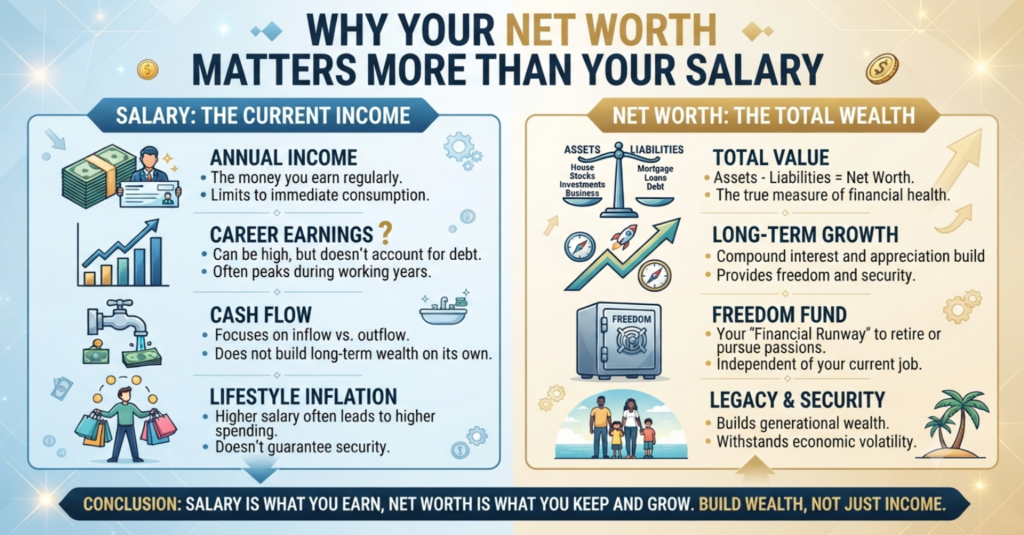
Many people believe that earning a high salary automatically leads to wealth. While a bigger paycheck can certainly create more financial opportunities, income alone doesn’t determine long-term financial success. Instead, your net worth offers a much clearer picture of your overall financial health.
You may know someone who earns six figures but still struggles with debt and lives paycheck to paycheck. On the other hand, another person may earn a modest income while steadily building wealth through smart saving, investing, and spending habits. Consequently, salary tells only part of the story. Net worth reveals what you actually own after subtracting what you owe.
Moreover, focusing only on income can lead to lifestyle inflation. As earnings increase, spending often rises just as quickly. Therefore, people with impressive salaries may not accumulate meaningful wealth if they fail to manage their money wisely.
Fortunately, understanding your net worth can help you make better financial decisions. Rather than chasing a higher paycheck alone, you can build a stronger financial foundation that supports your future goals.
How to Create a Simple Investment Plan
Let’s explore why net worth deserves more attention than salary and how you can improve it over time.
What Is Net Worth?
Your net worth is one of the simplest ways to measure your financial position.
The calculation is straightforward:
Net Worth = Total Assets − Total Liabilities
Assets are everything you own that has financial value.
Examples include:
- Cash in checking and savings accounts
- Retirement accounts
- Investment portfolios
- Home equity
- Vehicles
- Valuable personal property
Liabilities are your financial obligations.
These often include:
- Mortgage balances
- Credit card debt
- Auto loans
- Student loans
- Personal loans
- Other outstanding debts
For example, imagine you own assets worth $450,000. Meanwhile, your total debts equal $180,000. As a result, your net worth would be $270,000.
Although the formula is simple, it provides valuable insight into your financial progress.
Why Salary Doesn’t Tell the Whole Story
A large paycheck may look impressive. However, income alone doesn’t reveal how effectively someone manages money.
Consider two professionals.
The first earns $180,000 each year. However, they carry significant credit card debt, finance luxury vehicles, and spend nearly every dollar they earn.
The second earns $90,000 annually. Nevertheless, they live below their means, invest consistently, avoid unnecessary debt, and save a portion of every paycheck.
Over time, the second person may build a much higher net worth despite earning a lower salary.
Therefore, wealth depends more on what you keep than what you earn.
Furthermore, salary can disappear if employment changes. Net worth, by contrast, reflects the financial resources you’ve built over many years.
Why Net Worth Matters More
Your net worth influences nearly every aspect of your financial life.
Rather than measuring monthly income, it reflects your long-term financial strength.
A growing net worth can help you:
- Prepare for retirement
- Handle emergencies
- Purchase a home
- Start a business
- Support your family
- Achieve financial independence
Meanwhile, tracking your net worth encourages better financial habits.
Instead of asking, “How much did I earn this month?” you’ll begin asking, “Did my financial position improve?”
That shift in thinking often leads to smarter decisions.
Wealth Is Built Through Ownership
Most financially successful people focus on acquiring assets instead of increasing expenses.
For instance, they purchase investments that have the potential to grow over time.
Common wealth-building assets include:
- Broad-market index funds
- Exchange-Traded Funds (ETFs)
- Retirement accounts
- Rental properties
- Dividend-paying stocks
- Small businesses
Although every investment carries some level of risk, owning productive assets allows your money to work on your behalf.
Consequently, wealth often grows through ownership rather than consumption.
Lifestyle Inflation Can Slow Wealth Growth
One of the biggest obstacles to increasing net worth is lifestyle inflation.
Lifestyle inflation happens when spending rises every time income increases.
For example, someone receives a promotion.
Instead of saving the additional income, they purchase:
- A more expensive vehicle
- A larger home
- Luxury vacations
- Designer clothing
- Premium subscriptions
Although these purchases may improve comfort, they don’t always increase financial security.
Meanwhile, monthly expenses continue rising.
As a result, many high-income earners remain financially stressed despite earning excellent salaries.
Instead, directing raises toward investments, retirement savings, or debt repayment can strengthen your net worth much faster.
Good Debt vs. Bad Debt
Not every debt affects your net worth in the same way.
Understanding the difference can help you make smarter borrowing decisions.
Good Debt
Good debt has the potential to increase future financial value.
Examples include:
- A reasonably priced home mortgage
- Student loans that improve earning potential
- Business loans that generate income
Bad Debt
Bad debt usually finances depreciating assets or short-term spending.
Common examples include:
- High-interest credit cards
- Payday loans
- Buy-now-pay-later balances
- Unnecessary personal loans
Consequently, reducing high-interest debt often becomes one of the fastest ways to improve net worth.
Furthermore, lowering debt also reduces interest expenses, creating more opportunities to save and invest.
Small Financial Habits Create Big Results
Many people assume wealth comes from one major financial decision.
In reality, consistent habits usually matter much more.
Simple habits include:
- Saving before spending
- Investing every month
- Tracking expenses
- Avoiding unnecessary debt
- Reviewing financial goals regularly
- Increasing retirement contributions after raises
Although each habit may seem small, their combined effect becomes powerful over time.
Moreover, consistency often produces better results than trying to make perfect financial decisions.
How to Calculate Your Net Worth Regularly
Knowing your net worth once is helpful. However, tracking it consistently is even more valuable. Instead of checking your salary every payday, review your net worth every three to six months. That habit allows you to measure real financial progress.
Begin by listing everything you own.
Your assets may include:
- Checking and savings accounts
- Certificates of deposit (CDs)
- Retirement accounts
- Brokerage investments
- Home equity
- Vehicles
- Valuable collectibles
Next, list everything you owe.
This includes:
- Mortgage balance
- Student loans
- Auto loans
- Credit card balances
- Personal loans
- Other outstanding debt
Afterward, subtract your liabilities from your assets.
If your net worth increases over time, you’re moving in the right direction. On the other hand, if it remains unchanged or declines, it may be time to review your spending and saving habits.
Furthermore, tracking your progress regularly can help you stay motivated because every improvement becomes measurable.
Practical Ways to Increase Your Net Worth
Growing your net worth doesn’t require earning a six-figure salary. Instead, it requires making smart financial decisions consistently.
Increase Your Savings Rate
Saving more is one of the fastest ways to build wealth.
Therefore, try increasing your savings whenever your income grows.
For example, direct part of every raise or bonus into savings or investments instead of increasing your lifestyle.
Invest Consistently
Money sitting in a checking account usually loses purchasing power over time because of inflation.
Instead, consider investing regularly in diversified assets that align with your goals and risk tolerance.
Many long-term investors choose options such as:
- Broad-market index funds
- Exchange-Traded Funds (ETFs)
- Employer-sponsored retirement plans
- Individual Retirement Accounts (IRAs)
Moreover, investing consistently through market ups and downs can help reduce the temptation to time the market.
Pay Off High-Interest Debt
Every dollar spent on interest is money that cannot be invested elsewhere.
Consequently, paying down high-interest credit card debt often provides an immediate financial benefit.
Start with debts carrying the highest interest rates whenever possible.
Meanwhile, continue making minimum payments on your remaining obligations.
Increase Your Income Strategically
Although salary isn’t everything, increasing your income still helps.
However, what you do with that additional income matters even more.
Rather than upgrading your lifestyle immediately, consider using extra earnings to:
- Increase retirement contributions
- Build emergency savings
- Invest in diversified assets
- Pay down debt
As a result, your net worth may grow much faster than your spending.
Protect What You’ve Built
Building wealth is important. Nevertheless, protecting it is equally essential.
Review your insurance coverage regularly, including health, auto, homeowners, renters, and life insurance if appropriate.
Likewise, keep important financial documents organized and update beneficiary information when needed.
Common Mistakes That Keep Net Worth Low
Even people with strong incomes can struggle to build wealth if they repeat certain financial mistakes.
Focusing Only on Income
Many workers celebrate salary increases while ignoring spending habits.
Instead, ask yourself whether each raise improves your overall financial position.
A growing paycheck means little if debt and expenses grow just as quickly.
Ignoring Retirement Accounts
Some people postpone retirement savings because they believe they have plenty of time.
However, starting early allows compound growth to work for decades.
Even modest monthly contributions can become substantial over the long term.
Buying Depreciating Assets
Some purchases lose value quickly.
Luxury vehicles, expensive electronics, and frequent impulse purchases rarely increase net worth.
Therefore, prioritize assets that have the potential to appreciate or generate income.
Living Beyond Your Means
Spending more than you earn eventually slows financial progress.
Instead, create a realistic budget and live below your means whenever possible.
Consequently, you’ll have more money available for investing and saving.
General Net Worth Milestones
There isn’t a perfect net worth target because every household has different goals, incomes, and living costs.
Nevertheless, many financial professionals suggest focusing on progress rather than comparison.
Healthy financial milestones often include:
- Maintaining a positive net worth
- Eliminating high-interest debt
- Building an emergency fund
- Increasing retirement savings each year
- Growing investment balances consistently
Rather than comparing yourself with friends or neighbors, compare your current net worth with your previous results.
That approach provides a much more meaningful measure of financial success.
Frequently Asked Questions
Why is net worth more important than salary?
Salary measures how much money you earn. Net worth measures what you own after subtracting what you owe. Consequently, net worth provides a more complete picture of long-term financial health.
Can someone with a lower salary have a higher net worth?
Yes. A person who saves consistently, invests wisely, and limits debt may build a higher net worth than someone with a much larger income but higher expenses.
How often should I calculate my net worth?
Many financial experts recommend reviewing your net worth every three to six months. Regular tracking helps you measure progress and identify areas for improvement.
Does owning a home increase net worth?
A home can contribute to net worth through equity. However, the remaining mortgage balance is also a liability. Therefore, it’s important to consider both sides of the equation.
What’s the fastest way to improve net worth?
Reducing high-interest debt, increasing your savings rate, investing consistently, and avoiding lifestyle inflation are among the most effective ways to grow net worth over time.
Final Thoughts
Many people spend years chasing a higher salary, believing it is the ultimate measure of financial success. However, lasting wealth is built by what you keep, not simply by what you earn. Consequently, your net worth offers a far more meaningful picture of your financial future.
Fortunately, improving your net worth doesn’t require perfection. Instead, it requires consistent action. Save a little more, invest regularly, reduce unnecessary debt, and avoid lifestyle inflation whenever possible. Moreover, review your progress throughout the year so you can adjust your strategy as your financial goals evolve.
Above all, remember that wealth is a long-term journey rather than a short-term race. Every smart financial decision you make today has the potential to strengthen your net worth tomorrow. By focusing on building assets instead of simply increasing income, you’ll be better prepared for retirement, unexpected expenses, and the financial opportunities that lie ahead.
Consumer Financial Protection Bureau – Managing Your Money