
 MOHAMMAD ABUBAKR
Saving money doesn’t always require giving up the things you enjoy. In fact, many Americans improve their finances without making dramatic lifestyle changes. Instead, small adjustments to everyday spending habits often lead to meaningful savings over time. Consequently, you can strengthen your financial future while continuing to enjoy your current lifestyle.
Fortunately, saving money is often more about spending wisely than spending less. By reviewing recurring expenses, shopping more intentionally, and automating your savings, you can make steady financial progress without feeling deprived. Moreover, these simple habits are easier to maintain over the long term than extreme budgeting methods.
Today’s rising cost of living has encouraged many households to look for practical ways to reduce expenses. Therefore, finding effortless savings opportunities has become more valuable than ever. Even modest changes can free up extra money for emergency savings, retirement, or other financial goals.
If you’re looking for realistic ways to improve your finances, these strategies can help you save money without significantly changing how you live.
Simple Ways to Improve Your Financial Future
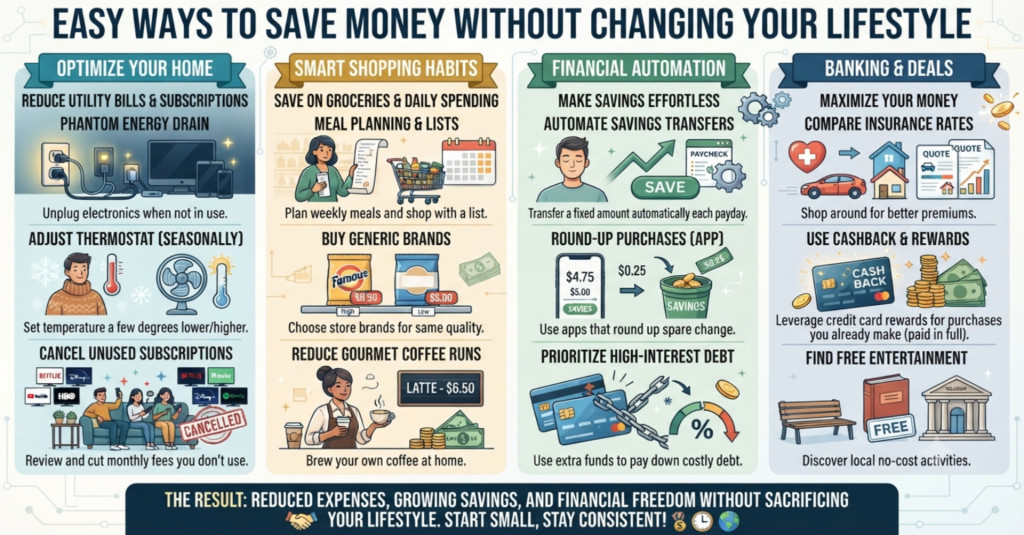
1. Automate Your Savings
One of the easiest ways to save money is to make saving automatic.
Instead of waiting until the end of the month, schedule automatic transfers from your checking account to your savings account.
Consequently, you’ll build savings consistently without having to think about it.
2. Review Your Subscriptions
Many households pay for subscriptions they rarely use.
Take time to review recurring charges such as:
- Video streaming services
- Music subscriptions
- Fitness memberships
- Cloud storage
- Software subscriptions
Furthermore, canceling even one or two unused services can create noticeable monthly savings.
3. Shop With a Grocery List
Impulse purchases often increase grocery bills.
Therefore, creating a shopping list before visiting the store helps you stay focused on what you actually need.
Additionally, planning meals in advance can reduce food waste while keeping grocery costs under control.
4. Compare Insurance Rates Regularly
Insurance premiums often change over time.
Instead of automatically renewing every policy, compare quotes periodically for:
- Auto insurance
- Homeowners insurance
- Renters insurance
- Life insurance
As a result, you may find similar coverage at a lower cost.
5. Use Rewards and Cashback Programs
Many retailers and financial institutions offer rewards programs.
When used responsibly, cashback offers and loyalty programs can reduce the cost of everyday purchases.
However, avoid spending extra money simply to earn rewards.
6. Reduce Energy Waste at Home
Small improvements in energy use can lower utility bills.
Simple ideas include:
- Turning off unused lights
- Adjusting your thermostat
- Using energy-efficient light bulbs
- Unplugging unused electronics
Consequently, these habits may reduce monthly utility expenses without affecting your daily routine.
7. Pay Bills on Time
Late fees increase your monthly expenses unnecessarily.
Therefore, consider setting up automatic payments or reminders for recurring bills.
Paying on time also supports healthy financial habits and may help protect your credit profile.
8. Track Your Spending
You don’t need to eliminate every discretionary purchase.
Instead, simply knowing where your money goes often leads to smarter spending decisions.
Reviewing your monthly transactions can help identify unnecessary expenses that are easy to reduce without affecting your lifestyle.
9. Take Advantage of Free Financial Tools
Managing your money doesn’t have to be complicated.
Fortunately, many free budgeting and expense-tracking tools can help you monitor your finances more effectively.
These tools can help you:
- Track spending
- Monitor savings goals
- Review monthly budgets
- Identify recurring expenses
Consequently, better financial visibility often leads to smarter spending decisions.
10. Avoid Lifestyle Inflation
As your income increases, it’s tempting to spend more.
However, increasing every aspect of your lifestyle can make it harder to build savings.
Instead, consider directing part of every raise or bonus toward:
- Emergency savings
- Retirement accounts
- Investment goals
- Debt repayment
As a result, you improve your financial future without sacrificing your current lifestyle.
11. Review Recurring Bills Regularly
Many monthly bills increase gradually over time.
Therefore, review expenses such as:
- Internet service
- Mobile phone plans
- Streaming subscriptions
- Insurance policies
Comparing providers and negotiating better rates may lower your monthly costs while allowing you to keep the same services.
12. Make Saving a Routine
Saving money is easier when it becomes part of your regular financial routine.
Instead of saving only when you have extra cash, include savings as a fixed monthly expense in your budget.
Furthermore, consistent saving often produces better long-term results than making occasional large deposits.
Common Savings Mistakes to Avoid
Saving money becomes easier when you avoid common financial mistakes.
Waiting Until the End of the Month to Save
Many people save whatever remains after paying bills.
Instead, save first and spend what’s left.
This approach helps build savings more consistently.
Ignoring Small Purchases
Small daily expenses may seem insignificant.
However, repeated purchases can add up quickly over the course of a month.
Reviewing these transactions often reveals simple opportunities to save.
Keeping Unused Subscriptions
Recurring charges are easy to overlook.
Therefore, review your subscriptions every few months and cancel services you no longer use.
Shopping Without a Plan
Impulse purchases often increase spending.
Creating a shopping list and comparing prices beforehand can help you stay within your budget.
Smart Financial Habits That Support Long-Term Savings
Although saving money doesn’t require major sacrifices, consistent habits make a meaningful difference.
Consider incorporating these practices into your routine:
- Automate monthly savings.
- Review your budget regularly.
- Compare insurance providers annually.
- Plan meals before grocery shopping.
- Reduce energy waste at home.
- Pay bills on time.
- Track recurring expenses.
- Increase savings after every raise.
- Review financial goals each year.
- Build and maintain an emergency fund.
While each habit may seem modest on its own, together they can significantly improve your financial health over time.
Frequently Asked Questions
Can I save money without making major lifestyle changes?
Yes. Many people save by automating transfers, reducing unnecessary recurring expenses, planning purchases, comparing service providers, and reviewing their budgets regularly without changing their daily routines.
What’s the easiest way to start saving?
Automating transfers to a savings account is one of the simplest strategies because it removes the need to remember to save each month.
How often should I review my subscriptions?
Review recurring subscriptions at least every three to six months to ensure you’re only paying for services you actively use.
Why is tracking spending important?
Tracking expenses helps identify spending patterns, unnecessary purchases, and opportunities to save more without significantly affecting your lifestyle.
Can small savings really add up?
Absolutely. Consistently saving small amounts and reducing minor recurring expenses can create meaningful financial improvements over the long term.
Final Thoughts
Saving money doesn’t have to mean giving up the lifestyle you enjoy. Instead, small changes such as automating savings, reviewing recurring bills, reducing unnecessary expenses, and making more intentional purchasing decisions can strengthen your finances without requiring major sacrifices. Consequently, these simple adjustments often produce meaningful results over time.
Moreover, lasting financial success is usually built through consistency rather than drastic changes. By developing practical money habits and reviewing your financial plan regularly, you can continue enjoying your everyday life while steadily improving your financial future.
Above all, remember that every dollar saved creates new opportunities. Whether you’re building an emergency fund, preparing for retirement, paying down debt, or working toward another financial goal, consistent saving helps you move closer to greater financial security and long-term peace of mind.
Consumer Financial Protection Bureau – Budgeting and Saving