
 MOHAMMAD ABUBAKR
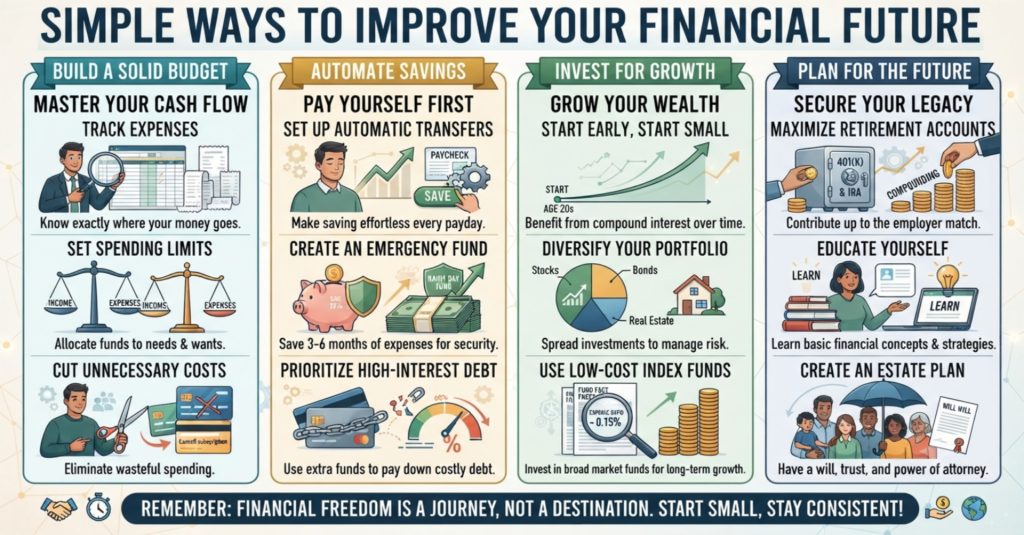
Improving your financial future doesn’t always require a higher income or complicated investment strategies. Instead, lasting financial progress often comes from small, consistent habits that strengthen your money management over time. Although meaningful results may not happen overnight, everyday financial decisions can have a significant impact on your long-term goals.
Fortunately, anyone can begin making positive financial changes. Whether you’re paying off debt, building savings, investing for retirement, or simply trying to manage your monthly budget more effectively, small improvements can create lasting benefits. Consequently, developing healthy financial habits today may help you achieve greater financial confidence tomorrow.
Moreover, financial success isn’t measured only by how much money you earn. It also depends on how well you save, spend, invest, and prepare for unexpected expenses. Therefore, focusing on practical strategies rather than quick fixes is often the smartest approach.
If you’re looking to strengthen your finances, these simple strategies can help you build a more secure financial future.
Why Financial Planning Is More Important Than Ever
1. Create a Realistic Monthly Budget
A budget provides a clear picture of where your money goes.
Instead of limiting your freedom, it helps you make intentional financial decisions.
A good budget should include:
- Housing expenses
- Groceries
- Transportation
- Savings
- Debt payments
- Entertainment
Furthermore, reviewing your budget each month helps you stay on track as your financial situation changes.
2. Pay Yourself First
Many people save whatever money remains after paying bills.
However, successful savers often reverse that process.
Instead, move money into savings as soon as you receive your paycheck.
Consequently, saving becomes a consistent habit rather than an occasional goal.
3. Build an Emergency Fund
Unexpected expenses can happen at any time.
Medical bills, vehicle repairs, and home maintenance can quickly affect your budget.
Therefore, maintaining emergency savings helps reduce financial stress while protecting your long-term goals.
Even small, regular contributions can make a meaningful difference over time.
4. Reduce High-Interest Debt
High-interest debt often slows financial progress.
Therefore, prioritize paying down expensive balances whenever possible.
Helpful strategies include:
- Paying more than the minimum payment
- Avoiding unnecessary borrowing
- Following a debt repayment plan
- Making payments on time
As a result, you’ll free up more income for saving and investing.
5. Save Consistently for Retirement
Retirement planning should begin long before retirement arrives.
Regular contributions to retirement savings may provide more time for long-term growth.
Moreover, increasing contributions whenever your income rises can strengthen your retirement outlook.
6. Invest for Long-Term Goals
Investing doesn’t require perfect timing.
Instead, many successful investors focus on consistent contributions over many years.
Common investment goals include:
- Retirement
- Financial independence
- College savings
- Wealth building
Consequently, patience often becomes one of the most valuable investing habits.
7. Track Your Spending
Knowing where your money goes is essential.
Reviewing your monthly spending helps identify:
- Unnecessary subscriptions
- Impulse purchases
- Convenience spending
- Recurring charges
Furthermore, tracking expenses makes it easier to adjust your budget and increase savings.
8. Continue Learning About Personal Finance
Financial knowledge grows over time.
Therefore, continue learning about topics such as:
- Budgeting
- Investing
- Taxes
- Retirement planning
- Insurance
As a result, you’ll be better prepared to make informed financial decisions throughout your life.
9. Increase Your Savings Whenever Your Income Grows
Receiving a raise or bonus creates an excellent opportunity to improve your financial future.
Instead of increasing every expense, consider directing part of your additional income toward:
- Emergency savings
- Retirement accounts
- Investment portfolios
- Debt repayment
Consequently, your financial progress can accelerate without requiring major lifestyle changes.
Moreover, increasing your savings rate over time strengthens your long-term financial security.
10. Protect Your Finances With the Right Insurance
Building wealth also means protecting it.
Therefore, review your insurance coverage regularly to ensure it still meets your needs.
Important types of coverage may include:
- Health insurance
- Auto insurance
- Homeowners or renters insurance
- Life insurance
- Disability insurance
Furthermore, comparing policies periodically may help you find better value while maintaining appropriate protection.
11. Set Clear Financial Goals
Without specific goals, it becomes difficult to measure progress.
Instead, establish realistic financial objectives with clear timelines.
Examples include:
- Paying off credit card debt
- Saving for a home
- Building a six-month emergency fund
- Increasing retirement contributions
- Growing long-term investments
As a result, your financial decisions become more focused and intentional.
12. Review Your Financial Plan Every Year
Your financial situation changes throughout life.
Career growth, family responsibilities, homeownership, and retirement planning all influence your financial priorities.
Therefore, reviewing your financial plan annually helps ensure your budget, savings, investments, and insurance continue supporting your long-term goals.
Additionally, regular reviews make it easier to identify opportunities for improvement before small issues become larger problems.
Common Financial Mistakes to Avoid
Even simple mistakes can slow your financial progress.
Fortunately, recognizing them early can help you stay on track.
Living Without a Budget
Without a budget, it’s easy to overspend without realizing it.
Instead, create a realistic spending plan and update it regularly.
Delaying Retirement Savings
Many people believe they’ll start saving later.
However, postponing retirement contributions reduces the amount of time your savings have to grow.
Starting early—even with modest contributions—can make a meaningful difference.
Carrying High-Interest Debt
Expensive debt reduces financial flexibility.
Therefore, paying down high-interest balances should remain a priority whenever possible.
Ignoring Financial Goals
Without measurable goals, it’s harder to stay motivated.
Review your progress regularly and adjust your plan whenever your circumstances change.
Smart Wealth-Building Strategies
Although building wealth takes time, these strategies can support long-term financial success:
- Save automatically from every paycheck.
- Increase retirement contributions regularly.
- Invest consistently for long-term goals.
- Build and maintain an emergency fund.
- Reduce high-interest debt.
- Diversify your investments.
- Track monthly spending.
- Review insurance coverage annually.
- Continue improving your financial knowledge.
- Reevaluate your financial plan every year.
While no strategy guarantees financial success, consistent habits often produce meaningful results over time.
Frequently Asked Questions
What’s the easiest way to improve my financial future?
Creating a budget, saving consistently, reducing high-interest debt, and investing regularly are among the simplest and most effective ways to strengthen your finances over time.
How much should I save each month?
The amount depends on your income, expenses, and financial goals. The most important step is saving consistently and increasing your contributions whenever possible.
Why is an emergency fund important?
Emergency savings help cover unexpected expenses such as medical bills, car repairs, or temporary income loss without relying heavily on high-interest debt.
How often should I review my financial plan?
Review your budget monthly and your overall financial plan at least once a year. Additionally, revisit your plan after major life events such as changing jobs, buying a home, or starting a family.
Can small financial habits really make a difference?
Absolutely. Small actions repeated consistently—such as saving automatically, tracking spending, and reducing unnecessary expenses—can significantly improve your long-term financial future.
Final Thoughts
Improving your financial future doesn’t require dramatic changes or perfect timing. Instead, it begins with simple habits such as budgeting carefully, saving consistently, reducing debt, investing for the long term, and reviewing your financial plan regularly. Consequently, these steady actions can strengthen your financial foundation and help you achieve greater confidence over time.
Moreover, financial success isn’t measured only by how much money you earn. Rather, it’s shaped by how intentionally you manage the resources you already have. By making thoughtful financial decisions today, you can create opportunities that benefit you for years to come.
Above all, remember that lasting financial progress is built one decision at a time. Every dollar you save, every debt payment you make, and every investment you contribute moves you closer to your goals. Stay consistent, remain patient, and continue learning, and you’ll be well positioned to build a more secure and rewarding financial future.
Consumer Financial Protection Bureau – Managing Your Money