
 MOHAMMAD ABUBAKR
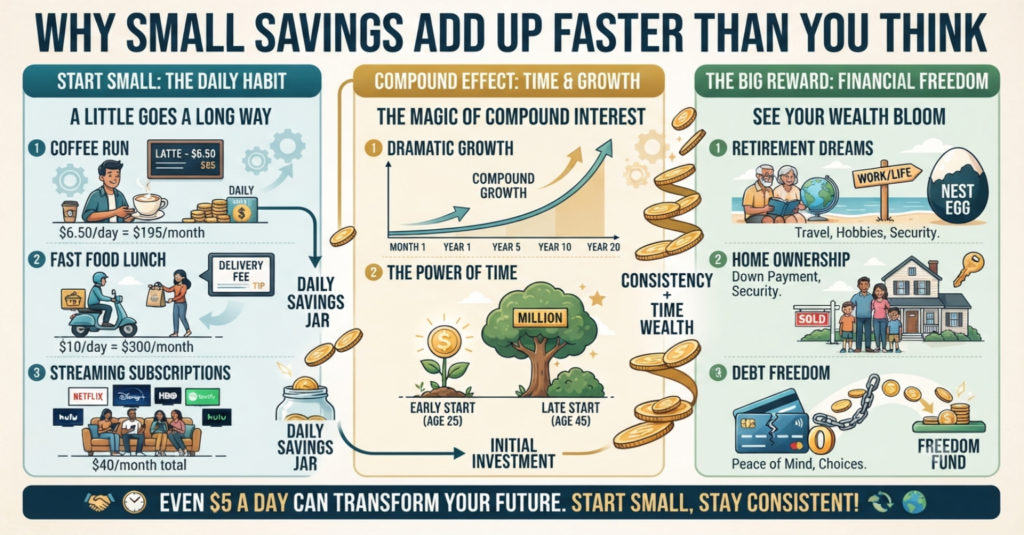
Many people believe they need to save hundreds of dollars each month to make meaningful financial progress. However, that’s not always true. In reality, small amounts saved consistently can grow into significant savings over time. Consequently, even modest financial habits can have a lasting impact on your future.
Fortunately, building savings doesn’t require a dramatic lifestyle change. Instead, it often begins with simple decisions that are easy to maintain. Moreover, consistent saving is usually more effective than making occasional large deposits that are difficult to sustain.
Whether you’re building an emergency fund, preparing for retirement, or saving for a major purchase, every dollar has a purpose. Therefore, focusing on steady progress rather than perfection can help you stay motivated and achieve your financial goals.
If you’ve ever wondered whether small savings really matter, these examples show why they can make a bigger difference than many people realize.
Easy Ways to Save Money Without Changing Your Lifestyle
1. Consistency Builds Momentum
Saving a small amount every week may not seem impressive at first.
However, consistent contributions create momentum over time.
Instead of waiting until you have extra money, save regularly—even if the amount is modest.
Consequently, saving becomes a habit rather than an occasional event.
2. Small Expenses Create Big Opportunities
Many everyday purchases seem insignificant.
Examples include:
- Coffee
- Snacks
- Impulse purchases
- Convenience store items
- Delivery fees
Although each expense may appear small, reducing just a few unnecessary purchases each week can free up money for savings.
Furthermore, redirecting those savings toward your financial goals can produce meaningful results over time.
3. Automatic Saving Makes Success Easier
Automation removes much of the effort from saving.
Instead of relying on willpower, schedule automatic transfers to your savings account after every paycheck.
As a result, you’ll save consistently without needing to remember each month.
4. Small Savings Reduce Financial Stress
Emergency savings provide more than financial security.
They also offer peace of mind.
Even a modest emergency fund can help cover:
- Car repairs
- Medical bills
- Home maintenance
- Unexpected travel
Therefore, small savings today can reduce financial pressure tomorrow.
5. Saving Helps You Avoid Expensive Debt
Unexpected expenses often lead people to rely on credit cards.
However, having savings available may reduce the need to borrow money.
Consequently, you’ll avoid paying unnecessary interest while protecting your long-term financial goals.
6. Every Financial Goal Starts With Small Steps
Large financial goals may seem overwhelming.
Nevertheless, every savings account begins with the first deposit.
Whether you’re saving for:
- A home
- Retirement
- Education
- Vacation
- Emergency expenses
small, consistent contributions move you closer to your goal.
7. Small Habits Become Lifelong Habits
Financial success is usually built through routine.
Saving a little each month reinforces positive money habits.
Moreover, once saving becomes part of your routine, increasing your contributions often feels much easier.
8. Progress Creates Motivation
Watching your savings grow can be encouraging.
Even modest progress reminds you that your efforts are working.
Therefore, tracking your savings regularly helps maintain motivation while reinforcing healthy financial habits.
9. Saving Becomes Easier as Your Income Grows
Small savings don’t have to remain small forever.
As your income increases, you can gradually increase the amount you save.
For example, you might save a portion of every:
- Pay raise
- Annual bonus
- Tax refund
- Side income
Consequently, your savings can grow faster without requiring major changes to your lifestyle.
Moreover, increasing contributions gradually often feels more manageable than making one large adjustment.
10. Small Savings Improve Financial Flexibility
Having money set aside gives you more options.
Instead of worrying about every unexpected expense, you can make financial decisions with greater confidence.
Savings may help you:
- Cover emergency expenses
- Avoid unnecessary borrowing
- Take advantage of opportunities
- Reach financial goals sooner
Therefore, every dollar you save increases your financial flexibility.
11. Saving Encourages Better Spending Decisions
Once saving becomes a habit, many people naturally become more intentional with their spending.
Instead of making impulse purchases, they begin asking whether a purchase truly supports their priorities.
As a result, saving and smart spending often reinforce one another.
Furthermore, thoughtful purchasing decisions make it easier to stay within your budget.
12. Long-Term Success Comes From Small Actions
Many people overestimate what they can accomplish in a single month.
However, they often underestimate what consistent habits can achieve over several years.
Therefore, focus on making steady progress instead of chasing quick financial wins.
Over time, those small actions can produce remarkable results.
Common Saving Mistakes to Avoid
Saving money becomes much easier when you avoid common mistakes.
Waiting for the Perfect Time to Start
Many people postpone saving because they believe they need more income.
However, beginning with a small amount today is often better than waiting indefinitely.
Saving Inconsistently
Large deposits made occasionally may feel rewarding.
Nevertheless, regular contributions usually create stronger long-term habits.
Automating your savings can help maintain consistency.
Spending Every Pay Raise
Higher earnings create an opportunity to improve your financial future.
Instead of increasing every expense, consider directing part of each raise toward savings or investments.
Ignoring Financial Goals
Saving becomes more meaningful when you have a purpose.
Whether you’re preparing for retirement, building an emergency fund, or saving for a home, clear goals help you stay motivated.
Smart Money-Saving Habits
Although saving doesn’t have to be complicated, consistent habits often produce the best results.
Consider adopting these practices:
- Automate your savings.
- Save a portion of every paycheck.
- Build an emergency fund.
- Review your budget every month.
- Track unnecessary spending.
- Increase savings after raises.
- Avoid high-interest debt.
- Review financial goals regularly.
- Compare recurring monthly expenses.
- Celebrate savings milestones.
While each habit may seem simple, together they can strengthen your long-term financial future.
Frequently Asked Questions
Do small savings really make a difference?
Yes. Saving small amounts consistently can build meaningful financial reserves over time while creating lasting money-management habits.
How much should I save each month?
The right amount depends on your income and financial goals. Even modest, consistent contributions are valuable and can be increased as your financial situation improves.
What’s the easiest way to save consistently?
Automating transfers from your checking account to your savings account after each paycheck is one of the simplest and most effective strategies.
Why is consistency more important than saving large amounts?
Consistent saving builds strong financial habits and keeps you making progress even during months when your budget is tighter.
Can small savings help me avoid debt?
Yes. An emergency fund built through regular saving can help cover unexpected expenses, reducing the need to rely on high-interest credit cards or loans.
Final Thoughts
Small savings may not seem impressive at first, yet they often become the foundation of long-term financial success. By saving consistently, spending more intentionally, and increasing contributions as your income grows, you can make meaningful progress without dramatically changing your lifestyle. Consequently, every small step you take today helps strengthen your financial future.
Moreover, successful saving isn’t about making perfect financial decisions every time. Instead, it’s about building habits that you can maintain year after year. Even modest contributions can grow into significant financial resources when combined with patience and consistency.
Above all, remember that every dollar saved has a purpose. Whether you’re preparing for unexpected expenses, working toward retirement, or pursuing another financial goal, small savings made consistently can create greater financial security, flexibility, and confidence over time.
Consumer Financial Protection Bureau – Budgeting and Saving