
 MOHAMMAD ABUBAKR
Investment trends come and go, but certain principles have remained valuable through changing markets, economic cycles, and generations of investors. Although new technologies, industries, and opportunities continue to emerge, the foundations of successful investing have changed very little. Consequently, understanding these timeless principles can help investors make better decisions regardless of current market conditions.
Fortunately, building long-term wealth doesn’t require predicting every market movement. Instead, it often depends on patience, discipline, consistency, and thoughtful planning. Moreover, investors who focus on proven strategies rather than short-term excitement are often better positioned to achieve their financial goals.
Every investor experiences periods of uncertainty. However, following reliable investing principles can reduce emotional decision-making while providing greater confidence during both rising and falling markets. Therefore, developing a disciplined investment approach may be one of the most valuable financial decisions you ever make.
Whether you’re investing for retirement, financial independence, or future family goals, these timeless principles can help strengthen your long-term strategy.
Why Patient Investors Often Come Out Ahead
1. Invest With a Long-Term Perspective
Successful investing rarely happens overnight.
Instead of focusing on daily market movements, many experienced investors maintain a long-term outlook.
Long-term investing allows you to:
- Stay focused on financial goals
- Reduce emotional decisions
- Benefit from long-term market growth
- Build disciplined investing habits
Consequently, patience often becomes one of the greatest advantages an investor can have.
2. Consistency Often Matters More Than Timing
Trying to predict the perfect moment to invest can be difficult.
Instead, investing consistently over time helps remove emotion from the process.
Regular investing may help you:
- Build wealth gradually
- Stay committed during market fluctuations
- Develop healthy financial habits
- Maintain long-term discipline
Furthermore, consistency often produces better long-term results than waiting for ideal market conditions.
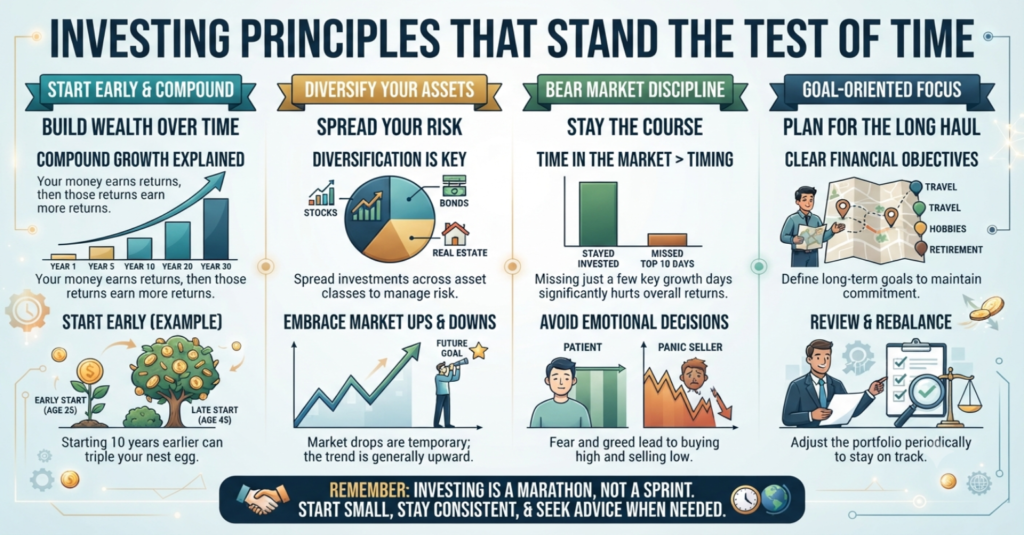
3. Diversification Helps Manage Risk
No single investment performs well all the time.
Therefore, spreading investments across different asset types may reduce overall portfolio risk.
A diversified portfolio may include investments that align with your:
- Financial goals
- Risk tolerance
- Investment timeline
As a result, diversification can help create a more balanced investment strategy.
4. Avoid Emotional Investing
Fear and excitement frequently influence investment decisions.
However, reacting emotionally to market headlines may lead to unnecessary buying or selling.
Instead, develop a written investment plan and follow it consistently.
Consequently, your decisions become guided by long-term objectives rather than short-term emotions.
5. Compounding Rewards Patience
One of the most powerful investing concepts is compounding.
As investment earnings remain invested, they may generate additional growth over time.
Therefore, giving your investments more time can significantly strengthen long-term wealth-building potential.
The earlier you begin investing, the more opportunity compounding has to work.
6. Continue Learning About Investing
Financial markets constantly evolve.
Therefore, successful investors continue improving their knowledge throughout their lives.
Useful topics include:
- Asset allocation
- Diversification
- Retirement planning
- Tax-efficient investing
- Risk management
Moreover, ongoing education supports more informed financial decisions.
7. Keep Investment Costs Under Control
Investment expenses may seem small initially.
However, fees can gradually reduce long-term returns.
Consequently, reviewing investment costs periodically helps ensure that more of your money remains invested for future growth.
8. Review Your Portfolio Regularly
A long-term investor doesn’t ignore their investments.
Instead, reviewing your portfolio periodically helps ensure it continues to match your financial goals.
Regular reviews may include:
- Checking diversification
- Reviewing asset allocation
- Evaluating investment performance
- Updating financial goals
Furthermore, small adjustments made over time may help keep your investment strategy aligned with changing circumstances.
9. Focus on Your Financial Goals, Not Market Headlines
Financial news changes every day.
Although staying informed is helpful, reacting to every headline can distract you from your long-term strategy.
Instead, remind yourself why you invested in the first place.
Your goals may include:
- Retirement planning
- Financial independence
- College savings
- Buying a home
- Building generational wealth
Consequently, keeping your goals at the center of every investment decision can help you remain disciplined during periods of market uncertainty.
10. Increase Your Investments as Your Income Grows
Building wealth becomes easier when your investments grow alongside your income.
Therefore, consider increasing your investment contributions whenever you receive:
- A salary increase
- A promotion
- A work bonus
- Additional freelance or business income
As a result, your portfolio can grow faster without requiring major changes to your daily lifestyle.
Moreover, gradually increasing contributions often feels more manageable than making one large adjustment.
11. Accept That Market Declines Are Part of Investing
No market moves upward forever.
Temporary declines have occurred throughout history, and they remain a normal part of investing.
Instead of viewing every downturn as a failure, many long-term investors see market volatility as part of the investing journey.
Consequently, maintaining perspective can reduce emotional decision-making during uncertain periods.
12. Build a Written Investment Plan
Successful investors rarely rely on emotions alone.
Instead, they create a clear investment strategy that outlines:
- Financial objectives
- Risk tolerance
- Investment timeline
- Savings goals
- Portfolio review schedule
Furthermore, having a written plan makes it easier to stay consistent when markets become unpredictable.
Common Investing Mistakes to Avoid
Even strong investment strategies can be weakened by avoidable mistakes.
Fortunately, recognizing these habits early can improve your long-term results.
Chasing Short-Term Trends
Popular investments often attract attention after prices have already increased.
Instead of following market hype, evaluate investments based on your long-term financial goals.
Trying to Predict Every Market Move
No one can consistently forecast short-term market performance.
Therefore, maintaining a disciplined investment strategy is often more effective than constantly changing direction.
Investing Without Diversification
Concentrating too much money in one company, industry, or asset increases risk.
Instead, diversify your portfolio to create a more balanced investment approach.
Forgetting to Review Your Portfolio
Long-term investing doesn’t mean ignoring your investments.
Review your portfolio periodically to ensure it still matches your goals, time horizon, and risk tolerance.
Smart Long-Term Investing Habits
Although every investor has different financial objectives, these habits have stood the test of time:
- Invest consistently.
- Stay focused on long-term goals.
- Diversify your portfolio.
- Increase contributions as your income grows.
- Keep investment costs under control.
- Review your portfolio annually.
- Avoid emotional decisions.
- Continue learning about investing.
- Build an emergency fund.
- Follow a written financial plan.
While no investment strategy guarantees future returns, these habits can help create a disciplined approach that supports long-term financial success.
Frequently Asked Questions
What is the most important investing principle?
Maintaining a long-term perspective is one of the most important principles because it helps investors avoid emotional decisions while allowing investments more time to grow.
Why is consistency important when investing?
Consistent investing helps build wealth gradually, encourages financial discipline, and reduces the pressure of trying to predict short-term market movements.
How often should I review my investment portfolio?
Review your portfolio at least once a year. Additionally, revisit it after major life events or significant changes to your financial goals.
Why is diversification considered a timeless investing principle?
Diversification helps spread investment risk across different asset types. As a result, it may reduce the impact of poor performance from any single investment.
Can new investors benefit from these principles?
Absolutely. These investing principles apply to both beginners and experienced investors because they focus on habits that support long-term financial growth rather than short-term market speculation.
Final Thoughts
Markets, technologies, and investment trends will continue to evolve. However, the core principles of successful investing have remained remarkably consistent for generations. Patience, diversification, disciplined saving, thoughtful planning, and regular portfolio reviews continue to provide a strong foundation for long-term financial success. Consequently, investors who follow these timeless principles are often better prepared to navigate changing market conditions.
Moreover, successful investing isn’t about predicting the next market winner or reacting to every headline. Instead, it’s about developing habits that you can maintain through both good markets and challenging ones. By investing consistently, increasing contributions over time, and staying committed to your financial goals, you create a strategy that can adapt as your life evolves.
Above all, remember that wealth is usually built gradually rather than instantly. Every investment you make today has the potential to support your future goals. By focusing on proven principles instead of short-term distractions, you can build greater financial confidence while creating a portfolio designed to stand the test of time.
U.S. Securities and Exchange Commission – Investor.gov