 MOHAMMAD ABUBAKR
Tax season doesn’t have to be stressful. However, many Americans wait until the last minute to organize documents, review deductions, and prepare their tax returns. As a result, they often spend more time searching for paperwork and may even miss valuable tax-saving opportunities.
Fortunately, developing a few smart tax filing habits can make the process much easier. Instead of rushing to meet filing deadlines, you can stay organized throughout the year and prepare your return with greater confidence. Consequently, you’ll reduce unnecessary stress while improving the accuracy of your tax filing.
Moreover, good tax habits aren’t only helpful during tax season. They also support better financial planning, improve recordkeeping, and make it easier to track income and expenses. Therefore, building these habits can benefit your finances all year long.
Whether you prepare your own taxes or work with a tax professional, these practical habits can help save both time and money.
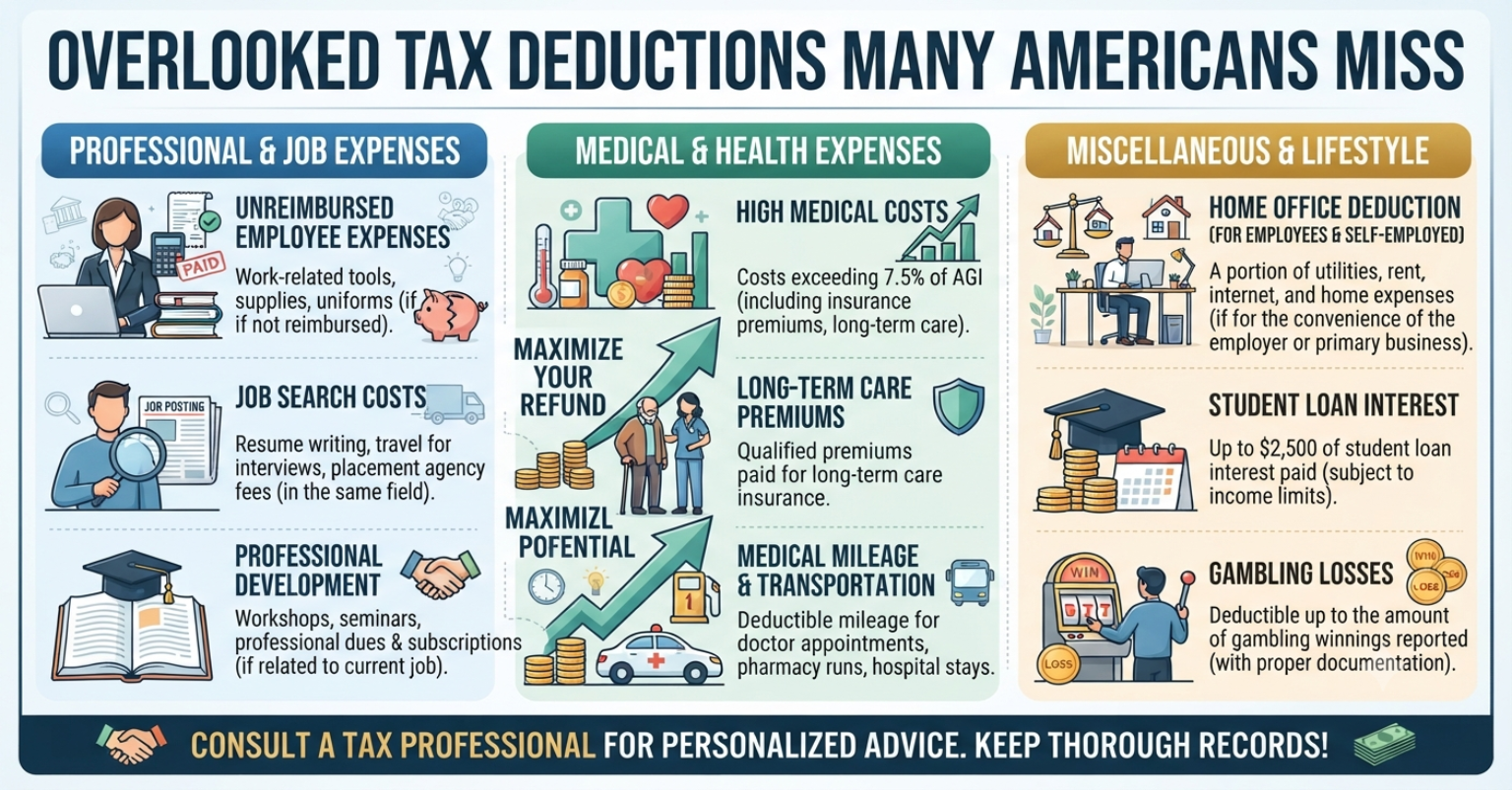
Overlooked Tax Deductions Many Americans Miss
Let’s explore the tax filing habits that can simplify tax season and help you avoid costly mistakes.
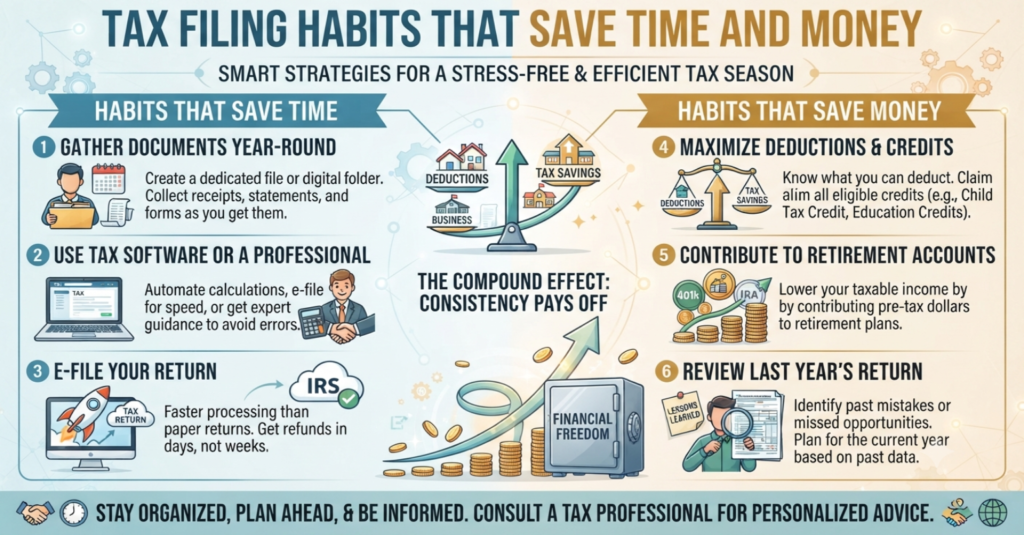
1. Organize Tax Documents Throughout the Year
One of the best ways to reduce tax season stress is to stay organized year-round.
Instead of collecting paperwork at the last minute, create a dedicated place for important tax documents.
Keep records such as:
- W-2 forms
- 1099 forms
- Mortgage statements
- Donation receipts
- Medical expense records
- Business expense receipts
Furthermore, organizing documents as you receive them makes filing much faster when tax season arrives.
2. Track Deductible Expenses Regularly
Many deductions are missed because taxpayers forget about eligible expenses.
Therefore, record deductible expenses as they occur rather than trying to remember them months later.
Examples may include:
- Charitable donations
- Business expenses
- Education expenses
- Medical expenses
- Retirement contributions
Consequently, you’ll have more complete records when preparing your return.
3. Review Your Tax Withholding
Receiving a large refund isn’t always a sign of effective tax planning.
Instead, review your tax withholding periodically to ensure it’s appropriate for your financial situation.
Changes that may affect withholding include:
- Marriage
- Divorce
- A new job
- Additional income
- Having children
Moreover, updating your withholding when needed can help reduce surprises at tax time.
4. File Before the Deadline
Waiting until the last few days before the filing deadline often creates unnecessary pressure.
Instead, begin preparing your return as soon as you receive your tax documents.
Filing early offers several benefits:
- More time to review your return
- Faster refunds for eligible taxpayers
- Lower risk of filing errors
- Less stress
Therefore, avoiding last-minute filing can improve both accuracy and peace of mind.
5. Double-Check Your Information
Simple mistakes can delay tax processing.
Before submitting your return, review:
- Your name
- Social Security number
- Filing status
- Income amounts
- Bank account information
- Tax calculations
Furthermore, taking a few extra minutes to verify these details may prevent unnecessary delays or corrections.
6. Save Digital Copies of Your Records
Paper documents can easily be misplaced.
Therefore, consider storing secure digital copies of important tax records.
Examples include:
- Tax returns
- W-2 forms
- 1099 forms
- Receipts
- Donation records
- Financial statements
As a result, you’ll have easier access to your records if questions arise in the future.
7. Separate Personal and Business Expenses
If you’re self-employed or own a small business, separating business and personal expenses is essential.
Using separate accounts helps:
- Simplify bookkeeping
- Improve recordkeeping
- Reduce filing errors
- Identify deductible expenses
Moreover, organized financial records can make tax preparation significantly easier.
8. Plan for Taxes All Year
Tax planning shouldn’t happen only during tax season.
Instead, review your financial situation throughout the year.
Consider:
- Retirement contributions
- Investment activity
- Charitable giving
- Business expenses
- Estimated tax payments
Consequently, you’ll have more opportunities to make informed financial decisions before the year ends.
9. Keep Track of Important Tax Deadlines
Missing a tax deadline can lead to unnecessary penalties and added stress.
Therefore, mark important tax dates on your calendar well in advance.
Important deadlines may include:
- Estimated tax payment dates
- IRA contribution deadlines
- Tax filing deadlines
- Extension filing deadlines
Furthermore, setting reminders several weeks before each deadline gives you plenty of time to gather documents and review your return.
10. Review Last Year’s Tax Return
Your previous tax return can serve as a helpful checklist.
Instead of starting from scratch every year, compare your current information with last year’s filing.
Look for:
- Income sources
- Investment accounts
- Retirement contributions
- Charitable donations
- Tax credits and deductions
Consequently, you’re less likely to overlook important information when preparing your new return.
11. Use Direct Deposit for Faster Refunds
If you’re expecting a tax refund, direct deposit is usually the quickest way to receive it.
Moreover, it reduces the chance of delays that may occur with mailed paper checks.
Before filing, verify that your:
- Bank routing number
- Account number
- Account type
are all entered correctly.
Taking a few extra minutes to review this information can help prevent processing delays.
12. Ask for Professional Help When Needed
Some tax situations are straightforward.
However, others involve investments, self-employment income, rental properties, or major life changes.
Therefore, seeking guidance from a qualified tax professional may help you understand complex tax rules and identify opportunities that fit your situation.
Professional advice may also reduce filing errors and improve your confidence before submitting your return.
Common Tax Filing Mistakes to Avoid
Avoiding common mistakes can save both time and money during tax season.
Waiting Until the Last Minute
Procrastination often leads to rushed decisions and missing paperwork.
Instead, begin organizing your records early.
As a result, you’ll have more time to review your return carefully.
Forgetting Important Tax Documents
Missing even one tax form can delay processing or require filing an amended return.
Before filing, confirm you’ve received all necessary documents from employers, banks, investment firms, and other income sources.
Overlooking Eligible Deductions and Credits
Many taxpayers claim the standard deduction without reviewing whether they qualify for additional tax benefits.
Therefore, examine your financial records carefully and determine which deductions or credits may apply under current IRS rules.
Entering Incorrect Personal Information
Simple mistakes such as an incorrect Social Security number, misspelled name, or inaccurate bank account details can delay processing.
Always review every section before submitting your return.
Ignoring Recordkeeping
Good records make tax filing much easier.
Store receipts, tax forms, and financial statements throughout the year instead of trying to locate them during tax season.
Consequently, you’ll spend less time searching for paperwork and more time reviewing your return for accuracy.
Smart Tax Habits for Every Year
Strong tax habits don’t begin in April.
Instead, they become part of your regular financial routine.
Consider these practices:
- Organize tax documents monthly.
- Save digital copies of important records.
- Track deductible expenses throughout the year.
- Review tax withholding after major life changes.
- Contribute to eligible retirement accounts.
- Record charitable donations immediately.
- Separate business and personal expenses.
- Monitor estimated tax payments if required.
- Review last year’s tax return before filing.
- Double-check every entry before submitting your return.
Although these habits require consistency, they can make future tax seasons significantly easier.
Frequently Asked Questions
When should I start preparing for tax season?
It’s best to prepare throughout the year by organizing documents, tracking expenses, and saving important records. Starting early helps reduce stress and minimizes the chance of overlooking valuable information.
What documents should I keep for tax filing?
Keep records such as W-2s, 1099s, mortgage statements, charitable donation receipts, medical expense records, retirement contribution confirmations, and any documents related to deductible business expenses.
Is electronic filing faster than mailing a paper return?
In many cases, electronically filed returns are processed more quickly than paper returns. Choosing direct deposit may also speed up eligible refunds.
How long should I keep tax records?
The amount of time depends on your specific situation and applicable IRS recordkeeping guidance. Review current IRS recommendations to determine how long you should retain your tax documents.
What’s the biggest tax filing mistake?
One of the most common mistakes is waiting until the last minute. Filing early gives you more time to review your return, gather missing documents, and correct potential errors before submission.
Final Thoughts
Developing smart tax filing habits can save both time and money while making every tax season less stressful. Instead of scrambling to collect paperwork at the last minute, stay organized throughout the year, track important financial records, and review your information carefully before filing. Consequently, you’ll reduce the likelihood of errors and improve the accuracy of your return.
Moreover, tax preparation is most effective when it’s viewed as a year-round process rather than a once-a-year task. Monitoring deductible expenses, reviewing your withholding, maintaining organized records, and staying informed about current tax rules can all contribute to better financial decisions. Over time, these habits can simplify filing and help you avoid unnecessary complications.
Above all, remember that every taxpayer’s financial situation is unique. Before claiming deductions, credits, or making significant tax decisions, confirm that you meet current IRS requirements or consult a qualified tax professional. By combining careful planning with consistent organization, you can approach tax season with greater confidence while supporting your long-term financial goals.
IRS – Filing Your Taxes