
 MOHAMMAD ABUBAKR
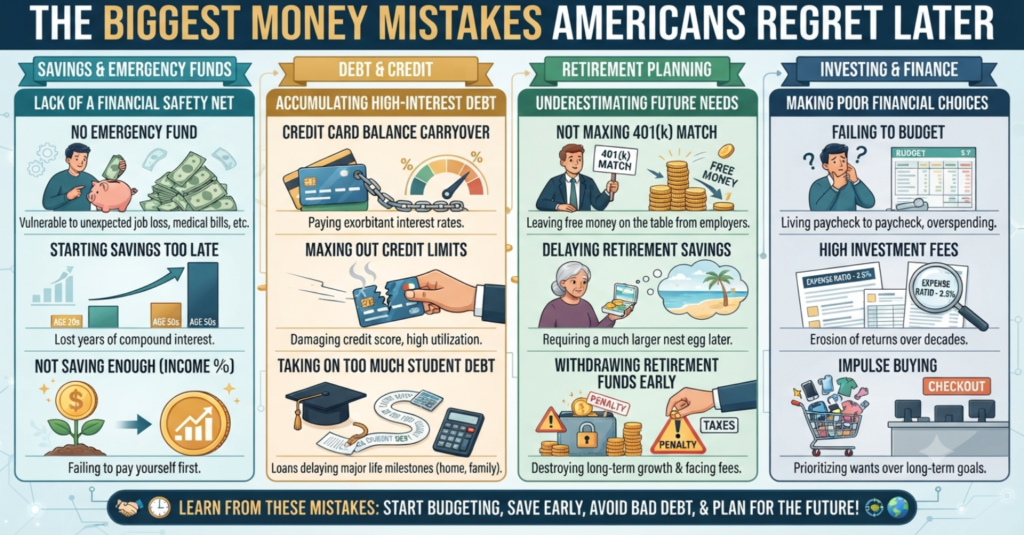
Most financial mistakes don’t happen overnight. Instead, they often develop through small decisions repeated over time. Although everyone makes money mistakes occasionally, some choices can have long-lasting effects on savings, debt, investments, and retirement planning. Therefore, learning from common financial regrets may help you avoid making similar mistakes.
Fortunately, improving your financial future doesn’t require perfection. Rather, it begins with recognizing unhealthy money habits and replacing them with smarter financial decisions. Consequently, even small changes today can make a meaningful difference over the years.
Moreover, many Americans share similar financial regrets regardless of income level. Delaying savings, carrying high-interest debt, overspending, and neglecting long-term planning are challenges that affect millions of households. Understanding these common mistakes can help you make more confident financial decisions.
Let’s explore the biggest money mistakes Americans often regret later in life.
Why Financial Security Matters More Than Ever
1. Waiting Too Long to Start Saving
Many people believe they’ll begin saving once they earn more money.
However, delaying savings often means missing valuable years of financial growth.
Instead, start saving consistently, even if the amount is small.
Consider saving for:
- Emergency expenses
- Retirement
- Major purchases
- Education
- Long-term investments
Furthermore, building the habit of saving early is often more important than the initial amount.
2. Carrying High-Interest Credit Card Debt
Credit cards can be useful financial tools when managed responsibly.
Nevertheless, carrying balances from month to month may lead to significant interest costs.
Therefore, try to:
- Pay balances in full whenever possible.
- Pay more than the minimum payment.
- Avoid unnecessary borrowing.
- Create a debt repayment plan.
Consequently, reducing high-interest debt can improve your monthly cash flow.
3. Living Beyond Your Means
Spending more than you earn may provide temporary satisfaction.
However, it often creates long-term financial stress.
Instead, create a realistic budget that allows you to:
- Cover essential expenses
- Save consistently
- Invest regularly
- Reduce debt
- Prepare for emergencies
Over time, living below your means can strengthen your financial stability.
4. Ignoring Emergency Savings
Unexpected expenses happen to almost everyone.
Medical bills, home repairs, and vehicle maintenance can quickly affect your finances.
Therefore, building an emergency fund should remain a top financial priority.
Even modest savings can help reduce reliance on high-interest debt during emergencies.
5. Delaying Retirement Planning
Retirement may seem far away.
However, waiting too long to begin saving often makes reaching retirement goals more difficult.
Many people benefit from contributing regularly to retirement accounts throughout their careers.
Consequently, consistent investing may provide more time for long-term growth.
6. Making Emotional Financial Decisions
Money decisions are often influenced by emotions.
For example, fear, excitement, or pressure from others can lead to costly mistakes.
Instead, pause before making major financial decisions.
Consider:
- Your budget
- Your long-term goals
- Your current financial obligations
- Future expenses
Thoughtful decisions usually produce better financial outcomes than impulsive reactions.
7. Not Tracking Monthly Spending
Many people underestimate how much they spend each month.
Small purchases can accumulate quickly.
Therefore, reviewing your spending regularly helps you identify:
- Unnecessary subscriptions
- Convenience purchases
- Dining expenses
- Entertainment costs
- Other recurring charges
As a result, you can redirect more money toward your financial goals.
8. Ignoring Insurance and Financial Protection
Many households focus only on saving and investing.
However, protecting your finances is equally important.
Review your:
- Health insurance
- Auto insurance
- Homeowners or renters insurance
- Life insurance
- Disability coverage
Furthermore, appropriate insurance coverage can reduce financial risk when unexpected events occur.
9. Trying to Keep Up With Other People’s Lifestyle
Comparing your finances to friends, neighbors, or social media influencers can become expensive.
Although buying a larger home, newer car, or luxury items may seem appealing, spending beyond your budget often creates unnecessary financial pressure.
Instead, build a lifestyle that matches your income and long-term goals.
Consequently, you’ll have more flexibility to save, invest, and prepare for unexpected expenses.
10. Avoiding Investing Because of Fear
Some people avoid investing because they’re worried about market fluctuations.
However, waiting for the “perfect” time may delay long-term wealth building.
Instead, focus on:
- Investing consistently
- Diversifying your portfolio
- Keeping a long-term perspective
- Reviewing investments periodically
Furthermore, patience and consistency often matter more than trying to predict short-term market movements.
11. Ignoring Regular Financial Reviews
Many Americans create a budget once and rarely look at it again.
Nevertheless, your financial situation changes over time.
A yearly financial review allows you to:
- Adjust your budget
- Update savings goals
- Review insurance coverage
- Monitor investments
- Evaluate debt repayment progress
As a result, your financial plan remains aligned with your current needs.
12. Failing to Set Clear Financial Goals
Without specific goals, it’s easy to spend money without a clear direction.
Therefore, establish both short-term and long-term financial objectives.
Examples include:
- Building a six-month emergency fund
- Paying off credit card debt
- Saving for a home down payment
- Increasing retirement contributions
- Creating an education savings fund
Moreover, measurable goals help you stay motivated while tracking your financial progress.
Smart Financial Habits That Prevent Costly Mistakes
Building wealth usually depends on consistent habits rather than one-time decisions.
Consider making these practices part of your routine:
- Create and follow a monthly budget.
- Save automatically every payday.
- Build an emergency fund.
- Pay credit card balances on time.
- Reduce high-interest debt.
- Invest consistently for long-term goals.
- Review your financial plan annually.
- Compare insurance coverage regularly.
- Track your monthly spending.
- Continue improving your financial knowledge.
Although each habit appears simple, together they can significantly improve your long-term financial health.
Common Money Myths
Misunderstanding personal finance can lead to costly decisions.
Here are a few common myths.
“I’ll Start Saving When I Earn More”
Higher income doesn’t automatically lead to higher savings.
Instead, developing strong saving habits early often produces better long-term results.
“Debt Is Just a Normal Part of Life”
Some debt may be manageable.
However, carrying large amounts of high-interest debt can slow financial progress and reduce future opportunities.
“Investing Is Only for Wealthy People”
Today, many investment accounts allow people to begin investing with relatively small amounts.
Consequently, consistent investing has become more accessible than ever.
“Budgeting Limits My Freedom”
A budget doesn’t eliminate freedom.
Instead, it helps ensure your money supports your priorities and long-term goals.
Frequently Asked Questions
What’s the biggest financial mistake people regret?
Many people regret delaying saving and investing because time plays an important role in long-term financial growth.
Why is an emergency fund so important?
Emergency savings can help cover unexpected expenses such as medical bills, vehicle repairs, or temporary job loss without relying heavily on high-interest debt.
How often should I review my finances?
Review your budget every month and your overall financial plan at least once each year. Additionally, revisit your plan after major life events such as changing jobs, getting married, or buying a home.
Is it ever too late to improve your finances?
No. Although starting early provides advantages, improving your financial habits at any stage can strengthen your long-term financial outlook.
What’s the best way to avoid money mistakes?
Create a budget, save consistently, reduce unnecessary debt, invest for the long term, and review your financial progress regularly. These habits can help you avoid many common financial regrets.
Final Thoughts
The biggest money mistakes Americans regret later are rarely caused by a single decision. Instead, they usually result from small habits that continue unchecked over many years. Delaying savings, carrying expensive debt, overspending, and avoiding long-term planning can gradually weaken your financial foundation. Fortunately, recognizing these patterns early gives you the opportunity to make meaningful changes.
Moreover, building financial security doesn’t require perfect timing or a high income. Consistent saving, responsible spending, thoughtful investing, and regular financial reviews can create lasting progress regardless of your current situation. Even modest improvements made consistently can produce significant results over time.
Above all, remember that every financial decision is an opportunity to move closer to your goals. By learning from common money mistakes and focusing on healthy financial habits, you can reduce future regrets, strengthen your financial confidence, and build a more secure future for yourself and your family.
Consumer Financial Protection Bureau – Managing Your Money