 MOHAMMAD ABUBAKR
Financial security has become a top priority for many Americans. Rising living costs, changing interest rates, economic uncertainty, and unexpected life events have made it clear that a strong financial foundation is more valuable than ever. Therefore, building financial security isn’t just about having more money—it’s about creating stability and preparing for the future.
Fortunately, financial security is achievable for people at many income levels. Instead of relying on a single strategy, it comes from developing consistent financial habits such as budgeting, saving, investing, and managing debt responsibly. Consequently, even small improvements can strengthen your financial position over time.
Moreover, financial security provides more than peace of mind. It gives you greater flexibility when facing unexpected expenses, career changes, or major life decisions. Whether you’re saving for retirement, buying a home, or simply trying to reduce financial stress, having a solid financial plan can help you move forward with confidence.
The good news is that building financial security doesn’t happen overnight. Rather, it’s the result of steady progress and smart financial decisions made consistently over many years.
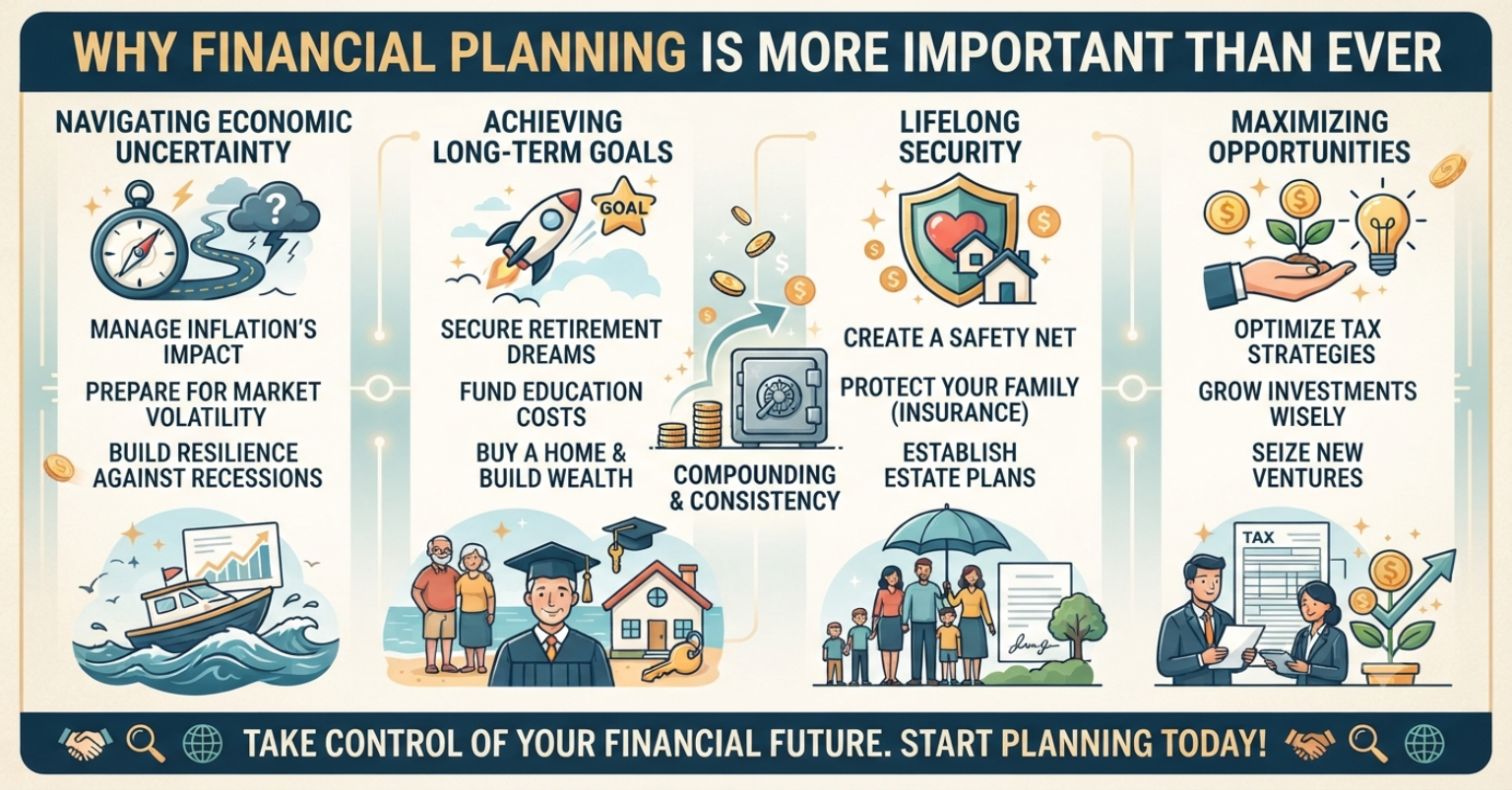
Why Financial Planning Is More Important Than Ever
Let’s explore why financial security matters more than ever and how you can strengthen your financial future.
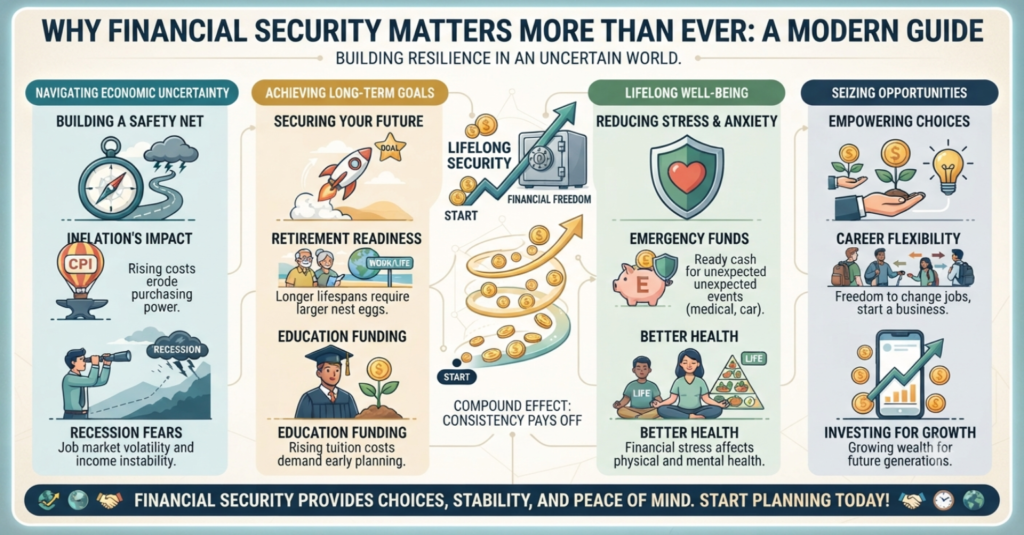
1. It Helps You Handle Unexpected Expenses
Unexpected expenses are part of life.
Medical bills, car repairs, home maintenance, or temporary job loss can affect almost anyone.
Therefore, having financial security begins with preparing for emergencies.
An emergency fund may help cover:
- Medical expenses
- Vehicle repairs
- Home repairs
- Unexpected travel
- Temporary income loss
As a result, you may avoid relying on high-interest debt during difficult times.
2. It Reduces Financial Stress
Money concerns are one of the most common sources of stress.
However, having a financial plan and emergency savings can improve your confidence during uncertain situations.
Financial security often comes from knowing you have:
- A monthly budget
- Savings for emergencies
- Retirement contributions
- Manageable debt
- Long-term financial goals
Consequently, you’re better prepared to make thoughtful financial decisions instead of reacting under pressure.
3. It Supports Long-Term Goals
Financial security isn’t only about today’s expenses.
Instead, it creates opportunities for future success.
Common financial goals include:
- Buying a home
- Saving for retirement
- Funding education
- Starting a business
- Building investments
Moreover, steady financial progress makes these goals feel more achievable over time.
4. It Improves Financial Flexibility
Life changes quickly.
Career opportunities, family needs, and economic conditions can all affect your finances.
Therefore, building financial security gives you greater flexibility to adapt when circumstances change.
For example, savings may help you manage:
- Career transitions
- Relocation expenses
- Family emergencies
- Major purchases
- Temporary income changes
5. It Encourages Better Spending Decisions
When you have clear financial goals, spending becomes more intentional.
Instead of making impulse purchases, you’re more likely to evaluate whether a purchase fits your budget.
Furthermore, thoughtful spending allows more money to be directed toward savings and investments.
Over time, these habits can strengthen your overall financial position.
6. It Makes Investing Easier
Many people feel uncertain about investing.
However, financial security often begins with creating a stable financial foundation first.
After building emergency savings and managing debt responsibly, many investors feel more confident contributing regularly toward long-term investments.
Consequently, investing becomes part of a balanced financial strategy rather than a source of unnecessary stress.
7. It Helps You Manage Debt Wisely
Debt can limit financial flexibility if it isn’t managed carefully.
Therefore, reducing high-interest balances should remain an important financial goal.
A strong financial plan helps you:
- Prioritize debt repayment
- Avoid unnecessary borrowing
- Improve monthly cash flow
- Increase savings
- Strengthen long-term financial stability
8. It Builds Confidence During Economic Uncertainty
Economic conditions continue to change.
Inflation, employment trends, and market volatility all influence household finances.
Nevertheless, financial security allows you to respond with greater confidence.
Instead of reacting emotionally, you can rely on your financial plan, savings, and long-term goals to guide your decisions.
9. It Helps Protect Your Family
Financial security isn’t only about your own future.
It also helps provide stability for the people who depend on you.
A strong financial plan may include:
- Emergency savings
- Life insurance
- Health insurance
- Estate planning
- Updated beneficiary information
Furthermore, reviewing these areas regularly can help your family navigate unexpected events with greater financial confidence.
10. It Gives You More Freedom to Make Life Decisions
Financial security creates choices.
Instead of making decisions based only on immediate financial pressure, you can focus on opportunities that align with your goals.
For example, financial stability may make it easier to:
- Change careers
- Start a business
- Return to school
- Relocate
- Reduce work hours before retirement
Consequently, your finances become a tool that supports your goals rather than a constant source of worry.
11. It Encourages Long-Term Wealth Building
Building wealth rarely happens overnight.
Instead, it often results from years of consistent financial habits.
These habits may include:
- Saving regularly
- Investing consistently
- Increasing retirement contributions
- Reducing unnecessary debt
- Reviewing financial goals
Moreover, staying focused on long-term progress can help you avoid emotional financial decisions during periods of market uncertainty.
12. It Helps You Prepare for Retirement
Retirement planning is a major part of financial security.
The earlier you begin preparing, the more time your savings and investments may have to grow.
Therefore, consider reviewing your retirement strategy each year.
You may also benefit from:
- Increasing contributions after raises
- Diversifying investments
- Monitoring investment costs
- Adjusting goals as retirement approaches
As a result, you can build a stronger foundation for your future lifestyle.
Common Financial Mistakes to Avoid
Avoiding common mistakes can strengthen your financial security over time.
Living Beyond Your Means
A higher income doesn’t automatically lead to financial stability.
Instead, spending less than you earn creates more opportunities to save and invest.
Maintaining a realistic budget can help you stay on track.
Neglecting Emergency Savings
Unexpected expenses can happen at any time.
Without emergency savings, many households turn to high-interest debt.
Building an emergency fund gradually can help reduce this risk.
Delaying Retirement Planning
Waiting too long to save for retirement reduces the time available for long-term growth.
Even modest contributions made consistently can have a meaningful impact over several decades.
Ignoring Your Financial Plan
A financial plan should change as your life changes.
Review it after major events such as:
- Marriage
- Divorce
- A new job
- Buying a home
- Having children
Regular updates help ensure your financial strategy continues to support your goals.
Smart Financial Habits That Build Security
Financial security grows through consistent habits rather than one-time decisions.
Consider making these practices part of your routine:
- Create a monthly budget.
- Save automatically every payday.
- Build and maintain an emergency fund.
- Pay bills on time.
- Reduce high-interest debt.
- Invest consistently.
- Increase savings after raises.
- Review your financial plan annually.
- Track your spending regularly.
- Continue learning about personal finance.
Although these habits require discipline, they can strengthen your financial future year after year.
Frequently Asked Questions
What does financial security mean?
Financial security generally means having enough resources to cover everyday expenses, prepare for emergencies, and work toward long-term financial goals without constant financial stress.
Why is financial security important today?
Rising living costs, economic uncertainty, and unexpected expenses have made financial preparedness more important than ever. A strong financial foundation can help households manage challenges with greater confidence.
How can I improve my financial security?
Start by creating a budget, building an emergency fund, paying down high-interest debt, saving consistently, and investing for long-term goals. Reviewing your financial plan regularly can also help you stay on track.
How much should I keep in an emergency fund?
The right amount depends on your income, expenses, and personal circumstances. Many financial professionals recommend saving enough to cover several months of essential living expenses.
Is financial security only about having a high income?
No. Financial security depends more on how you manage your money than how much you earn. Consistent saving, responsible spending, and thoughtful financial planning often matter more than income alone.
Final Thoughts
Financial security matters more than ever because today’s economic environment can change quickly. Rising prices, shifting job markets, and unexpected expenses make it essential to have a financial plan that supports both your current needs and future goals. Rather than waiting for the perfect financial situation, taking small, consistent steps today can create lasting stability.
Moreover, financial security isn’t built through one major decision. Instead, it grows from everyday habits such as budgeting, saving, investing, and managing debt responsibly. Over time, these actions can improve your financial flexibility, reduce stress, and help you prepare for life’s uncertainties.
Above all, remember that financial security looks different for everyone. The best approach is one that fits your income, goals, and lifestyle while allowing you to adapt as circumstances change. By staying committed to healthy financial habits and reviewing your progress regularly, you can build a stronger financial future with greater confidence.
Consumer Financial Protection Bureau – Managing Your Money