 MOHAMMAD ABUBAKR
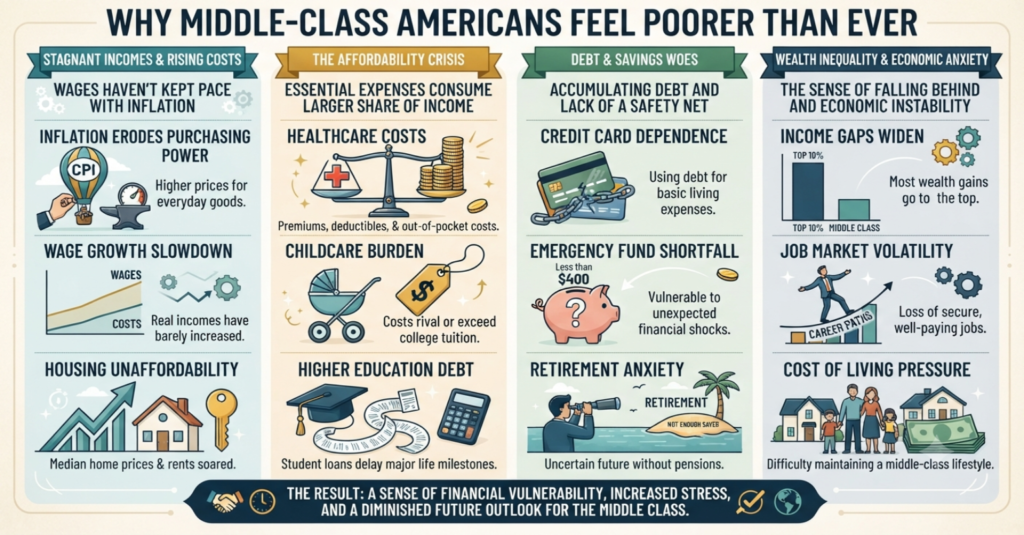
For many middle-class Americans, earning a steady income no longer provides the same sense of financial comfort it once did. Although wages have increased for some workers, many households continue to feel pressure from higher living costs, rising debt, and changing economic conditions. As a result, families often feel like their money doesn’t go as far as it used to.
Fortunately, feeling financially stretched doesn’t always mean you’re making poor financial decisions. Instead, a combination of economic trends and personal expenses has changed the way many people experience their finances. Consequently, even households with stable jobs and regular incomes may find it harder to save, invest, or reach long-term financial goals.
Moreover, today’s middle-class families often face expenses that have grown faster than their incomes. Housing, healthcare, childcare, insurance, and transportation costs can consume a significant portion of monthly budgets. Therefore, understanding these financial pressures is the first step toward making informed decisions and adapting to changing circumstances.
Let’s examine the key reasons many middle-class Americans feel financially squeezed.
Financial Changes That Could Affect Every Household
1. Everyday Living Costs Continue to Rise
Many essential expenses have become more expensive over the past several years.
Families often spend more on:
- Groceries
- Housing
- Utilities
- Transportation
- Healthcare
Therefore, even when income increases, higher everyday costs can reduce purchasing power.
Furthermore, small price increases across multiple categories can add up quickly over the course of a year.
2. Housing Takes a Larger Share of Income
Housing is one of the biggest expenses for most households.
Whether renting or owning a home, many families are paying more for:
- Rent
- Mortgage payments
- Property taxes
- Home insurance
- Maintenance
Consequently, less income remains available for savings, investing, or discretionary spending.
3. Higher Interest Rates Affect Monthly Budgets
Interest rates influence many aspects of personal finance.
They can increase the cost of:
- Credit card balances
- Auto loans
- Personal loans
- Home equity loans
As a result, households carrying debt may see larger monthly payments, leaving less room in their budgets for other priorities.
4. Healthcare Costs Continue to Climb
Healthcare remains a significant financial concern for many families.
Expenses may include:
- Insurance premiums
- Prescription medications
- Doctor visits
- Deductibles
- Out-of-pocket medical costs
Moreover, unexpected medical expenses can place additional pressure on household finances, even for families with insurance coverage.
5. Saving Has Become More Challenging
Many households want to save more.
However, rising monthly expenses often make that goal more difficult.
Instead of contributing regularly to:
- Emergency savings
- Retirement accounts
- Investment portfolios
some families focus first on covering essential living expenses.
Consequently, long-term financial goals may be delayed.
6. Childcare and Education Costs Add Pressure
Families with children often face significant ongoing expenses.
These may include:
- Childcare
- School supplies
- Extracurricular activities
- College savings
- Educational technology
Therefore, balancing today’s expenses with future education goals can become increasingly challenging.
7. Lifestyle Expectations Have Changed
Modern lifestyles often include expenses that were less common in previous generations.
Examples include:
- Multiple streaming services
- Internet and mobile plans
- Subscription memberships
- Digital devices
- Software services
Although each expense may seem manageable on its own, together they can noticeably affect monthly budgets.
8. Financial Goals Are Becoming More Expensive
Many traditional financial milestones now require larger financial commitments.
Buying a home, saving for retirement, paying for college, and building an emergency fund all require significant planning.
Consequently, some middle-class families feel they’re working just as hard while making slower financial progress than previous generations.
9. Retirement Planning Requires Larger Savings
Retirement has become more expensive for many Americans.
Longer life expectancy, healthcare costs, and inflation mean many households need larger retirement savings than previous generations.
Therefore, many middle-class families are increasing retirement contributions while also managing today’s expenses.
Balancing both priorities can be challenging.
10. Emergency Expenses Can Disrupt Any Budget
Even well-planned budgets can be affected by unexpected costs.
Examples include:
- Major vehicle repairs
- Home maintenance
- Medical emergencies
- Temporary job loss
- Family emergencies
Consequently, households without emergency savings may need to rely on credit cards or loans, creating additional financial pressure.
11. Economic Uncertainty Affects Financial Confidence
Many families feel uncertain about the future.
News about inflation, interest rates, employment trends, and market volatility can influence financial decisions.
As a result, some households delay large purchases or increase their savings to prepare for changing economic conditions.
Although uncertainty is normal, reviewing your financial plan regularly can help you stay focused on long-term goals.
12. Income Growth Doesn’t Always Match Rising Expenses
Some workers have received higher wages in recent years.
However, higher income doesn’t always translate into greater purchasing power.
When housing, healthcare, groceries, insurance, and transportation costs rise at the same time, pay increases may not fully offset those additional expenses.
Therefore, many middle-class families still feel financially stretched despite earning more than they did a few years ago.
Common Money Mistakes to Avoid
Economic conditions may be outside your control.
Nevertheless, avoiding these financial mistakes can improve your long-term financial health.
Ignoring a Monthly Budget
Without a budget, it’s difficult to understand where your money goes.
Therefore, review your income and expenses every month to identify opportunities to save.
Carrying High-Interest Debt
High-interest debt can consume a growing share of your income.
Instead, prioritize paying down expensive balances while avoiding unnecessary borrowing.
Over time, reducing debt can improve your monthly cash flow.
Delaying Emergency Savings
Many people postpone saving until their finances feel more comfortable.
However, unexpected expenses rarely wait.
Building an emergency fund gradually can provide valuable financial protection.
Forgetting Long-Term Goals
Today’s expenses are important.
Nevertheless, retirement, education, and future healthcare costs also deserve regular attention.
Review your long-term goals each year and adjust your savings plan as needed.
Smart Financial Habits for Middle-Class Families
Small financial improvements often create meaningful long-term results.
Consider adopting these habits:
- Create and follow a monthly budget.
- Build an emergency fund.
- Pay down high-interest debt.
- Save automatically every payday.
- Increase retirement contributions when possible.
- Review subscriptions and recurring expenses.
- Compare insurance policies periodically.
- Invest consistently for long-term goals.
- Track your spending every month.
- Review your financial plan annually.
Although these habits require consistency, they can strengthen your financial position over time.
Frequently Asked Questions
Why do many middle-class families feel financially stretched?
Many households are facing higher costs for housing, groceries, healthcare, transportation, insurance, and childcare. Even when income increases, these rising expenses can reduce purchasing power.
Does earning more always improve financial security?
Not necessarily. If living costs increase at a similar or faster pace than income, families may still feel financial pressure despite receiving raises.
How can middle-class families improve financial stability?
Creating a budget, reducing high-interest debt, building emergency savings, investing consistently, and reviewing financial goals regularly can strengthen long-term financial security.
Should families stop investing during uncertain economic periods?
Investment decisions depend on individual goals, time horizon, and risk tolerance. Many long-term investors continue investing consistently while reviewing their portfolios periodically.
What’s the biggest financial challenge facing middle-class households?
For many families, balancing rising everyday expenses with long-term goals such as retirement, homeownership, education, and emergency savings remains one of the greatest financial challenges.
Final Thoughts
Many middle-class Americans feel poorer than ever because the cost of everyday life has increased across multiple areas at the same time. Housing, healthcare, groceries, insurance, childcare, and transportation all compete for a larger share of household income. Consequently, even families with stable jobs and higher salaries may find it more difficult to save, invest, or achieve long-term financial goals.
Moreover, feeling financially stretched doesn’t necessarily indicate poor money management. Broader economic conditions have changed the financial landscape, making careful budgeting and long-term planning more important than ever. By focusing on consistent saving, responsible debt management, and thoughtful spending, households can improve their financial resilience despite ongoing challenges.
Above all, remember that financial progress is often gradual. Small, consistent actions—such as building an emergency fund, reducing unnecessary expenses, increasing retirement contributions, and reviewing your financial plan regularly—can strengthen your financial future over time. While economic conditions may continue to evolve, healthy financial habits remain one of the most effective ways to build lasting financial security.
Consumer Financial Protection Bureau – Managing Your Money