 MOHAMMAD ABUBAKR
Introduction
Starting a business is an exciting goal.
However, one of the first questions most entrepreneurs ask is, “How much money do I actually need?”
The answer depends on the type of business you want to build.
Some online businesses can launch with just a few hundred dollars.
Others may require thousands of dollars for equipment, inventory, or commercial space.
Instead of focusing on one magic number, it’s better to understand the costs involved and create a realistic budget.
In this guide, you’ll learn how to estimate startup expenses, avoid overspending, and prepare your business for long-term success.
There Is No One-Size-Fits-All Budget
Every business has different financial needs.
For example, a freelance graphic designer can often start with a laptop and internet connection.
On the other hand, opening a restaurant may require significant investments in equipment, permits, furniture, and employees.
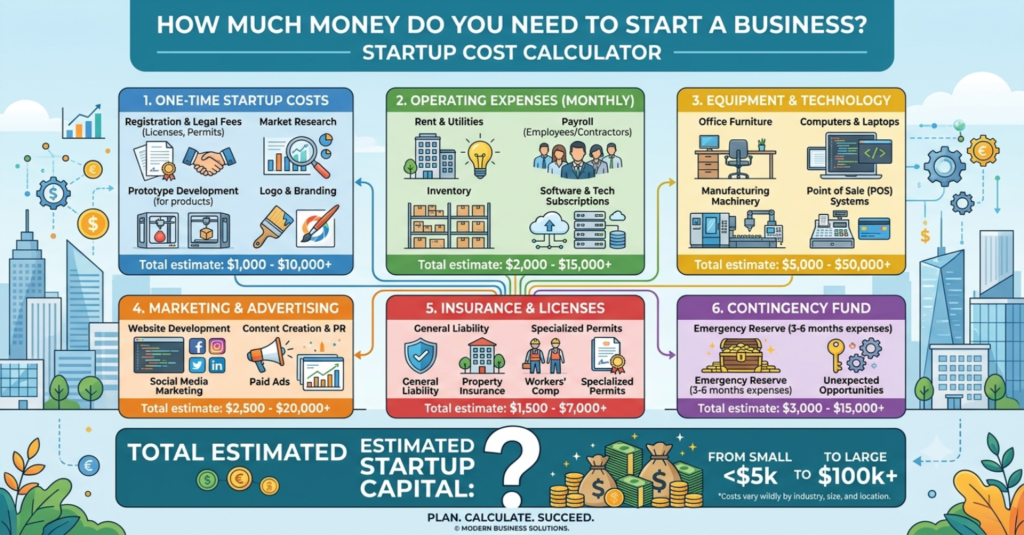
Startup costs usually depend on factors such as:
- Industry
- Business model
- Location
- Number of employees
- Equipment requirements
- Inventory needs
Understanding these factors helps you create a more accurate business budget.
1. Business Registration Costs
Before opening your doors, you may need to register your business.
Common registration expenses include:
- Business name registration
- LLC or corporation filing fees
- Business licenses
- Local permits
- Employer Identification Number (EIN), if applicable
Registration fees vary by state.
Research your local requirements before creating your budget.
2. Equipment and Technology
Most businesses need some type of equipment.
Depending on your industry, this may include:
- Computers
- Laptops
- Office furniture
- Manufacturing equipment
- Cleaning equipment
- Mobile devices
- Point-of-sale systems
Technology expenses may also include:
- Accounting software
- Project management tools
- Email services
- Website hosting
- Security software
Purchase only what your business truly needs during the early stages.
Additional upgrades can come later.
3. Website and Online Presence
Today’s customers expect businesses to have a professional online presence.
Even local companies benefit from having an easy-to-use website.
Your startup budget may include:
- Domain registration
- Website hosting
- Website design
- Professional email
- Logo design
- Search engine optimization (SEO)
A well-designed website helps build credibility and attract new customers.
4. Marketing Costs
Launching a business without marketing is like opening a store without a sign.
People need to know your business exists.
Common marketing expenses include:
- Search engine optimization
- Social media advertising
- Email marketing
- Content creation
- Business cards
- Local advertising
- Photography
- Video production
Start with a realistic marketing budget.
Then increase spending as your business grows.
5. Inventory and Supplies
Businesses that sell physical products need inventory before making sales.
Inventory costs may include:
- Products
- Packaging
- Shipping supplies
- Storage
- Labels
Avoid purchasing excessive inventory at the beginning.
Instead, order enough to meet expected customer demand while protecting your cash flow.
6. Emergency Business Fund
Unexpected expenses are common during the first year of business.
Equipment may fail.
Sales may grow slower than expected.
Operating costs may increase.
Setting aside emergency savings helps your business continue operating during difficult periods.
Many successful entrepreneurs include a financial cushion in their startup budget from the beginning.
Build Your Budget Before You Spend
Many new business owners make purchases too quickly.
Instead, create a complete budget first.
List every expected expense.
Then separate essential costs from optional upgrades.
This approach helps you launch more efficiently while protecting your finances.
Before investing your money, read our How to Start a Small Business in the USA guide to understand business registration, legal structures, licensing, and the key steps involved in launching a successful company.
7. Office or Workspace Expenses
Not every business needs a physical office.
Many entrepreneurs start from home to reduce costs.
However, if your business requires dedicated space, your budget may include:
- Office rent
- Utilities
- Internet service
- Furniture
- Office equipment
- Security systems
Compare your options carefully.
Starting with a smaller workspace can help you manage expenses while your business grows.
8. Employee and Contractor Costs
If you plan to hire help, labor costs should be part of your startup budget.
These expenses may include:
- Employee wages
- Payroll taxes
- Benefits
- Training
- Independent contractors
- Freelancers
Many startups begin with freelancers or part-time contractors before hiring full-time employees.
This approach can reduce fixed expenses during the early stages.
9. Insurance and Professional Services
Protecting your business is just as important as growing it.
Depending on your industry, you may need:
- General liability insurance
- Professional liability insurance
- Property insurance
- Workers’ compensation insurance
You may also pay for professional services such as:
- Accountants
- Attorneys
- Business consultants
Although these services increase startup costs, they can help you avoid expensive legal and financial problems later.
10. How to Reduce Startup Costs
Starting a business does not always require a large investment.
Many successful entrepreneurs begin with a lean approach.
Consider these strategies:
- Work from home whenever possible.
- Buy used equipment instead of new.
- Start with free or low-cost software.
- Lease equipment rather than purchasing it.
- Focus on one product or service first.
- Delay unnecessary upgrades until revenue increases.
Keeping expenses low gives your business more flexibility during its first year.
Common Budgeting Mistakes
Many entrepreneurs underestimate how much money they need.
Fortunately, these mistakes can be avoided.
- Forgetting ongoing monthly expenses.
- Spending too much before earning revenue.
- Ignoring emergency savings.
- Underestimating marketing costs.
- Mixing business and personal finances.
- Failing to track expenses.
- Borrowing more money than necessary.
A realistic budget helps you make better financial decisions and reduces unnecessary stress.
The U.S. Small Business Administration (SBA) provides free resources on startup budgeting, business planning, funding options, and financial management. Reviewing these tools can help entrepreneurs estimate costs, avoid common mistakes, and make informed decisions before launching a business.
Frequently Asked Questions
Can I start a business with $1,000?
Yes.
Many online businesses, freelance services, and consulting businesses can begin with a relatively small investment.
However, startup costs depend on your industry and business model.
What is the largest startup expense?
For many businesses, equipment, inventory, commercial space, or payroll represents the largest initial investment.
Your biggest expense will depend on the type of business you operate.
Should I use personal savings to start a business?
Many entrepreneurs use personal savings.
However, avoid investing money you cannot afford to lose.
Maintain an emergency fund for your personal finances before committing significant savings to a business.
Do I need a business loan?
Not always.
Some businesses can launch without borrowing money.
If financing is necessary, borrow only what your business realistically needs and create a repayment plan.
Final Thoughts
There is no single amount of money required to start a business.
Some entrepreneurs launch successful companies with only a few hundred dollars.
Others invest thousands before opening their doors.
The most important step is understanding your expected costs and creating a realistic budget.
Plan carefully.
Control your spending.
Monitor your cash flow.
Invest in the essentials first.
A well-planned budget can help your business grow steadily while reducing financial risk.