
 MOHAMMAD ABUBAKR
Introduction
Starting a business is an exciting achievement.
However, building a successful company requires much more than a great idea.
Every year, thousands of new businesses close before reaching their second year.
In many cases, failure is not caused by a single mistake.
Instead, it results from several small problems that grow over time.
The good news is that many of these challenges can be avoided.
With proper planning, smart financial decisions, and a willingness to adapt, entrepreneurs can greatly improve their chances of success.
In this guide, you’ll learn why so many small businesses fail in their first year and what you can do to avoid the same mistakes.
Why the First Year Matters Most
The first year is often the most challenging period for any business.
Owners are learning how to manage customers, finances, marketing, and daily operations at the same time.
Meanwhile, expenses usually arrive long before profits become consistent.
Businesses that prepare for these early challenges are often better positioned for long-term growth.
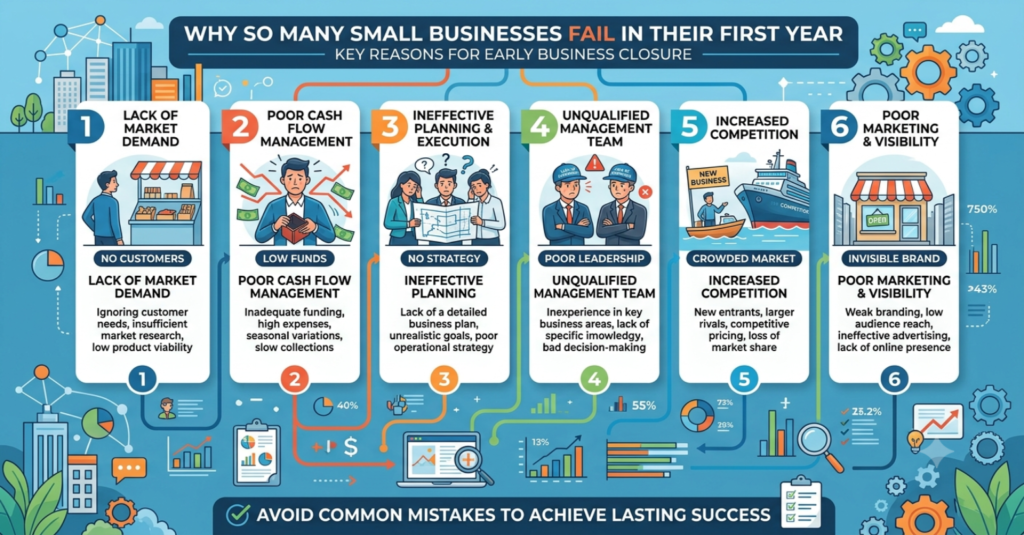
1. Poor Cash Flow Management
Cash flow is one of the biggest reasons new businesses struggle.
Even companies with strong sales can face problems if money is not available when bills are due.
Common cash flow mistakes include:
- Spending too quickly
- Late customer payments
- Poor budgeting
- Buying unnecessary inventory
- Underestimating monthly expenses
Review your cash flow regularly.
Planning ahead helps prevent financial emergencies.
2. Lack of Market Research
Some entrepreneurs launch businesses without confirming whether customers actually want their product or service.
This increases the risk of weak sales.
Before starting your business, research:
- Customer needs
- Local competition
- Industry trends
- Pricing
- Market demand
Good research helps you make informed business decisions instead of relying on assumptions.
3. Weak Business Planning
A business without a clear plan often struggles to stay focused.
Your business plan should include:
- Revenue goals
- Startup budget
- Marketing strategy
- Customer profile
- Growth objectives
Even a simple written plan provides direction and makes decision-making easier.
Many first-year failures begin with avoidable planning errors. Read our Small Business Mistakes That Cost Owners Thousands guide to learn how common business decisions can affect profitability and long-term growth.
4. Pricing Products Incorrectly
Many new business owners set prices too low because they fear losing customers.
Unfortunately, low prices often reduce profits instead of increasing sales.
Your pricing should cover:
- Product costs
- Labor
- Marketing
- Operating expenses
- Desired profit
Competitive pricing is important.
However, your business must remain profitable to survive.
5. Poor Marketing Strategy
Customers cannot support a business they do not know exists.
Many startups invest heavily in products but very little in marketing.
Effective marketing may include:
- Search engine optimization (SEO)
- Social media marketing
- Email marketing
- Local networking
- Referral programs
- Online advertising
Consistent marketing helps attract new customers while strengthening brand awareness.
6. Trying to Grow Too Quickly
Growth is exciting.
However, expanding too fast can create financial pressure.
Hiring too many employees, renting large office space, or purchasing excessive inventory may increase expenses before revenue is stable.
Instead, grow gradually.
Expand only when your business can comfortably support additional costs.
Steady growth is often more sustainable than rapid expansion.
Build a Strong Foundation Before Expanding
Many successful companies spent their early years improving systems rather than chasing rapid growth.
Focus on:
- Financial discipline
- Customer satisfaction
- Consistent marketing
- Quality products
- Reliable service
A strong foundation gives your business a better chance of long-term success.
7. Ignoring Customer Feedback
Customers often provide valuable insights about your products and services.
Unfortunately, some business owners overlook reviews or dismiss complaints.
Listening to customers helps you:
- Improve product quality
- Identify recurring issues
- Build customer loyalty
- Strengthen your reputation
Respond to feedback professionally.
Even small improvements can lead to repeat business and positive referrals.
8. Failing to Adapt to Market Changes
Customer preferences change.
Technology evolves.
Competitors introduce new products.
Businesses that refuse to adapt often struggle to remain competitive.
Monitor industry trends regularly.
Review your competitors.
Update your products or services when necessary.
Being flexible helps your business stay relevant in a changing market.
9. Hiring the Wrong People
Employees play a major role in your business success.
Hiring too quickly or choosing candidates without the right skills can reduce productivity and increase costs.
Before hiring, make sure you:
- Clearly define each role.
- Verify qualifications.
- Check references when appropriate.
- Provide proper training.
Building the right team supports long-term business growth.
10. Not Understanding Legal and Tax Responsibilities
Legal and tax obligations should never be ignored.
Missing filing deadlines or failing to comply with regulations can result in penalties and unnecessary expenses.
Depending on your business, you may need to:
- Register for state and local taxes.
- Maintain accurate financial records.
- Renew licenses and permits.
- File payroll taxes if you have employees.
- Comply with industry regulations.
Staying organized throughout the year makes these responsibilities much easier to manage.
How to Improve Your Chances of Success
Although every business faces challenges, these habits can improve your chances of long-term success:
- Create a realistic business plan.
- Monitor cash flow every month.
- Understand your target market.
- Build an emergency fund.
- Invest in consistent marketing.
- Review financial reports regularly.
- Continue learning and improving.
- Focus on delivering excellent customer service.
Small improvements made consistently often produce significant results over time.
The U.S. Small Business Administration (SBA) offers free resources for entrepreneurs, including business planning guides, financial management tools, mentoring programs, and educational materials. These resources can help new business owners avoid common first-year mistakes and build a stronger foundation for long-term success.
Frequently Asked Questions
What is the biggest reason small businesses fail?
Poor cash flow management is one of the most common reasons.
Without enough available cash, even businesses with healthy sales can struggle to pay expenses.
Can most first-year business mistakes be avoided?
Many can.
Proper planning, financial discipline, market research, and consistent customer engagement reduce the likelihood of costly mistakes.
Is competition the main reason businesses fail?
Competition is only one factor.
Weak planning, pricing errors, poor marketing, and cash flow problems often have a greater impact on long-term success.
Should new businesses spend heavily on marketing?
Marketing is important, but spending should match your budget.
Track your results and focus on the channels that generate the highest return on investment.
Final Thoughts
The first year of business is filled with challenges.
However, it also provides valuable opportunities to learn and improve.
Instead of trying to avoid every obstacle, focus on making informed decisions.
Manage your cash flow carefully.
Understand your customers.
Adapt as markets change.
Continue improving your products and services.
Businesses that stay disciplined and flexible are often the ones that achieve long-term success.