
 MOHAMMAD ABUBAKR
Introduction
Managing business expenses is just as important as increasing sales.
Many entrepreneurs focus on earning more revenue.
However, overlooking essential expenses can create financial problems that slow business growth.
Some costs are predictable.
Others appear when you least expect them.
Understanding which expenses deserve your attention helps you build a stronger, more profitable business.
In this guide, you’ll learn the business expenses you should never ignore and discover practical ways to keep your finances under control.
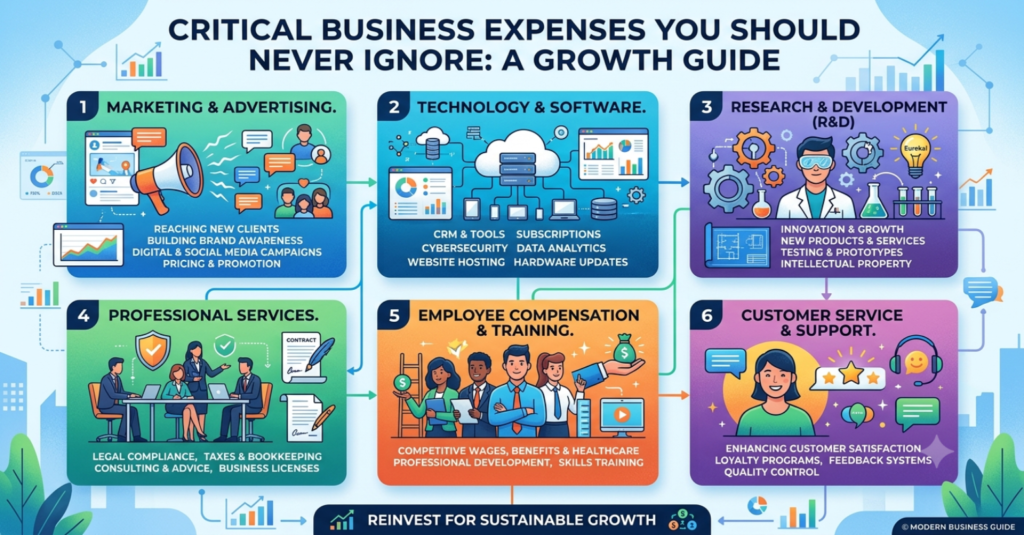
Why Tracking Business Expenses Matters
Every dollar spent affects your bottom line.
Without accurate expense tracking, it becomes difficult to understand your true profit.
Proper financial management helps you:
- Improve cash flow
- Create realistic budgets
- Prepare for tax season
- Reduce unnecessary spending
- Make informed business decisions
Small improvements in expense management can produce significant long-term savings
If you’re creating your first business budget, read our How Much Money Do You Need to Start a Business? guide to understand startup costs, funding options, and realistic financial planning before launching your company..
1. Rent and Workspace Costs
If your business operates from a physical location, rent is often one of your largest monthly expenses.
Workspace costs may include:
- Office rent
- Warehouse rent
- Utilities
- Internet service
- Property maintenance
Review these costs regularly.
As your business grows, you may discover opportunities to negotiate better lease terms or reduce unnecessary expenses.
2. Employee Payroll
Employees help businesses grow.
However, payroll is one of the most important financial responsibilities.
Payroll expenses include:
- Salaries
- Hourly wages
- Payroll taxes
- Employee benefits
- Retirement contributions
- Overtime payments
Late or inaccurate payroll can affect employee morale and create legal complications.
Therefore, monitor payroll carefully.
3. Marketing and Advertising
Without marketing, attracting new customers becomes much harder.
Many businesses reduce marketing during slower months.
Unfortunately, this often leads to even fewer sales.
Consider investing consistently in channels such as:
- Search engine optimization (SEO)
- Content marketing
- Social media advertising
- Email marketing
- Local advertising
- Referral programs
Track your results so you know which campaigns deliver the best return on investment.
4. Technology and Software
Modern businesses depend on technology every day.
Common software expenses include:
- Accounting software
- Customer relationship management (CRM) tools
- Project management platforms
- Email services
- Cloud storage
- Cybersecurity software
Although these subscriptions may seem small individually, together they can represent a significant monthly expense.
Review them regularly and cancel services you no longer use.
5. Insurance Costs
Business insurance protects your company from unexpected financial losses.
Depending on your industry, coverage may include:
- General liability insurance
- Property insurance
- Professional liability insurance
- Workers’ compensation
- Commercial vehicle insurance
Choosing the right coverage helps reduce financial risk during unexpected situations.
6. Inventory and Supplies
Businesses that sell physical products must carefully manage inventory.
Ordering too much inventory ties up valuable cash.
Ordering too little can result in missed sales opportunities.
Monitor:
- Product demand
- Supplier costs
- Storage expenses
- Shipping supplies
- Packaging materials
Regular inventory reviews help improve cash flow and reduce unnecessary spending.
Every Expense Should Support Business Growth
Not every expense is a bad expense.
Some investments help your business become more profitable.
Before spending money, ask yourself:
- Will this improve efficiency?
- Will this increase revenue?
- Will this reduce long-term costs?
- Does this support customer satisfaction?
Making intentional spending decisions helps your business grow more sustainably.
7. Taxes and Government Fees
Taxes are one of the most important business expenses.
Unfortunately, many business owners underestimate how much they need to set aside.
Depending on your business structure, you may need to pay:
- Federal taxes
- State income taxes
- Sales taxes
- Payroll taxes
- Local business taxes
- Annual registration fees
Setting aside money throughout the year helps you avoid financial stress when tax deadlines arrive.
8. Loan and Interest Payments
Many businesses borrow money to purchase equipment, expand operations, or improve cash flow.
If you have business debt, make loan payments a priority.
Late payments may result in:
- Additional fees
- Higher interest costs
- Lower business credit
- Reduced borrowing options
Review your loan balances regularly and pay more than the minimum whenever possible.
9. Equipment Maintenance and Repairs
Equipment helps your business operate efficiently.
However, every machine, computer, or vehicle requires maintenance.
Budget for expenses such as:
- Computer repairs
- Equipment servicing
- Vehicle maintenance
- Replacement parts
- Office repairs
Preventive maintenance often costs far less than replacing damaged equipment.
10. Professional Services
Many business owners try to handle every task themselves.
However, professional advice can prevent expensive mistakes.
Common professional services include:
- Certified Public Accountants (CPAs)
- Business attorneys
- Financial advisors
- IT consultants
- Marketing consultants
Although these services add to your expenses, they often save money by helping you avoid legal, financial, or operational problems.
Tips for Controlling Business Expenses
Reducing expenses does not always mean cutting essential services.
Instead, focus on spending more efficiently.
Consider these strategies:
- Review your monthly budget.
- Compare supplier prices regularly.
- Cancel unused software subscriptions.
- Negotiate contracts when possible.
- Buy equipment only when necessary.
- Monitor cash flow every month.
- Build an emergency reserve for unexpected costs.
Small savings made consistently can significantly improve profitability over time.
Common Expense Tracking Mistakes
Many businesses lose money because they fail to monitor expenses carefully.
Avoid these common mistakes:
- Mixing personal and business expenses.
- Forgetting recurring subscriptions.
- Keeping incomplete financial records.
- Ignoring small purchases.
- Failing to review monthly reports.
- Waiting until tax season to organize receipts.
- Spending without a written budget.
Accurate records help you understand where your money goes and make better financial decisions.
The IRS Business Expenses resource explains which ordinary and necessary business expenses may qualify for tax deductions. Reviewing the official guidance can help business owners maintain accurate records, understand deductible expenses, and prepare for tax season with greater confidence.
Frequently Asked Questions
What is the biggest expense for most small businesses?
The answer depends on the industry.
However, payroll, rent, inventory, and marketing are often among the largest ongoing expenses.
How often should I review business expenses?
Review your finances every month.
Regular reviews help identify unnecessary spending and improve cash flow management.
Should I separate business and personal expenses?
Yes.
Using separate bank accounts makes bookkeeping easier, simplifies tax preparation, and provides a clearer picture of your business performance.
Why is expense tracking important?
Tracking expenses helps you manage cash flow, prepare accurate financial reports, reduce wasteful spending, and make informed business decisions.
Final Thoughts
Managing business expenses is not about eliminating every cost.
Instead, it is about making smart financial decisions that support long-term growth.
Track your spending consistently.
Review your budget regularly.
Invest in tools and services that create real value.
At the same time, eliminate unnecessary expenses that no longer support your business goals.
Strong expense management improves profitability, protects cash flow, and helps your business remain financially healthy through every stage of growth.