 MOHAMMAD ABUBAKR
Introduction
Keeping money in the bank provides financial security.
However, many people struggle to decide how much cash is enough.
Some leave too little in their accounts and risk financial stress during emergencies.
Others keep large amounts of cash that could be working toward long-term financial goals.
Finding the right balance is important.
The amount you should keep in the bank depends on your income, monthly expenses, financial responsibilities, and future plans.
In this guide, you’ll learn how to determine the right amount of cash to keep in the bank while building a stronger financial foundation.
Why Cash Matters
Cash gives you flexibility.
It allows you to handle unexpected expenses without immediately borrowing money or selling long-term investments.
Having enough available cash can help you:
- Cover emergency expenses.
- Pay monthly bills.
- Reduce financial stress.
- Avoid unnecessary debt.
- Respond to unexpected opportunities.
The goal is to maintain enough cash for stability without allowing too much money to sit idle.
1. Start With Your Monthly Expenses
Before deciding how much cash to keep, calculate your essential monthly expenses.
Include costs such as:
- Housing
- Utilities
- Groceries
- Insurance
- Transportation
- Healthcare
Knowing your monthly spending creates a realistic starting point for your savings goal.
2. Build an Emergency Reserve
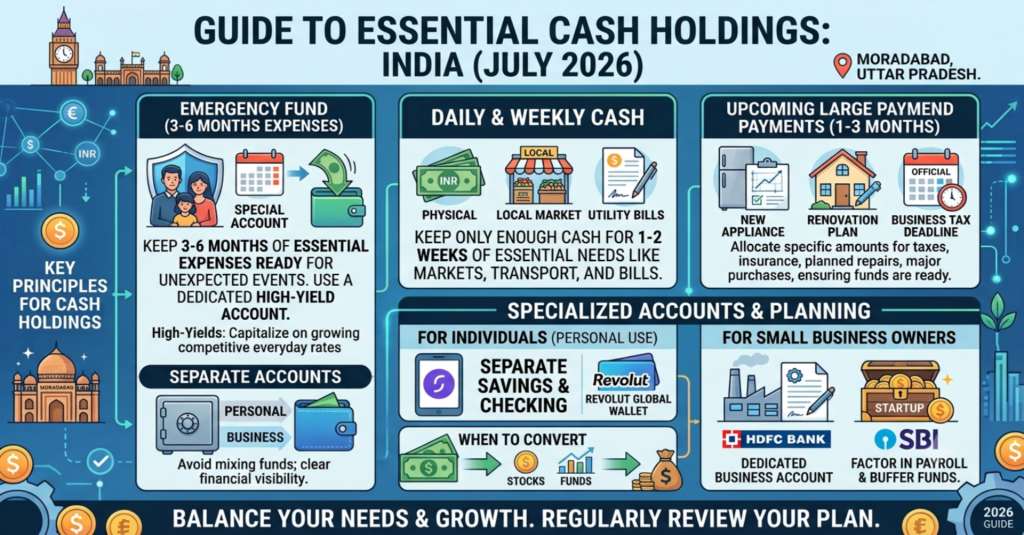
An emergency reserve is one of the most important reasons to keep cash in the bank.
Unexpected situations can happen without warning.
Examples include:
- Medical expenses
- Car repairs
- Temporary job loss
- Emergency travel
- Home repairs
Many financial professionals recommend maintaining enough emergency savings to cover several months of essential expenses.
The exact amount depends on your personal circumstances.
Building an emergency reserve is only the first step. Read our The Biggest Mistake People Make With Emergency Funds guide to avoid common saving mistakes and make sure your emergency cash is available when you truly need it.
3. Consider Job Stability
Your income plays a major role in determining how much cash you should keep available.
If your income changes from month to month, a larger cash reserve may provide additional financial security.
On the other hand, people with stable income may feel comfortable keeping a smaller emergency reserve while investing more toward long-term goals.
Review your employment situation regularly as your financial needs change.
4. Think About Your Family Responsibilities
Financial responsibilities differ from one household to another.
For example, you may need additional savings if you:
- Support children.
- Care for aging parents.
- Own a home.
- Have ongoing medical expenses.
Larger financial obligations often require a stronger cash cushion.
Planning ahead can reduce financial pressure during unexpected situations.
5. Separate Everyday Spending From Savings
Many people keep all of their money in one account.
Unfortunately, this makes it easier to spend money intended for emergencies.
Instead, consider using separate accounts for:
- Everyday spending
- Emergency savings
- Short-term goals
Keeping these funds separate helps protect your savings while improving budgeting habits.
6. Review Your Savings Regularly
Your financial situation will change over time.
A savings target that worked several years ago may no longer be appropriate.
Review your cash reserves whenever:
- Your income changes.
- Your expenses increase.
- Your family grows.
- You purchase a home.
- You change jobs.
Regular reviews help ensure your savings continue to match your financial needs.
The Right Amount Is Personal
There is no single amount that works for everyone.
Instead, focus on building a cash reserve that reflects your own financial responsibilities, income stability, and long-term goals.
A personalized approach usually provides greater confidence than following a one-size-fits-all rule.
7. Avoid Keeping Too Much Cash Idle
Holding cash provides security.
However, keeping far more than you need in a low-interest account may reduce your long-term financial growth.
Once your emergency fund and short-term savings goals are fully funded, consider directing additional money toward other financial priorities, such as:
- Retirement accounts
- Long-term investments
- Paying off high-interest debt
- Education savings
- Other financial goals
Balancing safety and growth can strengthen your overall financial plan.
8. Choose the Right Bank Accounts
Where you keep your cash matters.
Many people use different accounts for different purposes.
For example:
- A checking account for everyday spending.
- A savings account for emergency funds.
- A high-yield savings account for short-term goals.
- A money market account for added flexibility.
Choosing accounts that match your goals makes it easier to manage your money while keeping it accessible when needed.
9. Adjust Your Cash Reserve During Major Life Changes
Your cash needs may change over time.
Review your savings whenever you experience events such as:
- Starting a new job.
- Getting married.
- Having a child.
- Buying a home.
- Starting a business.
- Preparing for retirement.
Updating your savings plan helps keep your financial safety net aligned with your current situation.
10. Build Good Cash Management Habits
Strong financial habits are more important than chasing a specific dollar amount.
Simple habits include:
- Saving consistently.
- Reviewing your budget monthly.
- Tracking your expenses.
- Avoiding unnecessary debt.
- Monitoring your financial goals.
- Rebuilding savings after emergencies.
Small improvements made consistently can have a significant impact over time.
Common Cash-Saving Mistakes
Many people unintentionally weaken their financial security by making avoidable mistakes.
Watch out for these common errors:
- Keeping all your money in one account.
- Spending your emergency savings on non-emergencies.
- Ignoring inflation when setting savings goals.
- Forgetting to review your cash reserves.
- Saving without a written financial plan.
- Leaving large amounts of cash unused for many years.
Recognizing these mistakes can help you make better financial decisions.
The FDIC Deposit Insurance Resources explain how deposit insurance works, what types of accounts are covered, and the current insurance limits. Reviewing this information can help you decide how to protect your savings while keeping your money accessible.
Frequently Asked Questions
Is there a perfect amount of cash to keep in the bank?
No.
The ideal amount depends on your monthly expenses, income stability, financial obligations, and personal goals.
A personalized plan is usually more effective than following a fixed number.
Should I keep all my savings in one bank account?
Many people prefer separating everyday spending from emergency savings and other financial goals.
Using multiple accounts can make budgeting easier and reduce the temptation to spend emergency funds.
Can I keep too much cash in the bank?
Yes.
After you have built an appropriate emergency reserve and covered short-term needs, keeping excessive cash in low-interest accounts may limit your long-term financial growth.
Review your overall financial plan before deciding where to keep additional savings.
How often should I review my cash reserves?
Review your savings at least once a year or whenever your income, expenses, or major life circumstances change.
Regular reviews help keep your financial plan up to date.
Final Thoughts
The right amount of cash in the bank depends on your unique financial situation.
Instead of following a universal rule, focus on your monthly expenses, income stability, family responsibilities, and future goals.
Build an emergency reserve first.
Keep your everyday spending separate from long-term savings.
Review your cash reserves regularly as your life changes.
A balanced approach can help you stay prepared for unexpected expenses while continuing to work toward long-term financial success.