 MOHAMMAD ABUBAKR
Introduction
Managing your money should be simple.
However, many people wonder whether keeping all their money in one bank is the smartest choice.
Using a single bank offers convenience.
At the same time, relying on one financial institution may create risks that many people overlook.
The right decision depends on your financial goals, the amount of money you have, and how you prefer to manage your accounts.
In this guide, you’ll learn the advantages and disadvantages of keeping all your money in one bank and discover practical strategies for protecting your finances.
Why This Question Matters
Choosing where to keep your money affects more than convenience.
It can influence:
- Financial security
- Access to cash
- Budgeting
- Savings habits
- Banking fees
- Long-term financial planning
Understanding the benefits and drawbacks helps you make a decision that fits your personal situation.
1. The Convenience of One Bank
Many people choose one bank because it keeps everything in one place.
You can often manage:
- Checking accounts
- Savings accounts
- Credit cards
- Loans
- Mobile banking
Having a single login and one mobile app can make daily banking easier.
It also simplifies tracking your finances.
2. The Risk of Relying on One Bank
Although one bank offers convenience, unexpected problems can occur.
For example:
- Temporary system outages
- Debit card issues
- Fraud investigations
- Frozen accounts
- Branch closures
If all your money is held at one institution, these situations may temporarily limit access to your funds.
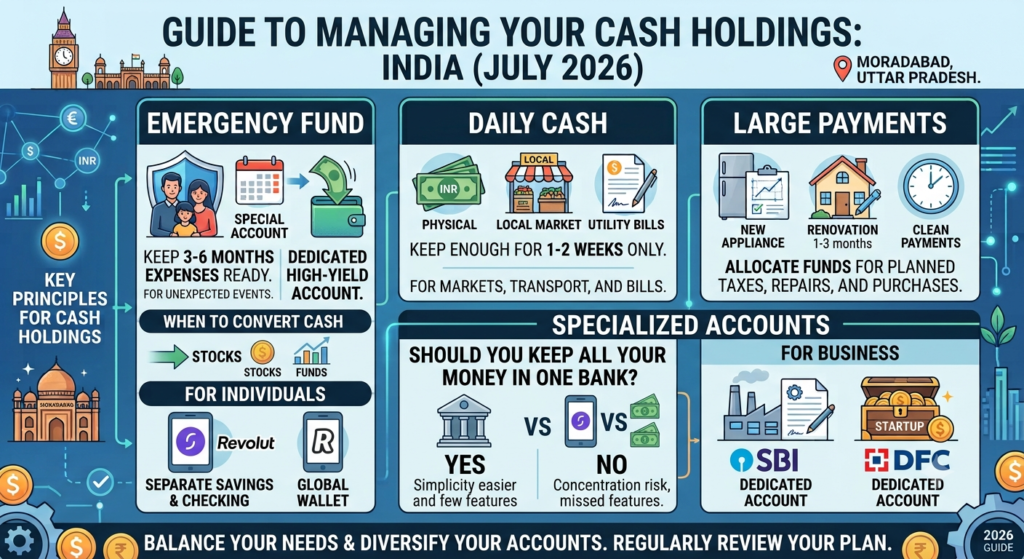
Having accounts at more than one bank can provide additional flexibility during unexpected events.
3. Understanding Deposit Insurance
One reason some people use multiple banks is deposit insurance coverage.
In the United States, eligible deposits at FDIC-insured banks are protected up to applicable coverage limits per depositor, per insured bank, and per ownership category.
Understanding these limits can help you decide whether spreading money across institutions makes sense for your situation.
If your total deposits exceed applicable coverage limits, you may wish to review your account structure or seek professional financial advice.
Before deciding how many bank accounts you need, read our How Much Cash Should You Really Keep in the Bank? guide to determine how much cash should remain readily available based on your financial goals and monthly expenses.
4. Separate Savings From Everyday Spending
Keeping all your money in one checking account may increase the temptation to spend your savings.
Instead, many people separate money into different purposes, such as:
- Everyday spending
- Emergency savings
- Vacation savings
- Home purchase savings
- Investment goals
Even if these accounts are at the same bank, separating them can improve budgeting.
5. Compare Banking Features
Not every bank excels in every area.
One institution may offer:
- Better savings rates.
- Lower fees.
- Stronger mobile banking.
- Better customer service.
- More ATM locations.
Comparing features helps ensure your banking setup supports your financial goals.
6. Consider Your Financial Goals
Your banking strategy should match your personal needs.
Ask yourself:
- Do I need easy access to cash?
- Am I saving for major goals?
- Do I travel frequently?
- Do I own a business?
- Will I need loans in the future?
Your answers can help determine whether one bank or multiple banks make more sense.
Convenience Should Not Be Your Only Priority
Easy banking is valuable.
However, convenience should be balanced with security, flexibility, and long-term financial planning.
Taking time to review your banking strategy today may help you avoid unnecessary challenges in the future.
7. When Multiple Bank Accounts Make Sense
Using more than one bank can provide additional flexibility.
Many people choose this approach to separate different financial goals.
For example, you could use:
- One bank for everyday spending.
- Another bank for emergency savings.
- A separate institution for high-yield savings.
- A different bank for a business account.
This strategy can make budgeting easier while reducing the impact if one account becomes temporarily unavailable.
8. Watch Out for Banking Fees
Opening multiple accounts can be helpful.
However, it also requires careful management.
Some banks charge fees for:
- Monthly maintenance
- Low account balances
- Excess transactions
- Paper statements
- Overdraft services
Before opening another account, compare fee schedules and account requirements.
Choosing accounts with features that match your needs may help reduce unnecessary costs.
9. Keep Your Accounts Organized
Managing several bank accounts does not have to be complicated.
Create a simple system for each account.
For example:
- Checking account for monthly bills.
- Savings account for emergencies.
- Separate account for travel or vacations.
- Dedicated account for home repairs.
Clear purposes make it easier to monitor your progress and avoid accidental spending.
10. Review Your Banking Strategy Every Year
Your financial needs will change over time.
A banking setup that works today may not fit your future goals.
Review your accounts whenever you:
- Change jobs.
- Move to a new city.
- Start a business.
- Buy a home.
- Get married.
- Retire.
Regular reviews help ensure your banking strategy continues to support your financial goals.
Common Banking Mistakes to Avoid
Many people make simple banking mistakes that can create unnecessary financial stress.
Avoid these common errors:
- Keeping every dollar in one checking account.
- Ignoring account fees.
- Forgetting to monitor account activity.
- Using savings for everyday spending.
- Failing to review FDIC insurance coverage.
- Opening accounts you rarely use.
- Choosing convenience over long-term financial planning.
Good banking habits can improve both security and financial organization.
The FDIC Deposit Insurance resources explain how deposit insurance works, coverage limits, and which accounts qualify for protection. Reviewing this information can help you decide whether keeping money at one bank or multiple banks is the right choice for your financial situation.
Frequently Asked Questions
Is it safe to keep all my money in one bank?
It can be safe for many people, especially when using an FDIC-insured bank and staying within applicable insurance limits.
However, using more than one bank may provide additional flexibility and organization depending on your financial needs.
Should I have more than one checking account?
Some people benefit from having multiple checking accounts for different purposes, such as separating household bills from discretionary spending.
Choose a system that helps you manage your money effectively.
Can multiple bank accounts improve budgeting?
Yes.
Separating savings, bills, and spending into different accounts can make it easier to track your money and avoid overspending.
How often should I review my bank accounts?
Review your accounts at least once each month.
In addition, reassess your overall banking strategy whenever your financial situation changes significantly.
Final Thoughts
Keeping all your money in one bank is not automatically the right or wrong choice.
The best decision depends on your savings, financial goals, banking habits, and comfort with managing multiple accounts.
Focus on security first.
Choose accounts that meet your needs.
Review your banking strategy regularly.
Most importantly, build a system that helps you protect your money while supporting your long-term financial success.