 MOHAMMAD ABUBAKR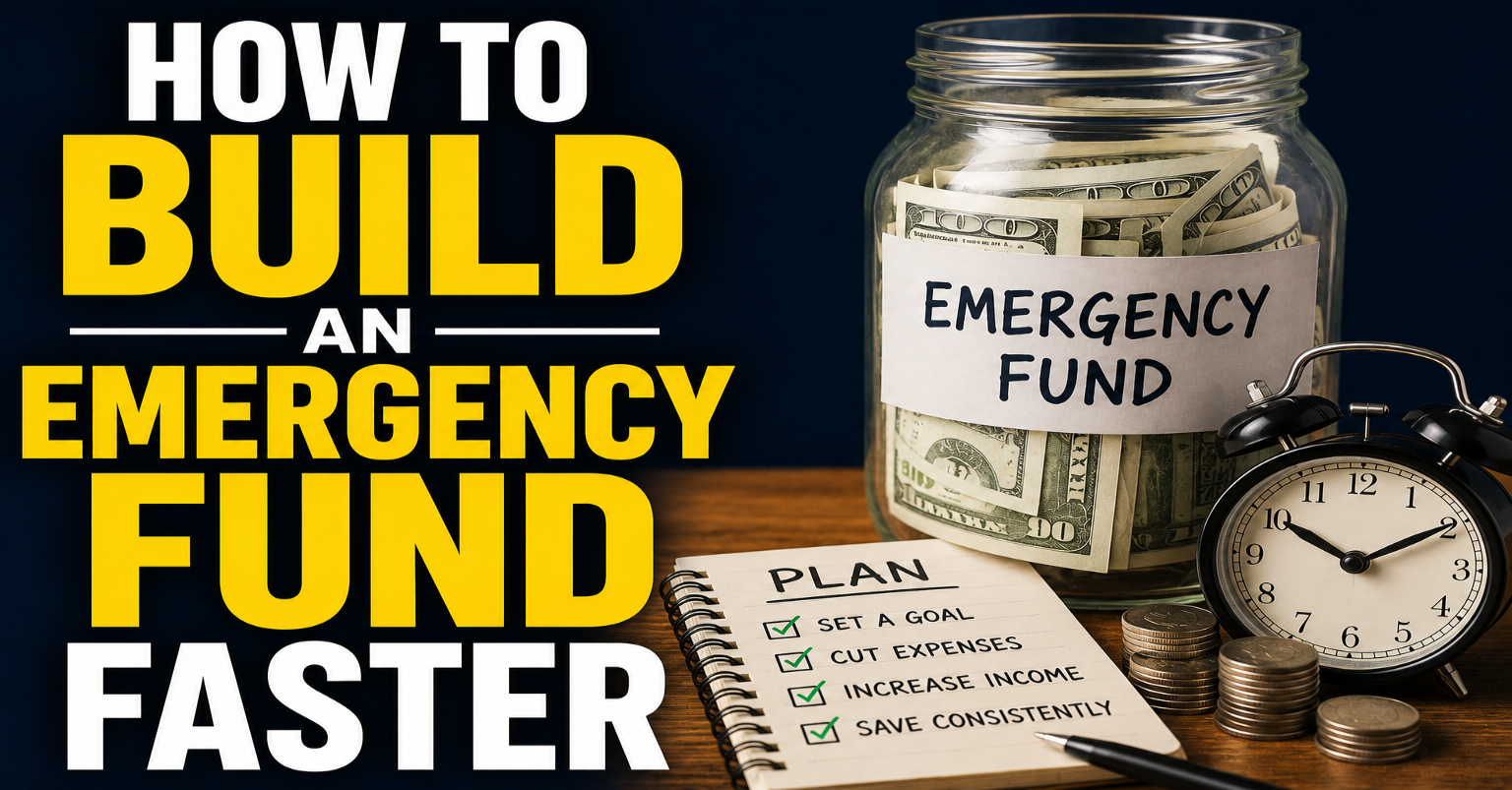
Introduction
Life is full of surprises.
A medical bill, car repair, or temporary job loss can happen when you least expect it.
Without emergency savings, many people rely on credit cards or loans to cover these costs.
That often creates long-term financial pressure.
The good news is that building an emergency fund does not have to take years.
With the right plan and consistent habits, you can grow your savings faster than you might think.
In this guide, you’ll learn practical ways to build an emergency fund faster while staying on track with your everyday financial goals.
Why an Emergency Fund Is Important
An emergency fund provides a financial safety net.
It helps you pay for unexpected expenses without disrupting your long-term plans.
Having emergency savings can help you:
- Reduce financial stress.
- Avoid high-interest debt.
- Cover unexpected bills.
- Protect your monthly budget.
- Gain greater financial confidence.
Even a modest emergency fund can make a meaningful difference during difficult situations.
1. Set a Clear Savings Goal
Saving without a target often leads to slow progress.
Instead, decide exactly how much you want to save.
Your goal may be based on:
- Three months of living expenses.
- Six months of essential expenses.
- A fixed dollar amount.
- Your household budget.
Clear goals provide motivation and make it easier to measure progress.
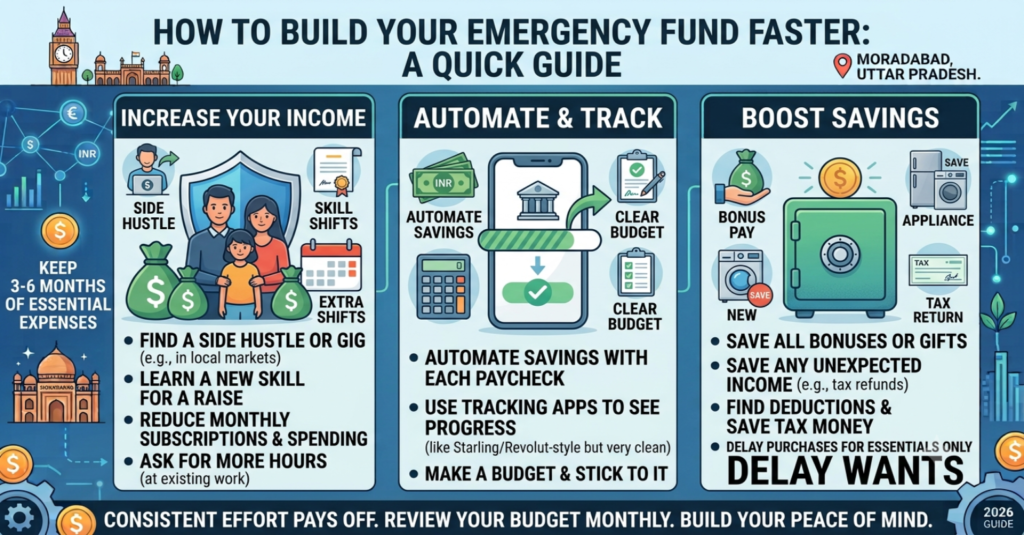
2. Automate Your Savings
One of the easiest ways to save consistently is through automation.
Schedule an automatic transfer to your emergency savings account every payday.
This approach helps you:
- Build savings consistently.
- Avoid forgetting deposits.
- Reduce unnecessary spending.
- Reach your goal faster.
Treat your savings like any other monthly bill.
3. Reduce Small Everyday Expenses
Small expenses often add up over time.
Review your monthly spending and look for areas where you can cut back.
Examples include:
- Dining out less often.
- Canceling unused subscriptions.
- Reducing impulse purchases.
- Shopping with a grocery list.
- Comparing insurance or utility costs.
Redirect those savings into your emergency fund.
Small changes made consistently can produce significant results.
4. Save Unexpected Income
Extra income can speed up your progress.
Consider saving:
- Tax refunds.
- Work bonuses.
- Cash gifts.
- Side hustle income.
- Overtime pay.
Although it may be tempting to spend these funds, using part or all of them for your emergency savings can help you reach your goal much sooner.
5. Keep Your Savings Separate
Avoid mixing emergency savings with everyday spending money.
Instead, use a dedicated savings account.
Keeping your emergency fund separate helps you:
- Track your progress.
- Avoid unnecessary withdrawals.
- Protect your financial safety net.
- Stay focused on your goal.
This simple step also makes budgeting easier.
Keeping emergency savings in a separate account can help reduce unnecessary spending. Read our Should You Keep All Your Money in One Bank? guide to learn whether using one bank or multiple banks is the better choice for your financial goals.
6. Increase Your Savings Gradually
You do not need to save large amounts immediately.
Start with an amount you can comfortably afford.
As your income grows or expenses decrease, gradually increase your monthly contribution.
Steady progress often produces better long-term results than trying to save too much at once.
Consistency Builds Financial Security
Building an emergency fund is not about saving perfectly.
It is about saving consistently.
Every contribution, no matter how small, moves you closer to greater financial stability.
7. Cut High-Interest Debt First
High-interest debt can slow your financial progress.
If you carry expensive credit card balances, consider reducing them while continuing to build your emergency fund.
A balanced approach may help you:
- Lower interest costs.
- Improve cash flow.
- Increase monthly savings.
- Strengthen your financial stability.
Reducing costly debt can make it easier to save more over time.
8. Increase Your Income
Saving more is not always about spending less.
Sometimes the fastest way to grow your emergency fund is by increasing your income.
Consider options such as:
- Freelance work.
- Part-time jobs.
- Selling unused items.
- Overtime opportunities.
- Starting a small side business.
Even temporary income can make a noticeable difference when added directly to your emergency savings.
9. Track Your Progress Every Month
Monitoring your savings keeps you motivated.
Review your emergency fund regularly.
Ask yourself:
- How much have I saved?
- Am I meeting my monthly goal?
- Can I increase my contribution?
- Have my financial needs changed?
Tracking your progress also helps you identify problems before they slow your savings plan.
10. Protect Your Emergency Fund
Building an emergency fund takes time.
Protect it by using the money only for genuine emergencies.
Examples include:
- Unexpected medical expenses.
- Essential home repairs.
- Major vehicle repairs.
- Temporary income loss.
Avoid using emergency savings for vacations, entertainment, or impulse purchases.
Every unnecessary withdrawal delays your financial progress.
Common Emergency Fund Mistakes
Many people unintentionally slow their savings growth.
Avoid these common mistakes:
- Saving without a written plan.
- Skipping monthly contributions.
- Keeping emergency savings with everyday spending money.
- Spending the fund on non-emergencies.
- Ignoring changes in monthly expenses.
- Forgetting to rebuild the fund after using it.
Avoiding these mistakes helps your savings grow more consistently.
The Consumer Financial Protection Bureau (CFPB) offers practical guidance on emergency savings, budgeting, and financial preparedness. Reviewing these resources can help you create a stronger savings plan and improve your long-term financial stability.
Frequently Asked Questions
How much should I save in an emergency fund?
The ideal amount depends on your monthly expenses, income stability, and financial responsibilities.
Many financial professionals recommend saving enough to cover several months of essential living expenses.
Where should I keep my emergency fund?
Many people choose a savings account that provides quick access to their money while keeping it separate from everyday spending.
The best option depends on your financial goals and personal preferences.
How long does it take to build an emergency fund?
The timeline varies for everyone.
Your savings rate, income, and monthly expenses all affect how quickly you reach your goal.
Consistent saving usually matters more than making large deposits.
Should I stop investing while building an emergency fund?
The answer depends on your financial situation and priorities.
Many people choose to establish a basic emergency fund first while continuing to work toward long-term financial goals.
Final Thoughts
Building an emergency fund faster is possible with the right habits.
Set a realistic goal.
Automate your savings.
Reduce unnecessary expenses.
Save unexpected income whenever possible.
Most importantly, stay consistent.
Small monthly contributions may seem modest at first.
However, they can grow into a financial cushion that helps you handle unexpected challenges with greater confidence.