 MOHAMMAD ABUBAKR
Introduction
Credit card rewards can help you earn cashback, travel miles, or valuable points on everyday purchases.
However, many people fail to receive the full value of these programs.
Some choose the wrong rewards card.
Others miss redemption opportunities or carry expensive balances that erase the value of their rewards.
Fortunately, avoiding these mistakes is easier than you might think.
With a few smart habits, you can maximize your rewards while protecting your financial health.
In this guide, you’ll learn the most common credit card rewards mistakes and discover practical strategies for earning more value from every purchase.
Why Credit Card Rewards Matter
A rewards program can provide meaningful benefits when used responsibly.
Depending on your card, rewards may include:
- Cashback
- Travel miles
- Hotel points
- Gift cards
- Statement credits
- Shopping discounts
The key is matching your spending habits with the right rewards program.
Without a plan, many benefits go unused.
1. Choosing the Wrong Rewards Card
Not every rewards card fits every lifestyle.
Some cards focus on travel.
Others provide higher cashback on groceries, gas, or dining.
Before applying, compare:
- Annual fees
- Reward categories
- Redemption options
- Interest rates
- Sign-up bonuses
- Foreign transaction fees
Choosing a card that matches your spending habits can increase your overall rewards.
2. Carrying a Balance
One of the biggest rewards mistakes is paying interest every month.
Although earning rewards feels good, high interest charges can easily exceed the value of those rewards.
Whenever possible, pay your statement balance in full.
Doing so allows you to enjoy the rewards without unnecessary borrowing costs.
Building a strong emergency fund can reduce the need to carry expensive credit card balances. Read our The Biggest Mistake People Make With Emergency Funds guide to strengthen your financial safety net and avoid unnecessary interest charges.
3. Ignoring Bonus Categories
Many rewards cards offer higher earnings in specific spending categories.
For example:
- Grocery stores
- Restaurants
- Gas stations
- Travel purchases
- Online shopping
Understanding your card’s bonus categories helps you earn more points or cashback on purchases you already make.
4. Missing Sign-Up Bonus Requirements
Some rewards cards offer generous welcome bonuses.
However, these bonuses often require spending a certain amount within a limited period.
Read the terms carefully.
Track your spending.
Meeting the requirements on time can significantly increase the value of your new card.
5. Letting Rewards Expire
Some reward programs have expiration rules.
Others require periodic account activity.
Review your account regularly to understand:
- Expiration dates
- Redemption deadlines
- Minimum redemption amounts
- Program updates
Redeeming rewards before they expire helps you maximize their value.
6. Redeeming Rewards Without Comparing Value
Not every redemption option provides the same return.
For example, points redeemed for travel may offer greater value than merchandise or gift cards.
Before redeeming rewards, compare your available options.
A few minutes of research may help you receive significantly more value from the same number of points.
Small Changes Can Increase Your Rewards
Maximizing credit card rewards does not require spending more money.
Instead, it requires making smarter financial decisions.
Choosing the right card, understanding the program, and paying your balance responsibly can help you earn more from purchases you already make.
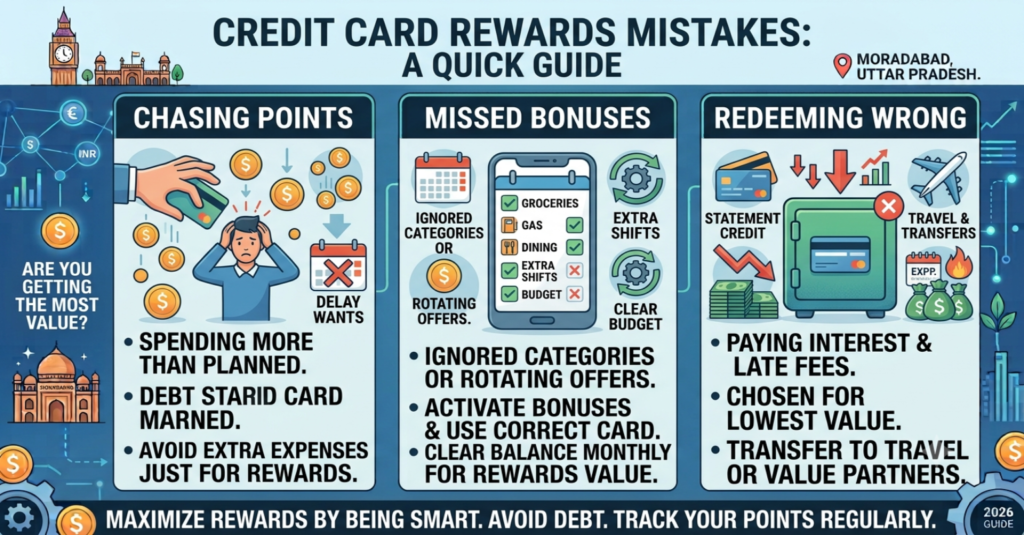
7. Spending More Just to Earn Rewards
One of the biggest credit card rewards mistakes is buying things you do not need.
Some people spend extra money simply to earn more points or cashback.
Unfortunately, unnecessary purchases usually cost far more than the rewards you receive.
Instead, use your rewards card for planned purchases that already fit your monthly budget.
Earning rewards should be a bonus, not a reason to spend more.
8. Paying Annual Fees Without Measuring Value
Some rewards cards charge annual fees.
In many cases, those fees are worthwhile because they provide valuable benefits.
However, not every card delivers enough value for every cardholder.
Review your account every year.
Ask yourself:
- Am I using the card’s benefits?
- Do the rewards exceed the annual fee?
- Would another card better match my spending habits?
Regular reviews help ensure your credit card continues to work for you.
9. Forgetting to Monitor Reward Program Changes
Credit card companies occasionally update their reward programs.
Changes may affect:
- Reward categories
- Redemption options
- Bonus offers
- Point values
- Program rules
Check your account notifications regularly.
Staying informed helps you avoid surprises and maximize your available rewards.
10. Ignoring Your Overall Financial Goals
Rewards should never become your primary financial goal.
Focus first on:
- Paying bills on time.
- Staying within your budget.
- Avoiding high-interest debt.
- Building emergency savings.
- Improving your credit score.
Strong financial habits create far more value than rewards alone.
How to Maximize Credit Card Rewards
Simple habits can help you earn more without increasing your spending.
Consider these strategies:
- Pay your balance in full each month.
- Use the right card for each purchase category.
- Redeem rewards before they expire.
- Monitor promotional offers.
- Review your rewards program regularly.
- Avoid unnecessary purchases.
These habits can increase the value of your rewards while supporting better financial management.
The Consumer Financial Protection Bureau (CFPB) provides official information about credit cards, interest charges, fees, billing rights, and responsible credit use. Reviewing these resources can help you make informed decisions and get more value from your credit cards.
Frequently Asked Questions
Are credit card rewards worth it?
They can be valuable when you pay your balance in full and use the card responsibly.
Otherwise, interest charges may outweigh the rewards you earn.
Which rewards are usually the most valuable?
The answer depends on your spending habits.
Some people benefit more from cashback, while others receive greater value from travel rewards or statement credits.
Choose a program that fits your lifestyle.
Do credit card rewards expire?
Some programs have expiration policies, while others do not.
Review your card’s terms regularly to avoid losing earned rewards.
Can using rewards cards improve my finances?
Rewards can add value when combined with responsible spending, on-time payments, and good budgeting habits.
They should support your financial plan rather than replace it.
Final Thoughts
Credit card rewards can help you save money and earn valuable benefits.
However, they work best when paired with responsible financial habits.
Choose a card that matches your spending.
Pay your balance on time.
Monitor your rewards regularly.
Avoid spending simply to earn more points.
By using your credit card wisely, you can enjoy meaningful rewards while protecting your long-term financial health.