
 MOHAMMAD ABUBAKR
Introduction
For years, many Americans have heard the phrase, “Renting is throwing money away.”
While homeownership offers many advantages, renting is not always a bad financial decision.
In fact, depending on your income, location, career, and financial goals, renting may provide flexibility and even help you build wealth in other ways.
The right housing choice depends on your personal circumstances—not a one-size-fits-all rule.
In this guide, you’ll learn why renting isn’t always throwing money away and when renting may actually make better financial sense than buying.
Why This Myth Exists
Homeownership has long been considered part of the American Dream.
Owning a home allows you to build equity over time.
However, many people overlook the ongoing costs of ownership.
Renting and buying both involve expenses.
The goal is choosing the option that best supports your financial situation.
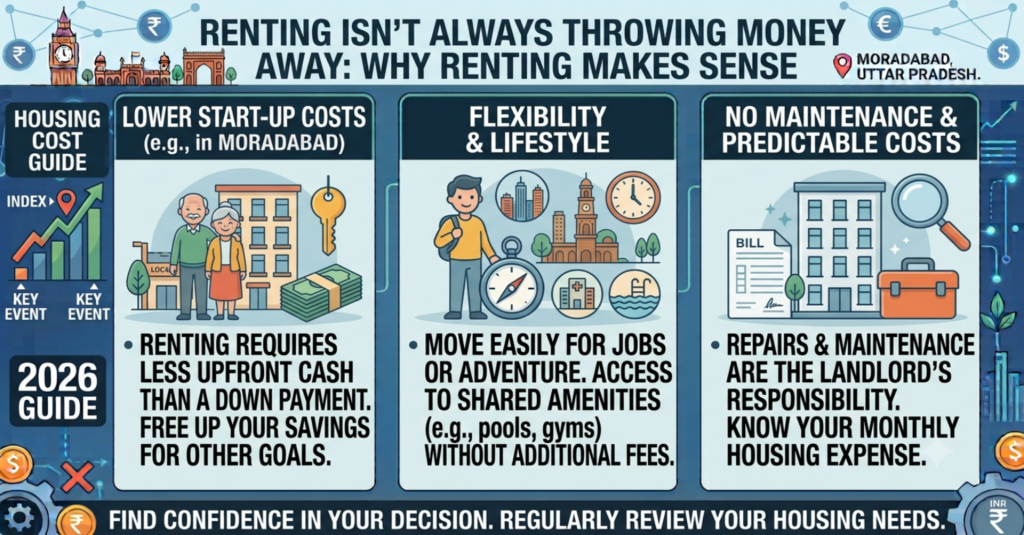
1. Renting Offers Greater Flexibility
One of the biggest advantages of renting is flexibility.
Renters can often move more easily for:
- New jobs.
- Career opportunities.
- Family needs.
- Lifestyle changes.
- Education.
Homeowners may need months to sell a property before relocating.
For people who expect major life changes, renting may be the more practical choice.
2. Homeownership Comes With Additional Costs
A mortgage payment is only one part of owning a home.
Homeowners may also pay for:
- Property taxes.
- Homeowners insurance.
- Maintenance.
- Repairs.
- HOA fees.
- Landscaping.
Renters typically avoid many of these unexpected expenses.
Understanding the total cost of ownership helps you make a more informed decision.
3. Renting Can Improve Cash Flow
Buying a home often requires:
- A down payment.
- Closing costs.
- Moving expenses.
- Emergency repair savings.
Renting may leave more money available for:
- Investing.
- Paying off debt.
- Building an emergency fund.
- Retirement savings.
Financial flexibility can be valuable, especially early in your career.
Before deciding whether to rent or buy, read our Housing Market Trends Every Buyer Should Know guide to better understand today’s real estate market and how it may influence your decision.
4. Housing Markets Do Not Always Rise
Many people assume home values always increase.
In reality, housing markets experience cycles.
Property values may rise, level off, or decline depending on local market conditions.
Buying a home should be viewed as a long-term financial decision rather than a guaranteed investment.
5. Renting Reduces Maintenance Responsibilities
When something breaks in a rental property, the landlord often handles many repairs.
This may include:
- Plumbing problems.
- Appliance repairs.
- Roof issues.
- Heating and cooling systems.
Homeowners are usually responsible for these costs themselves.
Avoiding unexpected repair bills can make budgeting easier.
6. Renting May Support Other Financial Goals
For some households, renting creates opportunities to focus on other priorities.
Examples include:
- Paying off student loans.
- Building retirement savings.
- Starting a business.
- Growing investments.
- Increasing emergency savings.
Housing decisions should support your overall financial plan—not work against it.
Housing Decisions Are Personal
Neither renting nor buying is automatically the better choice.
The right decision depends on your finances, future plans, and personal priorities.
7. Renting Can Be Cheaper in Some Markets
The cost difference between renting and buying depends heavily on location.
In some cities, buying a home may require a large down payment and expensive monthly payments.
Renting may provide a more affordable option while allowing you to save and invest elsewhere.
Before making a decision, compare:
- Monthly rent.
- Mortgage payments.
- Property taxes.
- Insurance costs.
- Maintenance expenses.
- Long-term financial goals.
A careful comparison helps you choose the option that fits your situation.
8. Renting Allows You to Invest the Difference
One reason renting can be financially smart is the ability to invest money that would otherwise go toward homeownership costs.
For example, a renter may invest money saved from:
- A smaller monthly housing payment.
- Lower maintenance costs.
- Avoiding large upfront costs.
Over time, consistent investing can help build wealth outside of real estate.
The important factor is using the extra money wisely.
9. Homeownership Is Not the Only Way to Build Wealth
Many people believe owning a home is the only path to financial success.
However, wealth can also be built through:
- Retirement accounts.
- Stock market investments.
- Business ownership.
- Real estate investments.
- Saving and smart money management.
A home can be a valuable asset, but it is only one part of a complete financial plan.
10. Your Life Stage Matters
The best housing choice may change as your life changes.
Renting may make more sense when you are:
- Starting a career.
- Saving money.
- Exploring new locations.
- Building financial stability.
Buying may become more attractive when you have:
- Stable income.
- Long-term plans in one location.
- Sufficient savings.
- A comfortable budget.
Your housing decision should match your current priorities.
Common Renting and Buying Mistakes
Whether renting or buying, people often make decisions based on emotions rather than financial facts.
Avoid these mistakes:
- Buying a home you cannot comfortably afford.
- Renting without a savings plan.
- Ignoring total housing costs.
- Comparing yourself to others.
- Making decisions based only on market trends.
A thoughtful approach leads to better financial outcomes.
The Consumer Financial Protection Bureau (CFPB) provides reliable information about mortgages, home financing, housing costs, and making informed borrowing decisions. These resources can help you better understand the financial side of renting and buying a home.
Frequently Asked Questions
Is renting really wasting money?
No.
Rent provides a place to live and may offer flexibility, lower upfront costs, and fewer maintenance responsibilities.
Whether renting is a good choice depends on your financial situation and goals.
Is buying always better than renting?
Not always.
Buying can be beneficial for some people, but renting may be the better option depending on location, income, lifestyle, and future plans.
Can renters build wealth?
Yes.
Renters can build wealth by investing, saving consistently, reducing debt, and making smart financial decisions.
When should I consider buying a home?
Buying may make sense when you have stable income, enough savings, manageable debt, and plans to stay in the same location for several years.
Final Thoughts
Renting is not automatically a financial mistake.
While owning a home can provide long-term benefits, renting can also be a smart choice when it supports your financial goals.
The best decision depends on your budget, lifestyle, location, and future plans.
Instead of asking whether renting is “throwing money away,” ask whether your housing choice helps you build the life and financial future you want.
A smart financial decision is not always about owning a home—it is about making choices that work for you.