
 MOHAMMAD ABUBAKR
Introduction
Planning for retirement can seem overwhelming.
Many people believe they need a large income or a significant amount of money to get started.
In reality, retirement planning often becomes much easier when you focus on small, consistent actions instead of trying to do everything at once.
Building wealth for retirement is usually a long-term process.
Small improvements made consistently can add up over time.
In this guide, you’ll learn why retirement planning gets easier with small steps and discover practical habits that can help you build a stronger financial future.
Why Small Steps Matter
Large financial goals can feel intimidating.
Breaking them into smaller actions makes them easier to achieve.
Small steps can help you:
- Build confidence.
- Develop consistent saving habits.
- Reduce financial stress.
- Stay motivated.
- Make steady progress.
The key is consistency rather than perfection.
1. Start Saving as Early as Possible
Time is one of the most valuable advantages in retirement planning.
Even modest contributions made early may benefit from years of compound growth.
You do not need to wait until you can save large amounts.
Starting today is often more important than waiting for the perfect opportunity.
2. Create a Realistic Retirement Goal
Saving becomes easier when you know what you are working toward.
Consider factors such as:
- Your desired retirement age.
- Expected lifestyle.
- Monthly living expenses.
- Healthcare costs.
- Other financial goals.
A clear goal provides direction and helps you measure your progress.
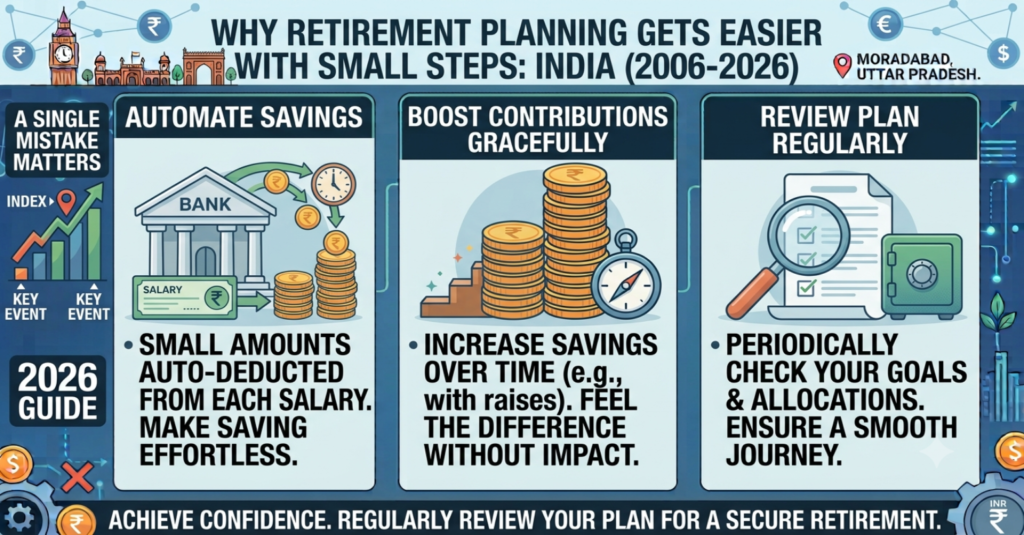
3. Increase Contributions Gradually
Many people believe they must save a large percentage of their income immediately.
Instead, consider increasing your retirement contributions little by little.
For example, you may choose to:
- Increase savings after a raise.
- Add part of a bonus.
- Save a portion of tax refunds.
- Raise contributions once each year.
Small increases are often easier to maintain over the long term.
4. Automate Your Retirement Savings
Automation removes much of the effort from saving.
Automatic contributions help you:
- Save consistently.
- Reduce missed contributions.
- Build discipline.
- Reach retirement goals faster.
Treat retirement savings like any other important monthly expense.
5. Focus on Long-Term Growth
Daily market movements can be distracting.
Retirement planning usually spans decades.
Instead of reacting to short-term changes, focus on your long-term investment strategy.
Patience and consistency have historically been important qualities for long-term investors.
Long-term investing has repeatedly rewarded patient investors. Read our Investing Lessons From the Last 20 Years guide to learn how market history can help shape a stronger retirement strategy.
6. Review Your Plan Regularly
Retirement planning is not a one-time decision.
Your financial situation may change because of:
- Career changes.
- Marriage.
- Children.
- Home purchases.
- Income growth.
- Retirement goals.
Reviewing your plan regularly helps keep your savings aligned with your future needs.
Progress Matters More Than Perfection
You do not have to build a perfect retirement plan overnight.
Small improvements made consistently can create meaningful financial progress over time.
Every positive step brings you closer to greater financial security.
7. Eliminate High-Interest Debt
Saving for retirement becomes easier when expensive debt is under control.
High-interest balances, especially on credit cards, can reduce the amount of money available for long-term investing.
Focus on:
- Paying bills on time.
- Reducing high-interest debt.
- Avoiding unnecessary borrowing.
- Staying within your monthly budget.
Lower debt often creates more room for retirement savings.
8. Diversify Your Investments
A diversified retirement portfolio can help reduce overall investment risk.
Instead of relying on one investment, consider spreading your money across different asset types.
Diversification may include:
- Stocks
- Bonds
- Mutual funds
- Exchange-traded funds (ETFs)
- Cash equivalents
Diversification does not guarantee profits or prevent losses, but it can help manage risk over the long term.
9. Stay Consistent During Market Changes
Market ups and downs are a normal part of investing.
Changing your retirement strategy every time the market moves can make it harder to achieve long-term goals.
Instead:
- Continue making regular contributions.
- Review your plan periodically.
- Avoid emotional decisions.
- Focus on your long-term objectives.
Consistency often matters more than trying to predict short-term market movements.
10. Celebrate Small Milestones
Retirement planning is a long journey.
Recognizing your progress can help you stay motivated.
Celebrate achievements such as:
- Reaching your first savings goal.
- Increasing your monthly contribution.
- Paying off a major debt.
- Staying consistent for a full year.
Small milestones reinforce positive financial habits.
Common Retirement Planning Mistakes
Many people delay retirement planning because they believe they have plenty of time.
Avoid these common mistakes:
- Waiting too long to start saving.
- Saving without a clear goal.
- Ignoring employer retirement benefits.
- Withdrawing retirement savings early.
- Taking more investment risk than necessary.
- Failing to review your retirement plan.
Avoiding these mistakes can improve your long-term financial outlook.
Investor.gov, the U.S. Securities and Exchange Commission’s investor education website, provides reliable information on retirement investing, diversification, compound growth, and long-term financial planning. These resources can help you make informed decisions as you build your retirement strategy.
Frequently Asked Questions
How much should I save for retirement?
The ideal amount depends on your income, retirement goals, lifestyle, and expected expenses.
Saving consistently and increasing contributions over time is often more important than reaching a specific number quickly.
Is it too late to start retirement planning?
Starting earlier is beneficial, but it is never too late to improve your retirement savings.
Even small, consistent contributions can make a meaningful difference over time.
Should I increase my retirement savings every year?
Many people increase contributions whenever their income rises.
Gradually saving more each year may help you reach retirement goals faster.
Why is consistency important in retirement planning?
Regular contributions allow your investments more opportunities to grow over time while helping you build strong financial habits.
Final Thoughts
Retirement planning does not have to feel overwhelming.
The most effective plans often begin with small, manageable steps.
Start saving what you can.
Increase contributions gradually.
Stay invested for the long term.
Review your progress regularly.
By focusing on consistency instead of perfection, you can build greater financial confidence and improve your chances of enjoying a more secure retirement.