 MOHAMMAD ABUBAKR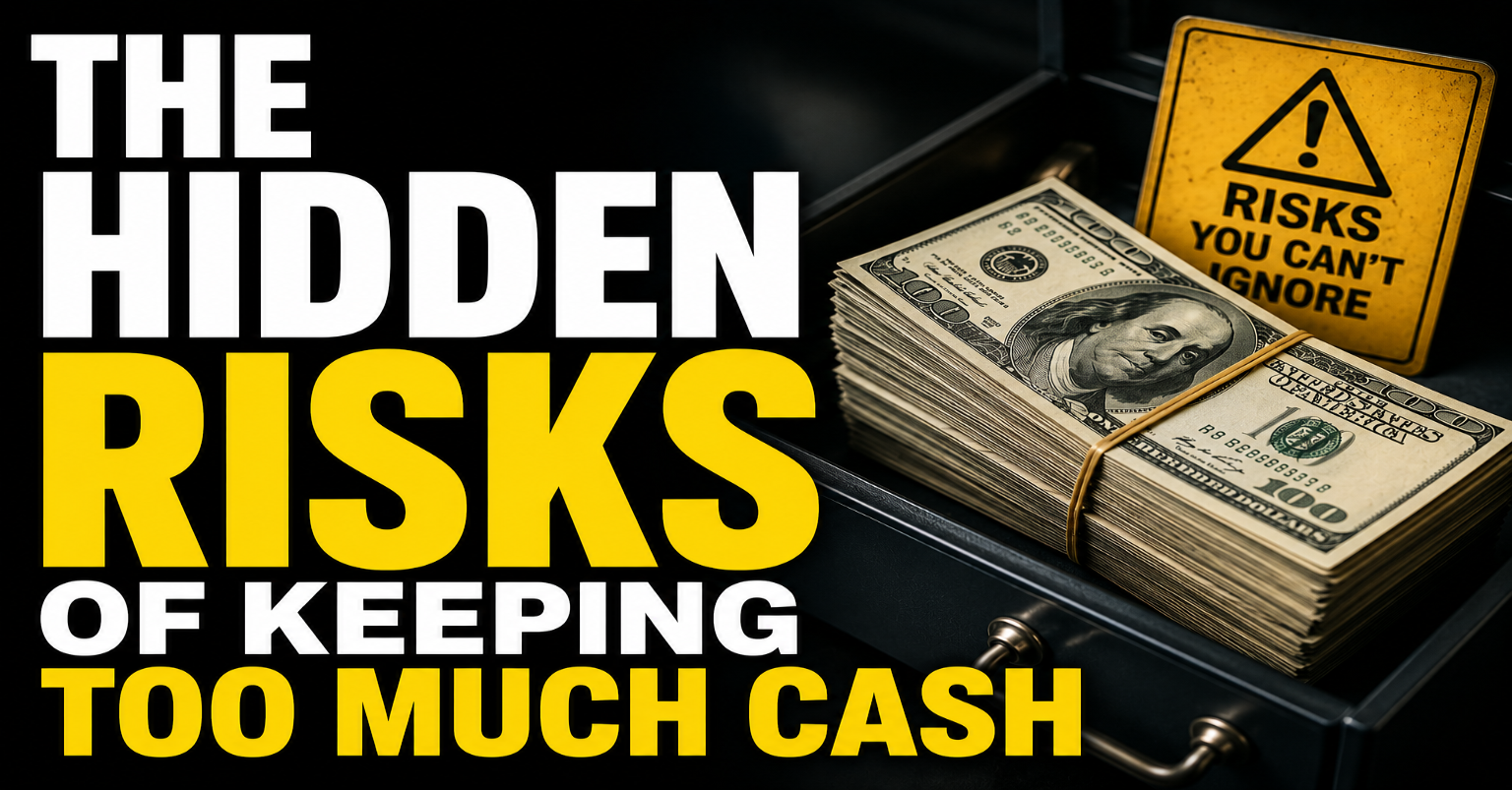
Introduction
Saving money is one of the most important financial habits you can develop.
Having cash available for emergencies, monthly expenses, and short-term goals provides financial security and peace of mind.
However, keeping too much of your money in cash for long periods may create hidden financial risks.
While cash is safe from stock market volatility, it may lose purchasing power because of inflation and could miss opportunities for long-term growth.
The key is finding the right balance between accessible savings and long-term investments.
In this guide, you’ll learn the hidden risks of keeping too much cash and how to build a more balanced financial strategy.
Why Cash Still Matters
Cash remains an essential part of every financial plan.
It can help you:
- Cover emergencies.
- Pay everyday expenses.
- Avoid unnecessary debt.
- Handle unexpected bills.
- Meet short-term financial goals.
The goal isn’t to avoid cash—it’s to avoid relying on it for every financial objective.
1. Inflation Can Reduce Purchasing Power
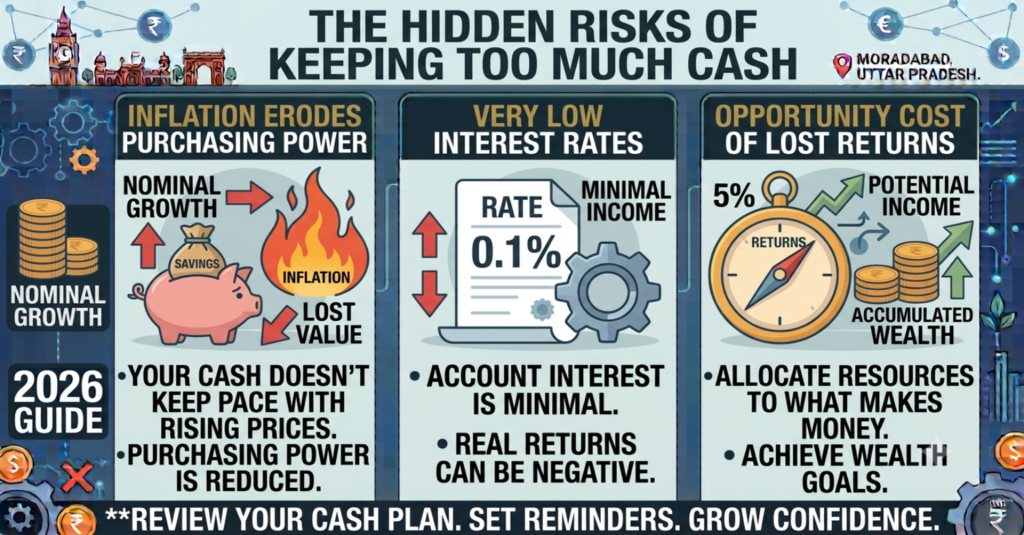
One of the biggest risks of holding large amounts of cash is inflation.
As the prices of goods and services increase, the same amount of money buys less over time.
Examples include:
- Groceries.
- Housing.
- Healthcare.
- Transportation.
- Utilities.
If your cash earns less than the rate of inflation, its real value gradually declines.
2. Your Money May Miss Long-Term Growth
Cash provides stability.
However, it generally offers lower long-term growth potential than investments.
Many long-term investors allocate part of their money to investments that may grow over time while maintaining enough cash for emergencies and short-term needs.
Balancing growth and accessibility is an important part of financial planning.
Before deciding how much cash to keep, read our Why Your Savings Account May Be Losing Money guide to understand how inflation and low interest rates can affect your savings over time.
3. Low Interest Rates Can Limit Earnings
Many traditional savings accounts earn relatively modest interest.
Although high-yield savings accounts may offer better returns, interest rates may still struggle to keep pace with inflation during certain periods.
Reviewing your savings strategy regularly can help ensure your money is working effectively.
4. Opportunity Cost Can Be Significant
Every financial decision involves trade-offs.
Keeping large amounts of cash may mean missing opportunities to:
- Invest for retirement.
- Build long-term wealth.
- Generate investment income.
- Benefit from long-term market growth.
Opportunity cost is an important concept when deciding how to allocate your money.
5. Cash Alone Doesn’t Create Diversification
Diversification spreads financial risk across different types of assets.
Keeping most of your money in cash limits diversification.
Many financial plans include a combination of:
- Cash savings.
- Retirement accounts.
- Investment portfolios.
- Other financial assets.
Diversification supports different financial goals over time.
6. Financial Goals May Take Longer to Reach
If all of your money remains in low-growth accounts, reaching long-term goals may become more difficult.
Examples include:
- Retirement.
- Buying a home.
- College savings.
- Financial independence.
Matching your money to the appropriate financial goal can improve long-term outcomes.
Balance Is More Important Than Extremes
Neither investing everything nor keeping everything in cash is appropriate for most people.
A balanced approach often provides greater financial flexibility.
7. Keep an Emergency Fund, Not Excessive Cash
Having emergency savings is one of the smartest financial habits.
However, the purpose of an emergency fund is to cover unexpected expenses—not to hold every dollar you own.
Many people keep enough readily available cash for situations such as:
- Medical emergencies.
- Job loss.
- Car repairs.
- Home maintenance.
- Unexpected travel.
After meeting your short-term cash needs, you can evaluate other options that align with your long-term financial goals and risk tolerance.
8. Review Your Cash Position Regularly
Your financial needs change over time.
A cash amount that made sense a few years ago may no longer match your current goals.
Review your finances periodically by asking:
- Have my monthly expenses changed?
- Is my emergency fund still appropriate?
- Am I saving for a major purchase?
- Am I missing long-term growth opportunities?
Regular reviews help ensure your money continues working toward your priorities.
9. Match Your Money to Your Goals
Different financial goals often require different strategies.
For example:
- Emergency funds may belong in accessible savings accounts.
- Short-term goals often require low-risk savings options.
- Long-term goals may involve investments, depending on your objectives and risk tolerance.
Separating your money by purpose can make financial planning more effective.
10. Build a Balanced Financial Strategy
Successful financial planning is usually about balance rather than extremes.
Many people benefit from combining:
- Cash for emergencies.
- Savings for short-term goals.
- Investments for long-term growth.
- Retirement accounts for future income.
A balanced approach can help you stay prepared today while planning for tomorrow.
Common Cash Management Mistakes
Many people unintentionally reduce their long-term financial potential through poor cash management.
Avoid these common mistakes:
- Keeping every dollar in checking or low-interest savings accounts.
- Ignoring the impact of inflation.
- Saving without clear financial goals.
- Failing to review cash balances regularly.
- Avoiding investing because of short-term market fears.
- Not maintaining an emergency fund before investing for long-term goals.
Making thoughtful adjustments can improve your overall financial strategy.
Investor.gov, operated by the U.S. Securities and Exchange Commission (SEC), offers educational resources on investing, diversification, long-term financial planning, and managing investment risk. These materials can help you make informed decisions about balancing cash and investments.
Frequently Asked Questions
Is it bad to keep a lot of cash?
Keeping cash for emergencies and planned expenses is important.
However, holding significantly more cash than you need for long-term periods may reduce purchasing power and limit potential long-term growth.
How much cash should I keep?
The right amount depends on your financial goals, monthly expenses, income stability, and personal circumstances.
Many people maintain an emergency fund while using other financial tools for long-term objectives.
Should I invest all of my money?
Not necessarily.
Most financial plans include a combination of accessible cash and long-term investments.
Maintaining some liquid savings can help cover unexpected expenses without selling investments.
Why does inflation affect cash?
Inflation increases the prices of goods and services over time.
If your cash earns less than the inflation rate, your purchasing power may gradually decrease.
Final Thoughts
Cash plays an essential role in every financial plan.
It provides flexibility, security, and peace of mind during unexpected situations.
At the same time, keeping too much money in cash for long periods may reduce your ability to grow wealth and protect your purchasing power.
The goal is not to avoid cash.
Instead, create a balanced financial strategy that supports both your short-term needs and your long-term goals.
Finding that balance can help strengthen your financial future.