 MOHAMMAD ABUBAKR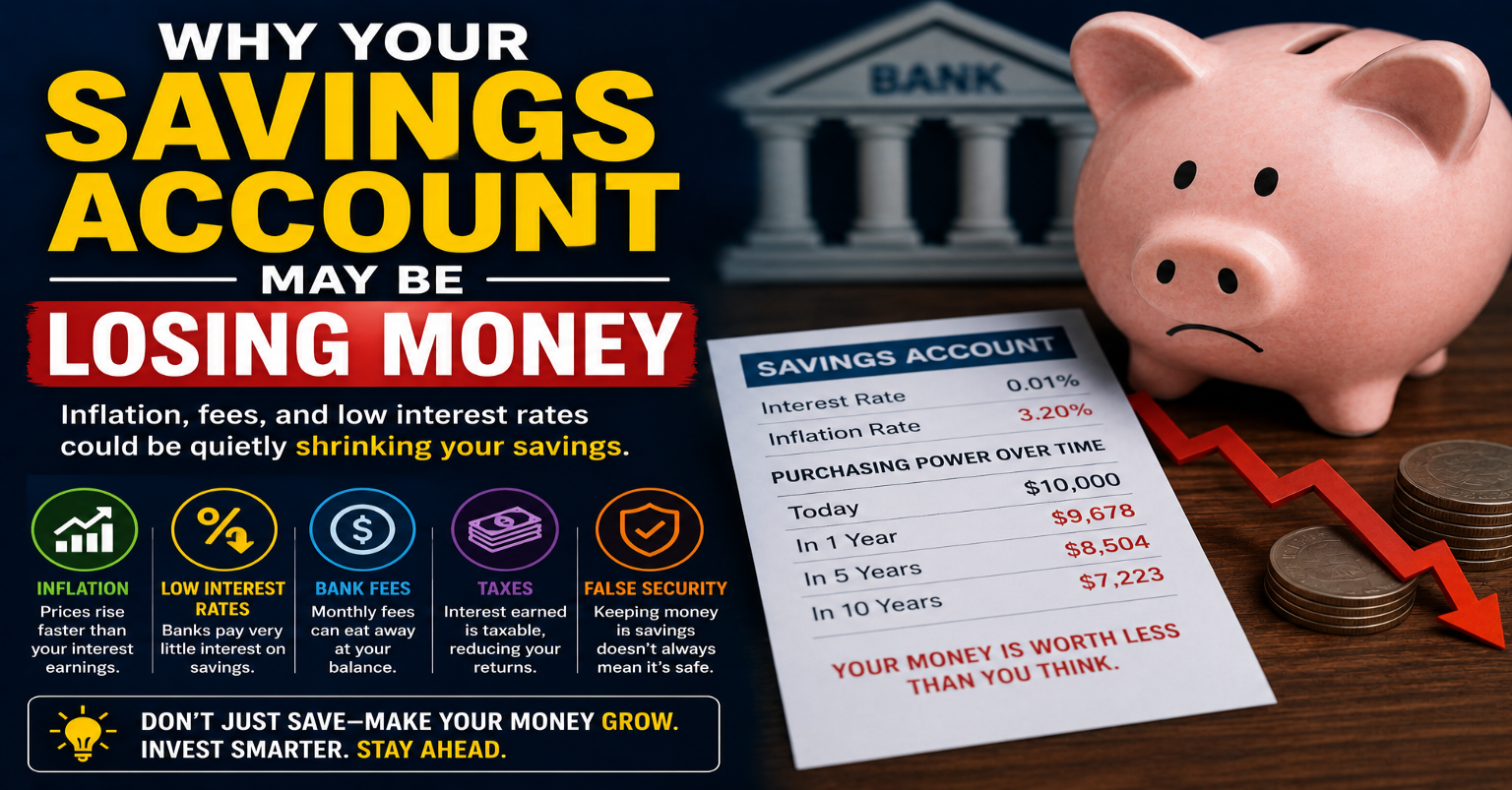
Introduction
Many people believe that keeping money in a savings account guarantees financial growth.
While a savings account is one of the safest places to store cash, it does not always increase your purchasing power.
If the interest your account earns is lower than the rate of inflation, your money may gradually lose value over time.
That doesn’t mean savings accounts are a bad choice.
They remain an important part of a healthy financial plan.
The key is understanding what they are designed to do—and what they are not.
In this guide, you’ll learn why your savings account may be losing money and how to make smarter decisions with your cash savings.
What Does “Losing Money” Really Mean?
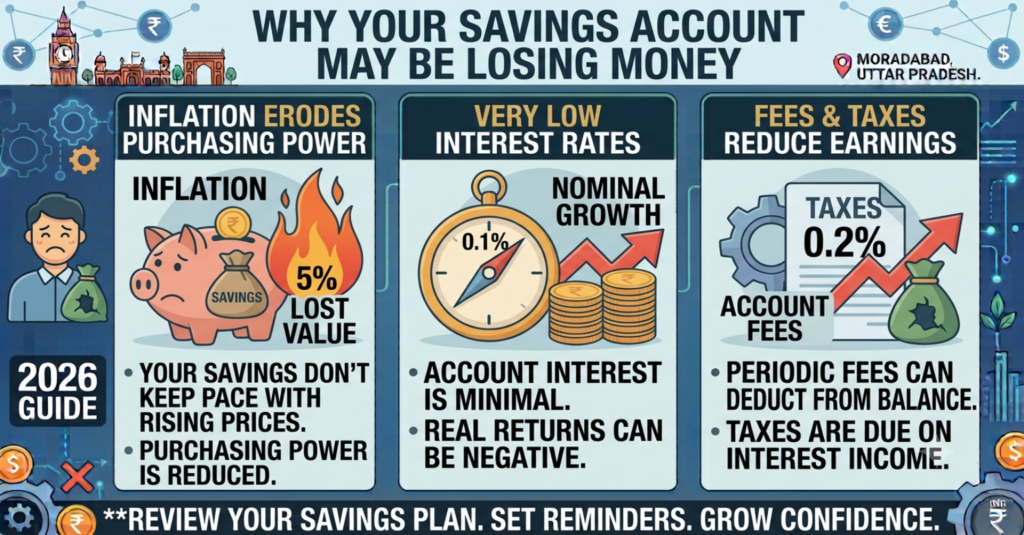
Your account balance may stay the same—or even increase slightly because of interest.
However, if prices rise faster than your savings grow, your money buys less than it did before.
This is known as a loss of purchasing power.
Understanding purchasing power helps explain why inflation matters so much to savers.
1. Inflation Reduces Purchasing Power
Inflation increases the cost of everyday goods and services.
As prices rise, your savings may not stretch as far.
Examples include:
- Groceries.
- Gasoline.
- Housing.
- Utilities.
- Healthcare.
If inflation rises faster than your savings earn interest, the real value of your money declines.
2. Low Interest Rates May Limit Growth
Many traditional savings accounts pay relatively modest interest rates.
Although your balance may grow gradually, the growth may not keep pace with inflation.
Reviewing your account’s interest rate periodically can help you understand how your savings are performing.
3. Savings Accounts Are Designed for Safety
The primary purpose of a savings account is protecting your money—not maximizing long-term returns.
Savings accounts are commonly used for:
- Emergency funds.
- Short-term savings goals.
- Planned expenses.
- Financial security.
Understanding this purpose helps set realistic expectations.
4. Keeping Too Much Cash Can Have a Cost
Having emergency savings is important.
However, keeping significantly more cash than you need for short-term goals may reduce opportunities for long-term growth.
Many people choose to balance:
- Cash savings.
- Retirement accounts.
- Investments.
- Other financial assets.
Diversification can support different financial goals.
5. Fees Can Reduce Your Savings
Some financial institutions charge fees that reduce your account balance.
Examples may include:
- Monthly maintenance fees.
- Excess withdrawal fees.
- Minimum balance fees.
Reviewing your account terms regularly can help you avoid unnecessary costs.
6. Regular Savings Still Matter
Even if inflation affects purchasing power, saving money remains essential.
Consistent savings can help you:
- Handle emergencies.
- Avoid unnecessary debt.
- Prepare for planned expenses.
- Increase financial confidence.
Building the habit of saving is often more important than focusing only on interest earnings.
Saving consistently becomes even more important when prices are rising. Read our Smart Ways to Save Money During Inflation guide for practical strategies to protect your budget and strengthen your financial future.
Understanding Your Savings Strategy
A savings account is an important financial tool.
The goal is not to avoid saving—but to understand how your savings fit into your overall financial plan.
7. Review Your Savings Goals Regularly
Not every savings goal is the same.
Review your financial goals every few months to decide whether your savings strategy still meets your needs.
For example, you may be saving for:
- An emergency fund.
- A vacation.
- A home down payment.
- Major home repairs.
- Future education expenses.
Matching your savings account to your financial goals helps you manage your money more effectively.
8. Compare Different Savings Account Options
Not all savings accounts offer the same features.
When comparing accounts, consider:
- Interest rates.
- Monthly fees.
- Minimum balance requirements.
- Withdrawal limits.
- Online banking features.
Taking time to compare options may help you find an account that better fits your financial needs.
9. Continue Saving While Building Wealth
Saving and investing serve different purposes.
Savings accounts help protect money needed in the near future.
Long-term investments may offer greater growth potential, although they also involve more risk.
Many people use both as part of a balanced financial strategy.
10. Make Saving an Automatic Habit
One of the easiest ways to grow your savings is through automation.
Consider setting up automatic transfers from your checking account to your savings account.
Automatic saving can help you:
- Build your emergency fund.
- Stay consistent.
- Reduce the temptation to spend.
- Reach financial goals more quickly.
Small automatic deposits can add up over time.
Common Savings Mistakes
Many people unintentionally reduce the value of their savings through avoidable mistakes.
Watch out for these common habits:
- Keeping all of your money in one account.
- Ignoring inflation.
- Paying unnecessary account fees.
- Not reviewing interest rates.
- Spending emergency savings on non-emergencies.
- Saving without clear financial goals.
Improving these habits can strengthen your overall financial plan.
The Consumer Financial Protection Bureau (CFPB) provides reliable guidance on savings accounts, emergency funds, budgeting, and managing your money. These resources can help you make informed decisions about protecting your savings and improving your financial well-being.
Frequently Asked Questions
Is my savings account actually losing money?
Your account balance may increase because of interest.
However, if inflation is higher than the interest your account earns, your purchasing power may decline over time.
Should I stop using a savings account?
No.
Savings accounts remain an important place for emergency funds and short-term financial goals because they provide safety, liquidity, and easy access to cash.
What’s the difference between saving and investing?
Saving is generally intended for short-term needs and financial security.
Investing is usually designed for long-term growth and involves different levels of risk.
Both can play an important role in a well-rounded financial plan.
How often should I review my savings account?
Reviewing your account at least once or twice a year can help you compare interest rates, check for unnecessary fees, and ensure your savings strategy still matches your financial goals.
Final Thoughts
A savings account is one of the most valuable tools for protecting your financial stability.
However, understanding how inflation, interest rates, and account fees affect your money can help you make better financial decisions.
Continue building your savings.
Review your financial goals regularly.
Compare account options when appropriate.
Use your savings account alongside other financial strategies that support your long-term goals.
A thoughtful balance between saving and investing can help strengthen your financial future.