 MOHAMMAD ABUBAKR
Introduction
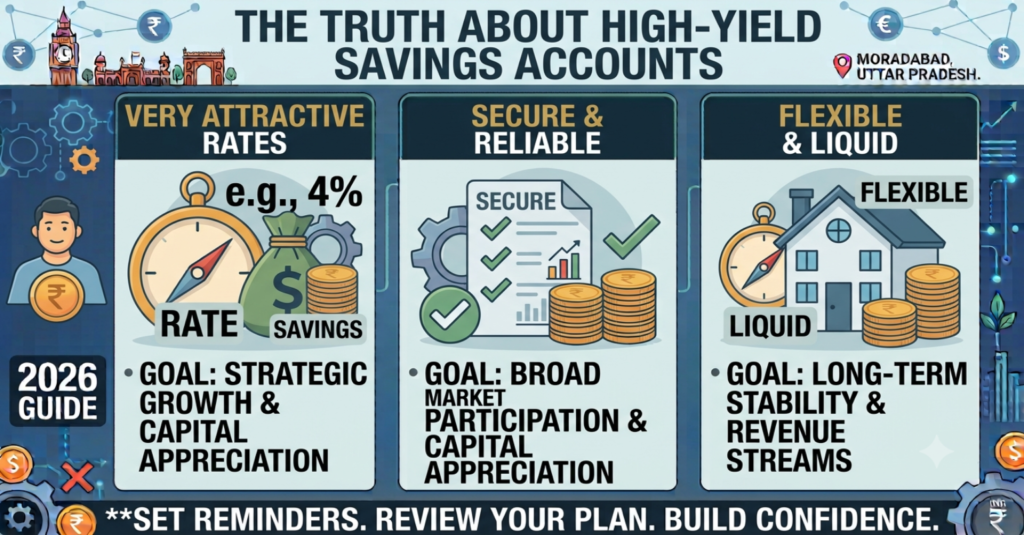
If you’ve been looking for better ways to grow your savings, you’ve probably heard about high-yield savings accounts.
These accounts often offer higher interest rates than traditional savings accounts, making them attractive to people who want their cash to earn more while remaining easily accessible.
However, they’re not the perfect solution for every financial goal.
Understanding how high-yield savings accounts work can help you decide whether they belong in your financial plan.
In this guide, you’ll learn the truth about high-yield savings accounts, including their advantages, limitations, and the situations where they may make the most sense.
What Is a High-Yield Savings Account?
A high-yield savings account is designed to pay a higher annual percentage yield (APY) than many traditional savings accounts.
Like other savings accounts, they are commonly used for:
- Emergency funds.
- Short-term savings goals.
- Planned purchases.
- Cash reserves.
The primary difference is the potential to earn more interest on your deposits.
1. Higher Interest Can Help Your Savings Grow
One of the biggest advantages of a high-yield savings account is the opportunity to earn more interest.
Although rates change over time, a higher APY can help your savings grow faster than they might in a standard savings account.
Keep in mind that higher interest does not eliminate the effects of inflation, but it may help reduce its impact.
Understanding how interest and inflation work together is essential for protecting your savings. Read our Why Your Savings Account May Be Losing Money guide to learn why purchasing power matters when choosing where to keep your cash.
2. Your Money Remains Accessible
Unlike many long-term investments, money in a high-yield savings account is generally available when you need it.
This makes these accounts suitable for:
- Emergency savings.
- Home repairs.
- Medical expenses.
- Planned purchases.
Easy access is one reason many people use these accounts as part of their emergency fund strategy.
3. Interest Rates Can Change
Many people assume the interest rate stays the same forever.
In reality, banks may adjust savings rates based on market conditions and broader economic factors.
Reviewing your account periodically helps ensure it still meets your financial needs.
4. They Are Not Designed for Long-Term Investing
Although high-yield savings accounts may earn more interest than traditional savings accounts, they are not investments.
They prioritize:
- Safety.
- Liquidity.
- Stability.
Long-term investing generally involves different financial products that carry different levels of risk and return potential.
5. Online Banks Often Offer Competitive Rates
Many online financial institutions offer higher savings rates than traditional brick-and-mortar banks.
This is often because online banks have lower operating costs.
However, interest rates, account features, fees, and customer service can vary from one institution to another.
Comparing several options before opening an account is a smart financial habit.
6. Fees Still Matter
A higher interest rate can lose value if unnecessary account fees reduce your earnings.
Before opening an account, review details such as:
- Monthly maintenance fees.
- Minimum balance requirements.
- Withdrawal policies.
- Other account charges.
Choosing an account with favorable terms can improve your overall savings experience.
High-Yield Savings Accounts Are a Tool
Like every financial product, a high-yield savings account serves a specific purpose.
Understanding that purpose helps you use it more effectively as part of a balanced financial strategy.
7. High-Yield Savings Accounts Work Best With Clear Goals
Before opening any savings account, decide what you’re saving for.
High-yield savings accounts are commonly used for:
- Emergency funds.
- Vacation savings.
- Home down payments.
- Major planned purchases.
- Short-term financial goals.
Matching the account to a specific purpose can help you stay motivated and organized.
8. Compare More Than Just the Interest Rate
A higher APY is important, but it should not be the only factor you consider.
Also compare:
- Monthly fees.
- Minimum balance requirements.
- Mobile banking features.
- Customer support.
- Transfer options.
- Account accessibility.
Looking at the full picture helps you choose an account that fits your financial needs.
9. Continue Saving Consistently
The amount you save regularly often has a greater impact than chasing the highest interest rate.
Consider setting up automatic transfers into your savings account.
Consistent saving can help you:
- Grow your emergency fund.
- Reach financial goals faster.
- Develop healthy money habits.
- Reduce financial stress.
Small deposits made consistently can produce meaningful results over time.
10. Use High-Yield Savings Alongside Other Financial Tools
A high-yield savings account is only one part of a healthy financial plan.
Many people combine it with:
- Checking accounts.
- Retirement accounts.
- Investment accounts.
- Budgeting tools.
Using different financial tools for different goals can help create a more balanced financial strategy.
Common Mistakes to Avoid
Many savers overlook important details when choosing a high-yield savings account.
Avoid these common mistakes:
- Choosing an account based only on the highest APY.
- Ignoring account fees.
- Keeping too much cash intended for long-term growth.
- Forgetting to compare account features.
- Not reviewing interest rates periodically.
- Saving without clear financial goals.
Avoiding these mistakes can help you get more value from your savings.
The Consumer Financial Protection Bureau (CFPB) provides reliable information on savings accounts, interest rates, banking products, and managing your money. Reviewing these educational resources can help you compare account options and make informed financial decisions.
Frequently Asked Questions
Are high-yield savings accounts safe?
Many high-yield savings accounts offered by federally insured banks and credit unions provide protection up to applicable insurance limits.
Before opening an account, verify the institution’s insurance coverage.
Are high-yield savings accounts better than traditional savings accounts?
They may offer higher interest rates than many traditional savings accounts.
However, the best choice depends on your financial goals, account features, fees, and accessibility needs.
Can I lose money in a high-yield savings account?
Your deposited funds generally do not lose value because of market fluctuations.
However, inflation may reduce your purchasing power over time if prices rise faster than your savings earn interest.
Should I keep all my money in a high-yield savings account?
Many financial experts recommend using high-yield savings accounts for emergency funds and short-term goals, while considering other financial products for long-term growth based on your personal goals and risk tolerance.
Final Thoughts
High-yield savings accounts can be an excellent place to keep money that you may need within the next few months or years.
They offer a combination of safety, liquidity, and the potential to earn more interest than many traditional savings accounts.
However, they are not designed to replace long-term investing.
By understanding both their advantages and limitations, you can decide how a high-yield savings account fits into your overall financial plan and helps support your long-term financial success.