
 MOHAMMAD ABUBAKR
Introduction
Good financial decisions are rarely about earning the highest income.
Instead, they often come down to the everyday habits that shape how you spend, save, and invest your money.
Many Americans unknowingly make financial mistakes that can slow wealth building and create unnecessary stress.
The good news is that most of these mistakes can be corrected with better planning and consistent financial habits.
In this guide, we’ll explore the biggest money mistakes Americans are making right now and practical ways to avoid them.
Why Financial Habits Matter
Your daily financial decisions have a long-term impact.
Healthy money habits can help you:
- Build savings.
- Reduce debt.
- Increase financial security.
- Prepare for unexpected expenses.
- Reach long-term financial goals.
Small improvements made consistently often produce the biggest results.
1. Living Without a Budget
Many people spend money without knowing exactly where it goes.
A monthly budget helps you:
- Track income.
- Monitor expenses.
- Identify unnecessary spending.
- Plan for savings.
Without a budget, it’s much easier to overspend.
2. Ignoring Small Daily Expenses
Small purchases may seem harmless.
However, repeated daily spending on items like coffee, food delivery, and impulse purchases can quietly add up over time.
Tracking these expenses often reveals opportunities to save hundreds or even thousands of dollars each year.
Many people underestimate how much everyday purchases affect their finances. Read our Why Small Daily Expenses Add Up Faster Than You Think guide to see how small spending habits can influence your long-term financial health.
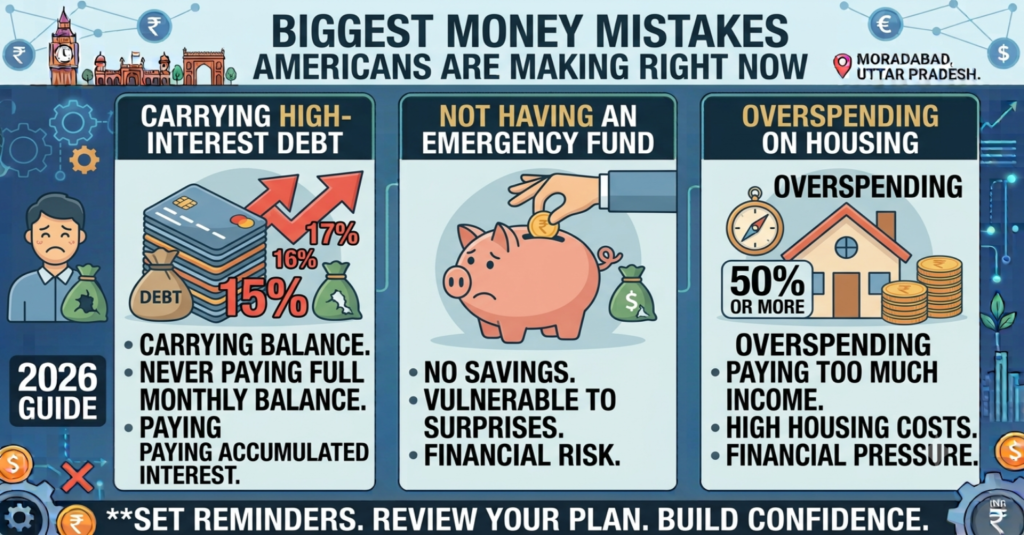
3. Not Building an Emergency Fund
Unexpected expenses happen to everyone.
Without emergency savings, people may rely on high-interest debt when facing:
- Medical bills.
- Car repairs.
- Home maintenance.
- Temporary job loss.
Even small, regular contributions can strengthen your financial security.
4. Carrying High-Interest Credit Card Debt
Credit cards can be useful financial tools.
However, carrying large balances for long periods may increase financial pressure because of interest charges.
Whenever possible:
- Pay on time.
- Keep balances low.
- Pay your statement balance in full.
Responsible credit use supports long-term financial health.
5. Waiting Too Long to Start Investing
Many people postpone investing because they believe they need more money or better market conditions.
Starting earlier often provides more time for long-term growth through consistent investing.
The habit of investing regularly is usually more important than trying to find the perfect time to begin.
6. Spending More as Income Increases
A higher income doesn’t always lead to greater wealth.
Some people increase their spending every time they receive a raise.
Instead, consider using additional income to:
- Increase savings.
- Pay down debt.
- Invest for retirement.
- Build an emergency fund.
Growing your savings alongside your income can strengthen your financial future.
Better Decisions Start With Awareness
Most financial mistakes are preventable.
The first step is recognizing the habits that may be slowing your progress.
7. Not Reviewing Financial Goals Regularly
Financial goals should change as your life changes.
Many people set goals once and never review them again.
Take time every few months to evaluate:
- Your savings progress.
- Debt repayment.
- Investment performance.
- Retirement contributions.
- Major upcoming expenses.
Regular reviews help keep your financial plan on track.
8. Making Emotional Money Decisions
Emotions can influence financial choices more than people realize.
Fear, excitement, and stress often lead to:
- Impulse purchases.
- Panic selling investments.
- Overspending during holidays.
- Taking unnecessary financial risks.
Making decisions based on a long-term financial plan instead of emotions usually leads to better outcomes.
9. Ignoring Retirement Planning
Many Americans believe retirement planning can wait.
However, delaying retirement savings may reduce the amount of time your investments have to grow.
Even modest contributions made consistently can make a meaningful difference over the long term.
Starting early is often one of the most valuable financial decisions you can make.
10. Trying to Keep Up With Other People’s Spending
Comparing your lifestyle to others can put unnecessary pressure on your finances.
Social media and advertising often encourage spending that doesn’t align with personal financial goals.
Instead of comparing yourself with others:
- Focus on your own budget.
- Build savings consistently.
- Invest for your future.
- Make purchases based on your priorities.
Financial success looks different for everyone.
Common Signs Your Financial Habits Need Improvement
You may benefit from reviewing your financial plan if you:
- Frequently rely on credit cards.
- Struggle to save money.
- Don’t know where your money goes each month.
- Avoid checking bank or credit card statements.
- Feel stressed about unexpected expenses.
- Have no written financial goals.
Recognizing these warning signs is the first step toward improving your financial health.
The Consumer Financial Protection Bureau (CFPB) provides practical guidance on budgeting, saving, managing debt, and improving financial well-being. These resources can help you build healthier money habits and make informed financial decisions.
Frequently Asked Questions
What is the biggest financial mistake people make?
One of the most common mistakes is spending without a budget.
Without understanding where your money goes, it’s difficult to save consistently or reach long-term financial goals.
How can I improve my financial habits?
Start by creating a budget, tracking expenses, building an emergency fund, reducing unnecessary debt, and reviewing your financial goals regularly.
Small improvements made consistently can have a significant impact.
Is it too late to improve my finances?
No.
Positive financial habits can be developed at almost any stage of life.
The sooner you begin making intentional financial decisions, the more time you have to benefit from them.
Why do small money mistakes matter?
Small financial decisions repeated consistently can either strengthen or weaken your long-term financial position.
Good habits often produce meaningful results over time.
Final Thoughts
Everyone makes financial mistakes from time to time.
The important part is recognizing them and making positive changes.
Building wealth is usually the result of consistent habits—not perfect decisions.
By following a budget, controlling debt, saving regularly, investing for the future, and focusing on your own financial goals, you can create a stronger financial foundation.
Small improvements today can lead to greater financial security tomorrow.