
 MOHAMMAD ABUBAKR
Housing costs have become one of the biggest financial concerns for American households. Whether you’re buying your first home, renting an apartment, or already own a property, changing housing costs can affect your monthly budget and long-term financial plans. Consequently, understanding today’s housing trends is more important than ever.
Fortunately, rising housing costs don’t tell the entire story. While some markets continue to experience higher prices, others have begun to stabilize as inventory improves and economic conditions evolve. Moreover, local housing markets often perform very differently from national averages. Therefore, understanding what’s happening in your area is just as important as following nationwide trends.
Several factors continue to shape today’s housing market, including mortgage rates, home inventory, construction activity, insurance costs, and population shifts. As a result, buyers and homeowners alike are adjusting their financial strategies to keep pace with changing conditions.
Whether you’re planning to purchase a home, renew a lease, or simply better understand today’s real estate market, these housing trends can help you make more informed financial decisions.
Housing Market Trends Every Buyer Should Know
1. Mortgage Rates Continue to Influence Affordability
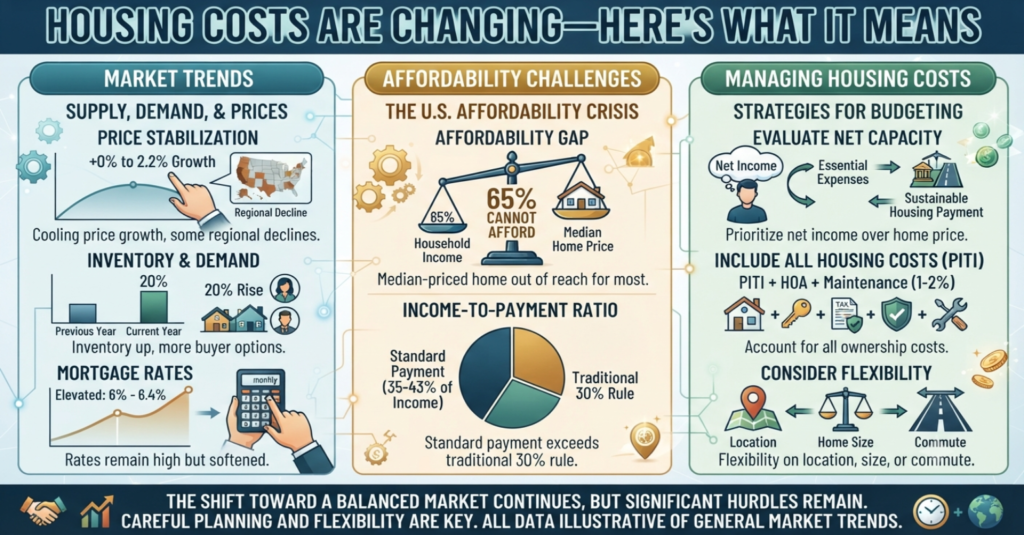
Mortgage rates remain one of the biggest factors affecting home affordability.
Even modest rate changes can influence:
- Monthly mortgage payments
- Loan qualification
- Buying power
- Overall housing costs
Consequently, many buyers compare multiple lenders before choosing a mortgage.
2. Home Prices Depend on Local Markets
National headlines don’t always reflect local conditions.
Some cities continue experiencing price growth, while others have seen prices level off or decline.
Local home prices are influenced by:
- Population growth
- Employment opportunities
- Housing supply
- Buyer demand
- New construction
Therefore, researching your local market provides a clearer picture than relying only on national averages.
3. Housing Inventory Is Gradually Improving
For several years, limited inventory made buying a home especially competitive.
Fortunately, more homes have gradually entered the market in many regions.
As inventory improves, buyers may experience:
- More housing choices
- Better negotiating opportunities
- Less competition
- More time to compare properties
Nevertheless, inventory remains below historical averages in some markets.
4. Renting Is Also Becoming More Expensive
Buying isn’t the only housing challenge.
Many renters continue to experience higher monthly housing costs as lease renewals become more expensive in certain markets.
Therefore, renters often review their budgets more frequently while comparing housing options carefully.
5. Property Insurance Costs Continue to Rise
Housing expenses extend beyond monthly mortgage payments.
Many homeowners now pay more for:
- Homeowners insurance
- Flood insurance (where applicable)
- Property maintenance
- Repairs
Consequently, total housing costs may increase even if mortgage payments remain unchanged.
6. New Construction Creates More Choices
Homebuilders continue adding inventory in many growing communities.
Newly built homes often include:
- Energy-efficient features
- Modern floor plans
- Builder warranties
- Lower maintenance requirements
Moreover, some builders may offer incentives that improve affordability for qualified buyers.
7. Higher Housing Costs Affect Household Budgets
Housing often represents the largest monthly expense for most families.
As housing costs rise, households may adjust spending on:
- Entertainment
- Travel
- Dining out
- Savings
- Other financial goals
Therefore, reviewing your overall budget becomes increasingly important.
8. Energy Efficiency Can Lower Long-Term Costs
Many buyers now prioritize homes with energy-efficient features.
Popular improvements include:
- Energy-efficient windows
- Modern insulation
- High-efficiency HVAC systems
- Smart thermostats
Although these upgrades may increase upfront costs, they can reduce monthly utility expenses over time.
9. Property Taxes Continue to Affect Housing Budgets
When people think about housing costs, they often focus on the purchase price or monthly rent.
However, property taxes are another major expense for homeowners.
Property tax amounts vary depending on:
- State and local tax rates
- Home value
- Local government assessments
- School district funding
Consequently, understanding property tax obligations before buying a home can help you avoid unexpected financial pressure.
10. Maintenance Costs Add Up Over Time
Owning a home involves ongoing expenses beyond the mortgage payment.
Common maintenance costs include:
- Roof repairs
- Plumbing issues
- HVAC servicing
- Landscaping
- Appliance replacement
Therefore, setting aside money for routine maintenance can help prevent larger financial surprises later.
11. Buyers Are Prioritizing Affordability
Many homebuyers are adjusting their expectations to match today’s market conditions.
Instead of purchasing the largest home they qualify for, many are focusing on:
- Affordable monthly payments
- Lower utility costs
- Reasonable maintenance expenses
- Flexible floor plans
- Convenient locations
As a result, affordability has become just as important as square footage.
12. Financial Preparation Creates More Options
Whether you’re buying or renting, preparation improves your financial flexibility.
Helpful steps include:
- Improving your credit profile
- Saving for a larger down payment
- Building an emergency fund
- Comparing mortgage lenders
- Researching neighborhood trends
Furthermore, strong financial preparation often leads to greater confidence during the housing search.
Common Housing Mistakes to Avoid
Changing housing costs make careful planning even more important.
Buying Beyond Your Budget
Qualifying for a larger mortgage doesn’t necessarily mean you should borrow the maximum amount.
Instead, leave room in your budget for savings, maintenance, emergencies, and future financial goals.
Ignoring Total Housing Costs
Monthly mortgage payments represent only part of homeownership expenses.
Remember to include:
- Property taxes
- Homeowners insurance
- Utilities
- Maintenance
- HOA fees, if applicable
Considering the full cost of ownership creates a more realistic budget.
Skipping Financial Preparation
Shopping for a home before reviewing your finances can create unnecessary challenges.
Getting pre-approved, improving your credit, and saving for upfront costs can strengthen your buying position.
Focusing Only on National Headlines
Real estate markets differ from one community to another.
Researching local market conditions provides a more accurate picture than relying solely on national housing news.
Smart Housing Strategies
Although housing markets continue to evolve, these strategies can help buyers and homeowners make informed decisions:
- Create a realistic housing budget.
- Compare mortgage offers from multiple lenders.
- Build an emergency fund for unexpected repairs.
- Research local market conditions.
- Consider total ownership costs.
- Improve your credit before applying for a mortgage.
- Save for a larger down payment when possible.
- Review homeowners insurance regularly.
- Plan for routine maintenance expenses.
- Reevaluate your housing budget each year.
While every housing market is different, these habits can support stronger long-term financial decisions.
Frequently Asked Questions
Why are housing costs changing?
Housing costs are influenced by many factors, including mortgage rates, home inventory, construction activity, insurance premiums, property taxes, inflation, and local supply and demand.
Are home prices increasing everywhere?
No. Housing markets vary widely by location. Some areas continue to experience price growth, while others have seen prices stabilize or decline.
How can I prepare for rising housing costs?
Creating a realistic budget, improving your credit, building emergency savings, and researching your local housing market can help you prepare for changing costs.
Should I wait to buy a home?
The right time to buy depends on your financial situation, housing needs, and long-term plans rather than trying to perfectly predict market conditions.
Why is affordability becoming more important?
Higher mortgage rates, insurance costs, taxes, and maintenance expenses have increased the overall cost of homeownership, making affordability a priority for many households.
Final Thoughts
Housing costs continue to evolve, affecting buyers, renters, and homeowners across the country. While mortgage rates, home prices, insurance premiums, and maintenance expenses may change over time, careful planning can help you make informed financial decisions. Consequently, understanding the full cost of housing—not just the purchase price or monthly rent—is essential for long-term financial stability.
Moreover, today’s housing market rewards preparation more than perfect timing. Improving your credit, building savings, researching local market conditions, and creating a realistic budget can position you to respond confidently as opportunities arise. Small financial decisions made today can have a meaningful impact on your future housing costs.
Above all, remember that housing is one of the largest financial commitments most people will make. By focusing on affordability, planning for ongoing expenses, and making decisions that align with your long-term goals, you can navigate changing housing costs while building a stronger financial future.
U.S. Department of Housing and Urban Development (HUD) – Homebuying Resources