 MOHAMMAD ABUBAKR
Becoming debt-free is about more than eliminating monthly payments. It also creates opportunities to save more, invest consistently, and work toward long-term financial goals with greater confidence. Although paying off debt takes time, developing the right financial habits can make the journey much more manageable. Consequently, consistent progress often leads to lasting financial freedom.
Fortunately, building a debt-free lifestyle doesn’t require perfection. Instead, it begins with practical habits that improve your money management over time. Moreover, even small changes in your spending and saving routines can accelerate your debt repayment while strengthening your overall financial health.
Today’s economic environment has encouraged many Americans to take a closer look at their finances. Therefore, reducing unnecessary debt has become an important priority for households seeking greater financial stability.
Whether you’re paying off credit cards, personal loans, auto loans, or student loans, these habits can help you build a stronger financial future.
Best Ways to Become Debt-Free Faster
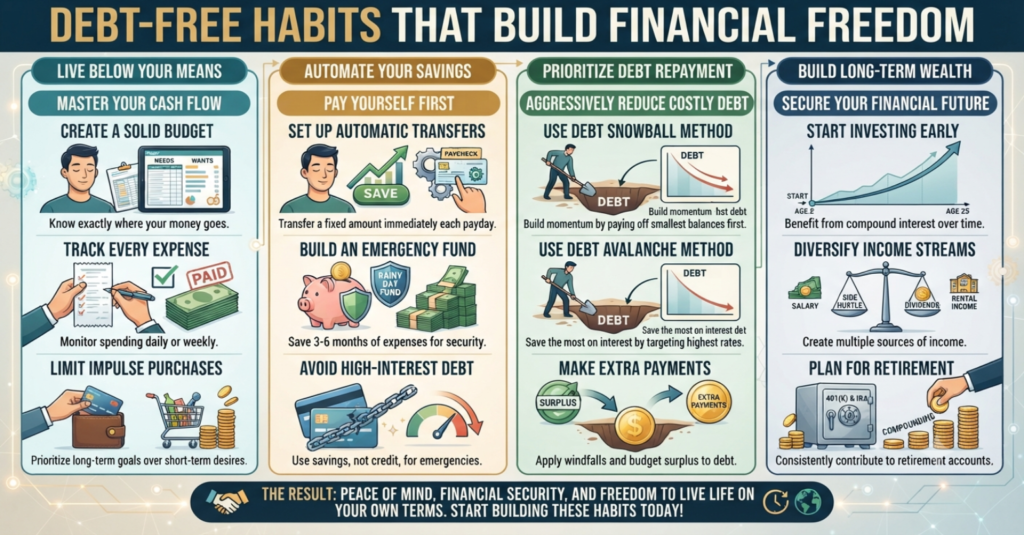
1. Create a Budget You Can Actually Follow
A realistic budget is the foundation of every successful debt repayment plan.
Instead of creating unrealistic spending limits, build a budget that reflects your actual income and expenses.
Include categories such as:
- Housing
- Groceries
- Transportation
- Utilities
- Savings
- Debt payments
Consequently, you’ll have a clearer understanding of where your money goes each month.
2. Pay More Than the Minimum
Making only the required minimum payment can extend your repayment timeline and increase interest costs.
Whenever your budget allows, pay extra toward your debt.
Doing so may help you:
- Reduce interest expenses
- Eliminate debt faster
- Improve monthly cash flow
- Reach financial goals sooner
Furthermore, even modest extra payments can make a meaningful difference over time.
3. Build an Emergency Fund
Unexpected expenses often cause people to rely on credit cards again.
Therefore, maintaining emergency savings helps reduce the need for additional borrowing.
Even a modest emergency fund can help cover:
- Vehicle repairs
- Medical bills
- Home maintenance
- Unexpected travel
As a result, your debt repayment plan is less likely to be interrupted.
4. Avoid Taking On New Debt
Paying off debt becomes much easier when new balances stop growing.
Before making a purchase, ask yourself whether it supports your long-term financial goals.
Moreover, delaying unnecessary purchases often protects your progress.
5. Track Every Dollar You Spend
Knowing exactly where your money goes creates opportunities to save.
Reviewing monthly spending helps identify:
- Unused subscriptions
- Impulse purchases
- Convenience spending
- Recurring charges
Consequently, the money you save can be redirected toward debt repayment.
6. Increase Payments as Your Income Grows
Raises, bonuses, and additional income create opportunities to accelerate debt repayment.
Instead of increasing spending immediately, consider applying part of your extra income toward outstanding balances.
Furthermore, increasing payments gradually can shorten your repayment timeline significantly.
7. Set Clear Financial Goals
Specific goals make it easier to stay motivated.
Examples include:
- Paying off a credit card
- Becoming debt-free
- Building emergency savings
- Saving for retirement
As a result, every payment becomes part of a larger financial plan.
8. Celebrate Progress Along the Way
Paying off debt takes time.
Therefore, recognizing milestones can help you stay motivated throughout the process.
Whether you’ve paid off one account or reached a savings goal, celebrating progress encourages long-term consistency.
9. Reduce High-Interest Debt First
Not all debt has the same financial impact.
Therefore, many people prioritize paying off balances with the highest interest rates before focusing on lower-interest loans.
Common examples include:
- Credit card debt
- Certain personal loans
- Payday loans
- High-interest financing offers
Consequently, reducing expensive debt first may lower the total interest you pay while helping you become debt-free sooner.
10. Automate Your Payments
Consistency plays a major role in successful debt repayment.
Instead of relying on memory, schedule automatic payments for recurring bills and loan payments.
As a result, you reduce the risk of missed due dates, late fees, and unnecessary stress.
Moreover, automation allows you to stay focused on your long-term financial goals.
11. Increase Your Financial Knowledge
Learning more about personal finance can strengthen every part of your debt-free journey.
Consider expanding your understanding of:
- Budgeting
- Credit management
- Saving strategies
- Investing
- Retirement planning
Furthermore, greater financial knowledge often leads to better decisions and stronger money habits over time.
12. Keep Reviewing Your Financial Plan
Financial situations rarely stay the same forever.
Income, expenses, family responsibilities, and life goals all evolve over time.
Therefore, reviewing your financial plan regularly helps ensure your debt repayment strategy continues to match your current priorities.
Additionally, making small adjustments throughout the year can improve your long-term results.
Common Debt Repayment Mistakes to Avoid
Avoiding common mistakes can help you make faster and more consistent progress.
Continuing to Accumulate New Debt
Paying off existing balances while adding new ones can slow your financial progress.
Instead, focus on limiting unnecessary borrowing until your repayment goals are achieved.
Ignoring Your Monthly Budget
Without a budget, it’s difficult to identify extra money for debt payments.
Review your spending regularly and adjust your budget whenever your income or expenses change.
Missing Payment Due Dates
Late payments may increase interest costs, trigger fees, and negatively affect your credit profile.
Automatic payments or reminders can help you stay on schedule.
Losing Motivation
Debt repayment often takes months or even years.
Consequently, celebrating small milestones and tracking your progress can help maintain long-term motivation.
Smart Financial Habits That Support Financial Freedom
Although becoming debt-free takes time, these habits can strengthen your financial future:
- Follow a realistic monthly budget.
- Pay more than the minimum whenever possible.
- Build and maintain an emergency fund.
- Avoid unnecessary borrowing.
- Track your monthly spending.
- Increase debt payments after raises or bonuses.
- Review your financial goals regularly.
- Automate bill payments.
- Continue improving your financial knowledge.
- Review your financial plan every year.
While each habit may seem simple, together they can help you reduce debt, improve financial stability, and create greater long-term freedom.
Frequently Asked Questions
What’s the best habit for becoming debt-free?
Creating a realistic budget and consistently paying more than the minimum payment whenever possible are among the most effective habits for reducing debt over time.
Should I build savings while paying off debt?
Yes. Maintaining a modest emergency fund can help cover unexpected expenses and reduce the need to rely on additional borrowing.
Why is paying extra toward debt important?
Extra payments reduce your outstanding balance faster, which may lower the total interest paid and shorten your repayment timeline.
How often should I review my debt repayment plan?
Review your progress at least once a month and adjust your strategy whenever your income, expenses, or financial goals change.
Can becoming debt-free improve financial freedom?
Absolutely. Eliminating debt can increase monthly cash flow, reduce financial stress, and create more opportunities to save, invest, and work toward long-term financial goals.
Final Thoughts
Becoming debt-free is one of the most effective ways to build lasting financial freedom. Although the journey requires patience and discipline, consistent habits such as budgeting carefully, paying more than the minimum, avoiding unnecessary borrowing, and building emergency savings can steadily improve your financial situation. Consequently, every payment you make moves you closer to greater financial security.
Moreover, financial freedom isn’t achieved through one major decision. Instead, it’s built through everyday choices that support your long-term goals. Tracking your spending, increasing payments as your income grows, and reviewing your financial plan regularly can all strengthen your progress over time.
Consumer Financial Protection Bureau – Managing Debt