 MOHAMMAD ABUBAKR
Banking should help you manage your money, not reduce it. Yet millions of Americans lose hundreds or even thousands of dollars each year because of avoidable banking mistakes. While some errors seem small, they can lead to unnecessary fees, missed savings opportunities, and long-term financial stress.
The good news is that most banking mistakes are easy to fix. By understanding where people go wrong, you can make smarter financial decisions and keep more of your hard-earned money.
In this guide, you’ll discover the biggest banking mistakes that cost Americans money and learn practical ways to avoid them.
Why Banking Habits Matter
Good banking habits help you build savings, avoid debt, and stay in control of your finances. On the other hand, poor habits can quietly drain your account through fees, penalties, and missed opportunities.
For example, ignoring your bank statements may allow recurring charges to continue unnoticed. Likewise, failing to compare banks could mean paying higher fees than necessary.
Therefore, reviewing your banking habits regularly is just as important as creating a budget.
Hidden Bank Fees Most Americans Never Notice
1. Ignoring Monthly Bank Statements
Many people never review their monthly statements. As a result, they miss unauthorized charges, subscription renewals, and unnecessary bank fees.
Even small errors can add up over time.
How to Avoid It
- Check your statement every month.
- Review every transaction carefully.
- Report suspicious activity immediately.
- Cancel services you no longer use.
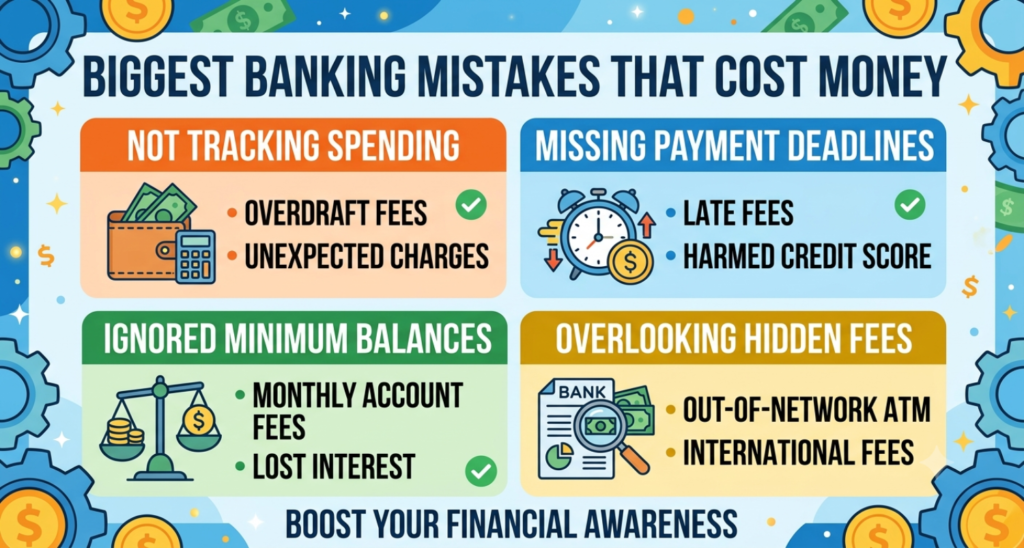
2. Paying Monthly Maintenance Fees
Many checking accounts charge maintenance fees.
Although some banks waive these fees after meeting certain requirements, many customers forget to qualify.
Paying $10 every month means losing $120 each year.
How to Avoid It
- Choose a no-fee checking account.
- Set up direct deposit.
- Maintain the required balance.
- Compare banks regularly.
3. Overdrawing Your Account
Overdraft fees remain one of the most expensive banking mistakes.
One purchase can trigger a fee of $30 or more. Multiple transactions may result in several fees on the same day.
How to Avoid It
- Enable low-balance alerts.
- Keep a financial cushion.
- Turn off overdraft coverage if possible.
- Monitor your balance before making purchases.
4. Using Out-of-Network ATMs
Many Americans withdraw cash without checking whether the ATM belongs to their bank’s network.
Consequently, they often pay two separate fees—one from their bank and another from the ATM owner.
How to Avoid It
- Use in-network ATMs.
- Get cash back during purchases.
- Use your bank’s mobile app to find nearby ATMs.
5. Keeping Too Much Money in Checking
A checking account is designed for spending, not long-term savings.
Leaving large balances there means missing higher interest rates available through high-yield savings accounts.
How to Avoid It
Keep only enough money for monthly expenses in checking. Move the rest into a savings account that earns competitive interest.
6. Forgetting Old Bank Accounts
People often open new accounts and forget about older ones.
Inactive accounts may continue charging maintenance fees or become dormant.
How to Avoid It
- Close accounts you no longer need.
- Keep a list of every financial account.
- Review your accounts at least once a year.
7. Not Building an Emergency Fund
Unexpected expenses can happen at any time. Without emergency savings, many people rely on credit cards or loans.
This increases debt and interest costs.
How to Avoid It
Aim to save three to six months of essential living expenses in a dedicated emergency savings account.
8. Ignoring Fraud Alerts
Banks send fraud alerts for a reason.
Ignoring these notifications can lead to larger financial losses if unauthorized transactions continue.
How to Avoid It
- Enable text and email alerts.
- Respond immediately to suspicious activity.
- Freeze your card if necessary.
9. Not Comparing Banks
Many customers stay with the same bank for years without comparing alternatives.
Meanwhile, other banks may offer:
- Lower fees
- Better mobile apps
- Higher savings rates
- Larger ATM networks
How to Avoid It
Compare your banking options once a year.
Switching banks could save you hundreds of dollars.
10. Missing Automatic Payments
Automatic payments are convenient. However, they only work if enough money is available.
Otherwise, you may face:
- Overdraft fees
- Late payment fees
- Declined transactions
How to Avoid It
Review upcoming payments regularly and keep enough funds in your account.
11. Sharing Banking Information Carelessly
Scammers continue targeting bank customers through emails, text messages, and phone calls.
Sharing login details can lead to identity theft and stolen funds.
How to Avoid It
- Never share passwords or PINs.
- Ignore suspicious links.
- Verify requests directly with your bank.
- Use two-factor authentication whenever available.
12. Not Taking Advantage of Banking Tools
Most banks offer free features that many customers never use.
These include:
- Balance alerts
- Spending reports
- Budget tracking
- Automatic savings transfers
- Mobile check deposits
Using these tools can improve your financial habits and help you avoid costly mistakes.
Smart Banking Habits That Save Money
Replacing bad habits with good ones doesn’t require major changes.
Start with these simple steps:
- Review statements every month.
- Keep an emergency fund.
- Use in-network ATMs.
- Enable account alerts.
- Compare banks yearly.
- Avoid unnecessary fees.
- Automate savings deposits.
- Protect your online banking account.
Small improvements today can lead to significant savings over time.
When Should You Switch Banks?
Sometimes the best solution is finding a better bank.
Consider switching if your current bank:
- Charges high monthly fees.
- Offers poor customer service.
- Has limited ATM access.
- Pays very low savings interest.
- Lacks useful mobile banking features.
Fortunately, many online banks now provide fee-free checking accounts, competitive savings rates, and excellent digital tools.
Final Thoughts
The biggest banking mistakes that cost Americans money are often simple to avoid. Unfortunately, many people don’t notice these habits until they’ve already paid unnecessary fees.
By reviewing your accounts, avoiding overdrafts, comparing banks, and using modern banking tools, you can protect your finances and keep more of your income.
Good banking isn’t about having the most accounts. Instead, it’s about making smart decisions with the accounts you already have. A few small changes today can save hundreds—or even thousands—of dollars over the years.
Consumer Financial Protection Bureau – Bank Accounts
Frequently Asked Questions
What is the biggest banking mistake?
Ignoring overdraft fees and monthly account charges is one of the most expensive banking mistakes.
How can I avoid unnecessary bank fees?
Choose low-fee accounts, use in-network ATMs, monitor your balance, and review your statements regularly.
Should I switch banks?
If your current bank charges high fees or offers poor services, comparing and switching banks may save money.
How often should I check my bank account?
Review your account at least once a week and carefully read your monthly statement