
 MOHAMMAD ABUBAKR
Introduction
Building wealth is rarely about luck.
Instead, it often comes down to consistent financial habits practiced over many years.
While everyone’s financial journey is different, many financially successful people share similar approaches to saving, spending, investing, and planning.
These habits are not limited to high-income earners.
Anyone can begin adopting smarter money habits, regardless of their current financial situation.
In this guide, you’ll learn the money habits that often separate wealthy individuals from everyone else and how you can apply them to your own financial life.
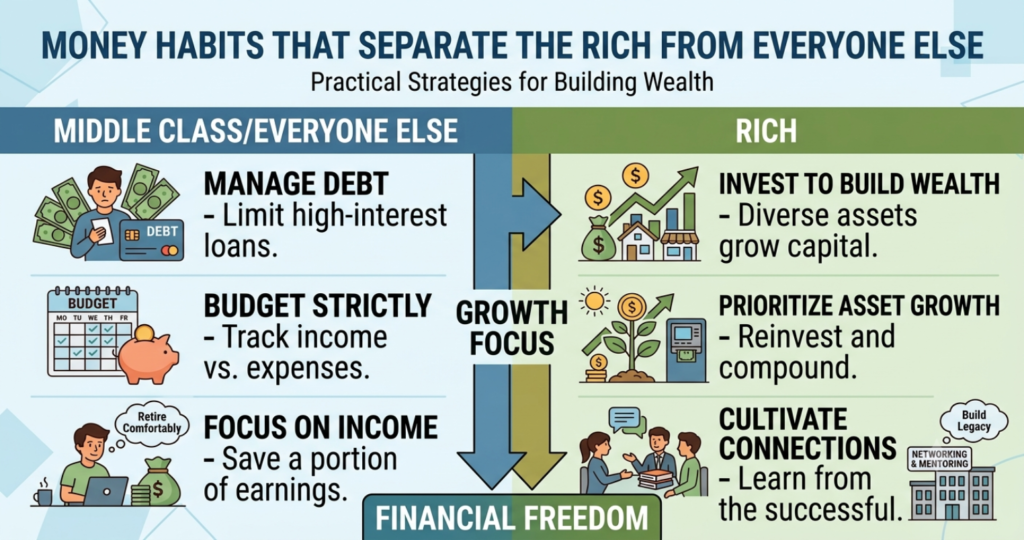
Why Financial Habits Matter More Than Income
Earning more money certainly helps.
However, income alone does not guarantee financial success.
Many high earners struggle financially because of poor spending habits, while others build wealth on modest incomes through consistent money management.
Daily financial decisions often have a greater long-term impact than occasional large financial wins.
1. They Spend Less Than They Earn
One of the most common wealth-building habits is living below your means.
This creates opportunities to:
- Save consistently.
- Invest regularly.
- Avoid unnecessary debt.
- Build financial security.
Spending less than you earn creates flexibility for future financial goals.
2. They Pay Themselves First
Rather than saving whatever remains after spending, many financially successful people save before spending.
Automatic transfers to savings or investment accounts make this habit easier to maintain.
Treating savings like a monthly bill encourages consistency.
3. They Invest for the Long Term
Many wealthy individuals focus on long-term investing instead of trying to predict short-term market movements.
Their strategies often include:
- Diversification.
- Regular investing.
- Patience.
- Long-term planning.
Time in the market is often more valuable than trying to perfectly time the market.
Long-term investing is only one part of financial success. Read our The Best Financial Habits to Build Wealth Faster guide to discover additional habits that can strengthen your financial future.
4. They Follow a Financial Plan
Successful money management usually begins with a plan.
Many financially successful people regularly review:
- Monthly budgets.
- Savings goals.
- Investment progress.
- Retirement planning.
- Major financial decisions.
A written financial plan helps keep long-term goals on track.
5. They Continue Learning About Money
Financial education doesn’t stop after school.
Many successful people regularly improve their knowledge by:
- Reading personal finance books.
- Following trusted financial news.
- Learning about investing.
- Reviewing tax strategies.
- Improving budgeting skills.
Knowledge often leads to better financial decisions.
6. They Avoid Lifestyle Inflation
As income increases, it becomes tempting to spend more.
Many wealthy individuals avoid dramatically increasing their lifestyle after every raise.
Instead, they often direct additional income toward:
- Investments.
- Savings.
- Retirement accounts.
- Business opportunities.
Keeping lifestyle inflation under control can significantly accelerate wealth building.
Wealth Is Usually Built One Habit at a Time
Financial success is rarely the result of one perfect investment or one unusually high paycheck.
Instead, it often grows from small, consistent decisions repeated over many years.
7. They Set Clear Financial Goals
Successful wealth builders rarely save or invest without a purpose.
Instead, they establish specific financial goals such as:
- Building an emergency fund.
- Buying a home.
- Saving for retirement.
- Funding education.
- Achieving financial independence.
Clear goals make it easier to stay motivated and measure progress over time.
8. They Review Their Finances Regularly
Wealthy individuals often monitor their finances consistently rather than only during tax season or when problems arise.
Regular financial reviews may include:
- Checking monthly spending.
- Tracking investment performance.
- Reviewing savings progress.
- Updating financial goals.
- Evaluating insurance and retirement plans.
Small adjustments made throughout the year can lead to better long-term financial outcomes.
9. They Focus on Assets That Can Grow
Many financially successful people prioritize acquiring assets that have the potential to increase in value or generate income over time.
Examples may include:
- Diversified investment portfolios.
- Retirement accounts.
- Income-producing businesses.
- Real estate investments.
- Dividend-paying investments.
A balanced portfolio aligned with personal goals and risk tolerance can support long-term wealth building.
10. They Think Long Term
One of the biggest differences between wealth builders and average savers is patience.
Instead of focusing on quick financial wins, they often make decisions based on where they want to be years or even decades from now.
Long-term thinking encourages:
- Consistent saving.
- Disciplined investing.
- Better financial planning.
- Reduced emotional decision-making.
Patience is often one of the most valuable financial habits.
Common Money Habits That Hold People Back
Many financial challenges result from habits that seem harmless at first.
Avoid these common mistakes:
- Spending every paycheck.
- Saving only when money is left over.
- Ignoring a monthly budget.
- Carrying high-interest debt for long periods.
- Chasing quick investment profits.
- Delaying retirement planning.
- Avoiding regular financial reviews.
Replacing poor financial habits with better ones can improve long-term financial health.
Investor.gov, the official investor education website from the U.S. Securities and Exchange Commission (SEC), provides free educational resources on investing, diversification, retirement planning, and long-term wealth building. These resources can help you make informed financial decisions throughout every stage of your financial journey.
Frequently Asked Questions
Do wealthy people always earn high incomes?
Not necessarily.
Many people build wealth by consistently saving, investing, and managing money wisely, regardless of their income level.
What is the most important money habit?
Living below your means and consistently saving or investing are among the most effective long-term wealth-building habits.
Can I build wealth on an average salary?
Yes.
Many individuals build significant wealth over time through disciplined budgeting, regular investing, and consistent financial planning.
How long does it take to build wealth?
Building wealth is typically a long-term process.
The timeline depends on factors such as income, savings rate, investment returns, and financial goals.
Final Thoughts
The habits that separate wealthy people from everyone else are usually simple rather than complicated.
They spend intentionally, save consistently, invest for the future, continue learning, and make decisions with long-term goals in mind.
You don’t need a perfect income or perfect timing to begin improving your finances.
By adopting better money habits one step at a time, you can build greater financial confidence, strengthen your long-term financial security, and move closer to achieving your financial goals.