 MOHAMMAD ABUBAKR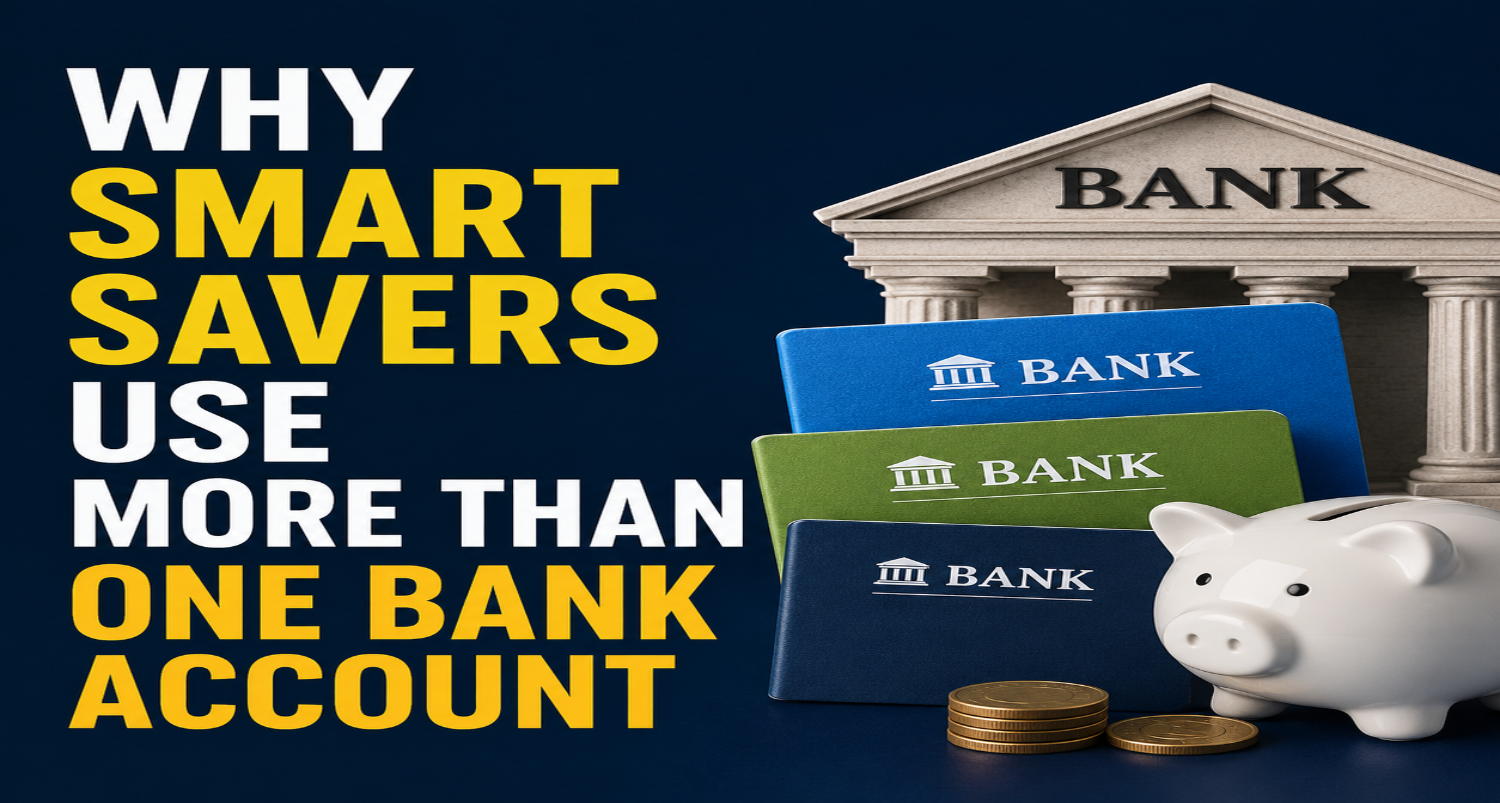
Many people believe that one bank account is enough. They receive their paycheck, pay their bills, and save whatever is left. While this method works for some, it is not always the smartest way to manage money.
Today, more Americans are opening multiple bank accounts to organize their finances. This strategy makes budgeting easier, helps protect savings, and can even increase the amount of interest earned over time.
The good news is that using more than one bank account is simple. You do not need to be wealthy or a financial expert. With the right approach, anyone can use this method to improve their financial health.
In this guide, you’ll learn why smart savers use more than one bank account, how to organize your money, and the mistakes to avoid.
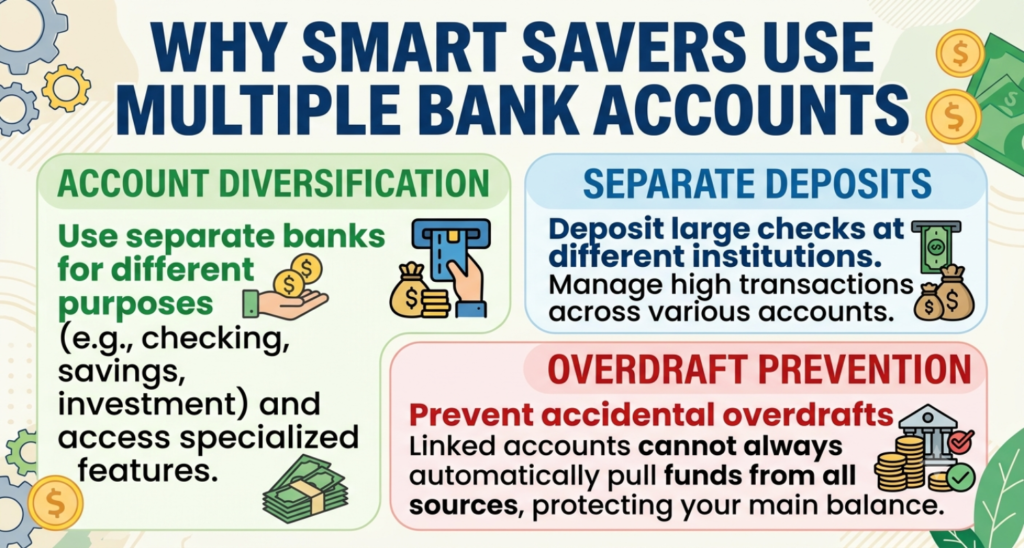
Why One Bank Account May Not Be Enough
Keeping all your money in one account can make it difficult to manage your finances.
For example, your paycheck, monthly bills, emergency savings, and vacation fund may all sit together in the same account. As a result, it becomes harder to know how much money you can actually spend.
In addition, having everything in one place increases the temptation to spend money that was meant for savings.
By separating your money into different accounts, you give every dollar a specific purpose.
Is Your Money Safe If Your Bank Fails?
The Benefits of Having More Than One Bank Account
Using multiple accounts offers several advantages.
Better Budgeting
One account can be used for everyday spending.
Another account can hold money for monthly bills.
A separate savings account can be reserved for long-term goals.
Because your money is organized, it becomes easier to avoid overspending.
Protect Your Emergency Fund
An emergency fund should stay untouched until you truly need it.
If your emergency savings remain in the same checking account as your daily spending money, you may accidentally spend it.
Instead, keeping emergency savings in a separate account creates a helpful barrier.
As a result, you are less likely to dip into those funds.
Earn Higher Interest
Not all banks offer the same savings rates.
Some online banks pay much higher annual percentage yields (APYs) than traditional banks.
Many smart savers keep their checking account at one bank while moving their savings to another bank with better interest rates.
Over time, this simple strategy can earn hundreds of extra dollars.
Improve Financial Discipline
Multiple accounts create clear financial boundaries.
For example:
- Spending Account
- Bills Account
- Emergency Savings
- Vacation Fund
- Holiday Shopping Account
Each account has one purpose.
Therefore, you always know where your money should go.
Reduce Financial Stress
Unexpected expenses happen.
However, if every dollar sits in one account, paying an emergency bill can become stressful.
When your money is organized into different categories, you gain confidence because you know exactly what funds are available.
Types of Bank Accounts Smart Savers Use
There is no perfect number of bank accounts.
Instead, choose accounts that match your financial goals.
1. Everyday Checking Account
This account is used for:
- Paychecks
- Debit card purchases
- ATM withdrawals
- Daily expenses
Most people use this account every day.
2. Bills Account
Many smart savers transfer money into a separate account every payday.
This account covers:
- Rent or mortgage
- Utilities
- Insurance
- Phone bill
- Internet
- Car payment
Since the money is already set aside, monthly bills become less stressful.
3. Emergency Savings Account
Experts often recommend saving three to six months of living expenses.
Keeping this money in a separate high-yield savings account helps protect it from unnecessary spending.
4. Goal-Based Savings Account
Saving becomes easier when each goal has its own account.
Examples include:
- Vacation
- New car
- Wedding
- Home down payment
- College fund
Watching these balances grow keeps you motivated.
5. High-Yield Savings Account
Traditional savings accounts often pay very little interest.
High-yield savings accounts generally offer much better returns.
Even a small increase in interest can make a noticeable difference over several years.
Is It Safe to Have Money at Multiple Banks?
Yes.
In fact, spreading money across multiple banks may increase your protection.
Most U.S. banks are insured by the Federal Deposit Insurance Corporation (FDIC).
The FDIC generally insures deposits up to $250,000 per depositor, per insured bank, per ownership category.
If you have large savings, using multiple FDIC-insured banks can increase your total insured coverage.
Common Mistakes to Avoid
Although multiple bank accounts offer many benefits, there are a few mistakes you should avoid.
Opening Too Many Accounts
Managing too many accounts can become confusing.
Start with two or three accounts.
Then add more only if necessary.
Ignoring Fees
Some banks charge:
- Monthly maintenance fees
- Minimum balance fees
- Excess withdrawal fees
Choose accounts with low or no fees whenever possible.
Forgetting Old Accounts
Unused accounts may still charge fees.
Review every account regularly.
Close accounts you no longer need.
Missing Automatic Transfers
Automation makes saving easier.
Set up automatic transfers from your checking account to your savings account every payday.
This habit helps build savings without extra effort.
Who Should Consider Multiple Bank Accounts?
This strategy works well for many people.
It may be especially helpful if you:
- Struggle with budgeting
- Want to save more money
- Have irregular income
- Are building an emergency fund
- Have multiple financial goals
- Prefer organized finances
Even college students and young professionals can benefit from separating spending and savings.
Tips for Managing Multiple Accounts
Follow these simple tips.
Use Mobile Banking Apps
Most banks allow you to monitor all your accounts through mobile apps.
Checking balances regularly helps prevent mistakes.
Name Your Savings Accounts
Many banks let you rename savings accounts.
Examples include:
- Emergency Fund
- Vacation 2027
- New Home
- Christmas Savings
Giving each account a name makes your goals feel more real.
Review Your Accounts Monthly
Take a few minutes each month to check:
- Balances
- Fees
- Interest earned
- Automatic transfers
Small adjustments can improve your savings over time.
Frequently Asked Questions
How many bank accounts should I have?
There is no perfect number. Most people can manage their finances well with two to five accounts.
Does having multiple bank accounts hurt my credit score?
No. Bank accounts are generally not included in your credit score.
Can I have accounts at different banks?
Yes. Many people use one bank for checking and another for high-yield savings.
Is it harder to manage several accounts?
Not necessarily. Online banking and mobile apps make it easy to monitor multiple accounts from anywhere.
Should I keep all my savings in one bank?
If your savings exceed FDIC insurance limits, spreading your money across multiple insured banks may provide additional protection.
If you’re keeping large balances across multiple banks, review the official FDIC Deposit Insurance Coverage guide to understand how your deposits are protected
Final Thoughts
Using more than one bank account is a simple yet powerful way to take control of your finances. Instead of keeping all your money in one place, you can assign each account a clear purpose. This makes budgeting easier, reduces the temptation to overspend, and helps you stay focused on your financial goals.
Whether you’re building an emergency fund, saving for a vacation, or simply trying to manage monthly bills more effectively, multiple bank accounts can make the process less stressful. In addition, choosing high-yield savings accounts and staying within FDIC insurance limits can help your money grow while remaining protected.
The key is to keep your system simple. Start with the accounts you truly need, automate your savings, and review your finances regularly. Over time, these small habits can lead to greater financial security and long-term success.
, improve internal linking, and support SEO for U.S. audiences.