 MOHAMMAD ABUBAKR
Introduction
Many people believe budgeting is restrictive.
In reality, a budget is simply a plan for how you want to use your money.
Without one, it’s easy to lose track of spending, miss savings opportunities, and struggle to reach long-term financial goals.
Even people with higher incomes can experience financial stress if they don’t have a clear plan for managing their money.
In this guide, you’ll learn the hidden costs of living without a budget and how creating a simple spending plan can improve your financial future.
Why Budgeting Matters
A budget helps you understand where your money goes each month.
It can help you:
- Control spending.
- Save consistently.
- Prepare for unexpected expenses.
- Reduce financial stress.
- Reach long-term financial goals.
Budgeting gives your money a purpose instead of leaving financial decisions to chance.
1. Small Expenses Become Big Problems
Without a budget, it’s easy to overlook small daily purchases.
Examples include:
- Coffee.
- Food delivery.
- Convenience store purchases.
- Subscription services.
- Impulse shopping.
While each expense may seem small, together they can significantly affect your monthly finances.
2. Saving Often Becomes an Afterthought
Many people save only what’s left at the end of the month.
Unfortunately, there often isn’t much remaining.
Creating a budget allows you to prioritize savings before spending on non-essential items.
Consistent saving is one of the most important wealth-building habits. Read our The Best Financial Habits to Build Wealth Faster guide to learn practical strategies for improving your long-term financial health.
3. Debt Can Grow Faster
Without knowing exactly how much money is available, some people rely on credit cards or loans to cover everyday expenses.
Over time, interest charges and monthly payments can make financial progress more difficult.
Budgeting helps reduce the need for unnecessary borrowing.
4. Financial Goals Become Harder to Reach
Whether you’re saving for:
- A home.
- Retirement.
- A vacation.
- College expenses.
- An emergency fund.
A budget helps ensure your money supports those priorities.
Without a plan, long-term goals often get delayed.
5. Money-Related Stress Can Increase
Financial uncertainty often creates unnecessary stress.
Not knowing:
- How much you’ve spent.
- How much you can save.
- Whether upcoming bills are covered.
can make money management feel overwhelming.
A simple budget provides greater financial clarity and confidence.
6. You May Miss Opportunities to Build Wealth
Every dollar has a job.
Without a budget, money that could be saved or invested may instead be spent unintentionally.
Over many years, those missed opportunities can have a significant impact on long-term wealth building.
A Budget Creates Financial Freedom
Many people think budgets limit spending.
In reality, a good budget helps you spend confidently because you know your financial priorities are covered.
7. Multiple Income Streams Are Becoming More Common
Many Americans are looking beyond a single paycheck to improve their financial stability.
Some people earn additional income through:
- Freelancing.
- Part-time work.
- Small businesses.
- Dividend-paying investments.
- Rental income.
Having more than one income source may provide greater financial flexibility during periods of economic uncertainty.
8. Financial Education Is More Valuable Than Ever
Understanding basic personal finance can help you make better decisions.
Important topics include:
- Budgeting.
- Saving.
- Investing.
- Credit management.
- Retirement planning.
Continuing to improve your financial knowledge can support better long-term outcomes.
9. Small Improvements Add Up
Many people believe they need dramatic changes to improve their finances.
In reality, consistent habits often matter more.
Examples include:
- Saving automatically each month.
- Reviewing recurring expenses.
- Paying bills on time.
- Increasing retirement contributions after a raise.
- Investing consistently over the long term.
Small actions repeated over many years can produce meaningful financial progress.
10. Focus on What You Can Control
No one can control inflation, interest rates, or the broader economy.
However, you can control:
- Your spending habits.
- Your savings rate.
- Your investment strategy.
- Your financial goals.
- Your long-term planning.
Focusing on controllable factors can reduce financial stress and improve confidence.
Common Financial Mistakes to Avoid
Many households unintentionally slow their financial progress by making avoidable mistakes.
Watch out for these common habits:
- Living without a budget.
- Carrying high-interest debt longer than necessary.
- Delaying emergency savings.
- Ignoring retirement planning.
- Trying to time the stock market.
- Making emotional financial decisions during periods of uncertainty.
Improving just a few habits can strengthen your overall financial position.
The Consumer Financial Protection Bureau (CFPB) provides practical resources on budgeting, saving, debt management, credit, and financial planning. These educational materials can help you make informed decisions and strengthen your financial future in a changing economy.
Frequently Asked Questions
Why do many people feel more financially stressed in 2026?
Many households are managing higher living costs, increased insurance expenses, and continued economic uncertainty, making it more difficult to balance everyday spending with long-term financial goals.
What is the most important financial priority?
The answer depends on your personal circumstances.
However, many financial plans begin with budgeting, emergency savings, paying down high-interest debt, and investing consistently for the future.
Can small financial changes really make a difference?
Yes.
Small, consistent improvements made over time often have a greater long-term impact than occasional large financial changes.
How can I improve my financial situation this year?
Creating a budget, increasing savings, reducing unnecessary expenses, paying down expensive debt, and reviewing your financial goals regularly are practical first steps.
Final Thoughts
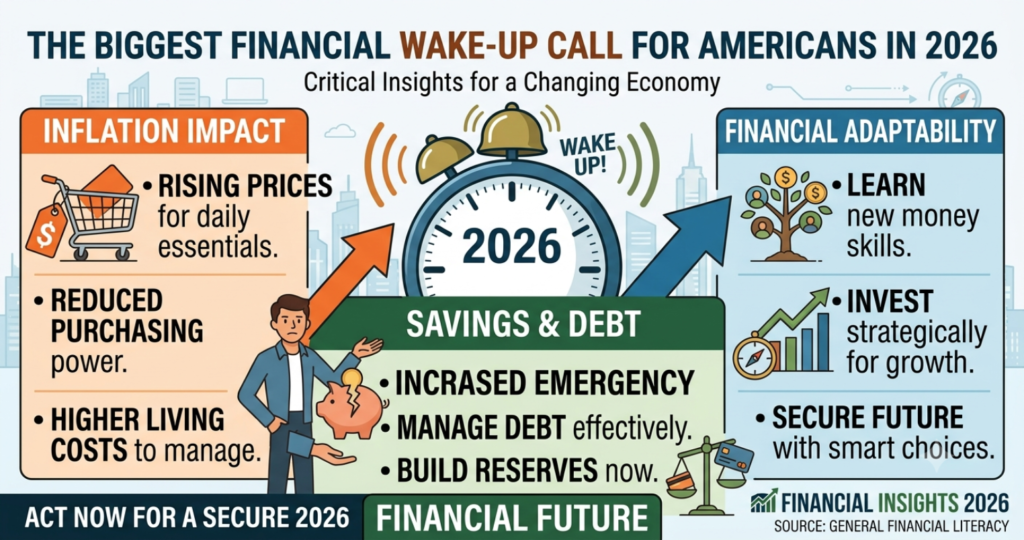
The biggest financial wake-up call for Americans in 2026 isn’t about one economic event.
It’s the realization that long-term financial security depends on consistent daily decisions.
Building an emergency fund, managing debt responsibly, spending intentionally, investing for the future, and continuing to improve your financial knowledge can help you adapt to changing economic conditions.
The sooner you begin strengthening your financial habits, the more prepared you’ll be for whatever comes next.