 MOHAMMAD ABUBAKR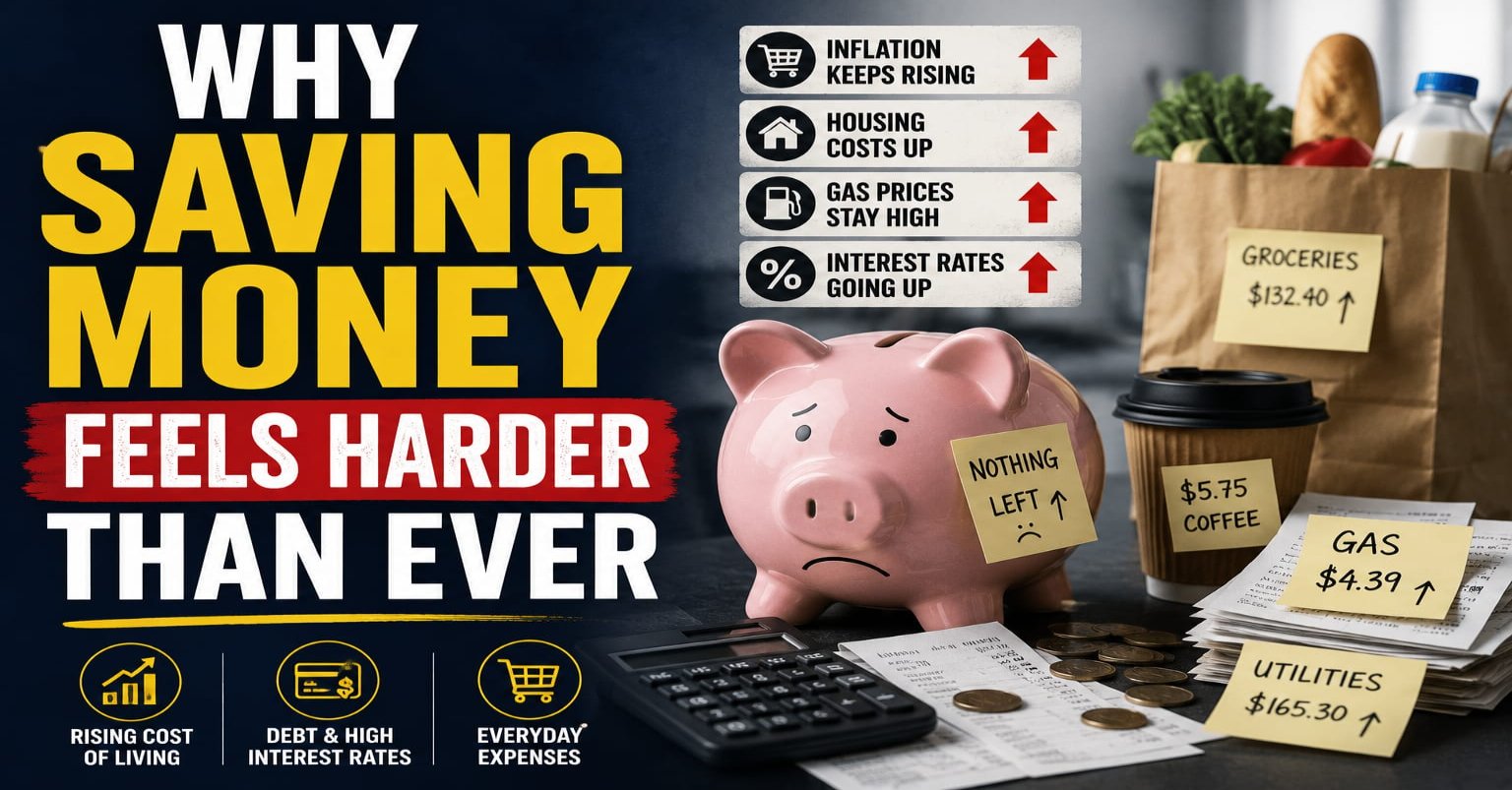
Introduction
If saving money feels more difficult than it did a few years ago, you’re not imagining it.
Many Americans are finding it harder to set money aside as everyday expenses continue to increase.
Higher housing costs, groceries, insurance premiums, transportation, and utility bills have placed greater pressure on household budgets.
At the same time, unexpected expenses and changing financial priorities make consistent saving even more challenging.
The good news is that understanding why saving has become harder can help you develop practical strategies to improve your financial future.
In this guide, you’ll learn the biggest reasons saving money feels more difficult today and simple ways to strengthen your savings habits.
Why Saving Has Become More Challenging
Several financial trends have made saving more difficult for many households.
These include:
- Rising living costs.
- Inflation.
- Higher monthly bills.
- Lifestyle inflation.
- Unexpected expenses.
Recognizing these challenges is the first step toward building a stronger financial plan.
1. Everyday Living Costs Continue to Rise
Many essential expenses cost more than they did just a few years ago.
Examples include:
- Groceries.
- Rent or mortgage payments.
- Utilities.
- Insurance.
- Transportation.
When essential costs increase, there is often less money available for savings.
2. Inflation Reduces Purchasing Power
Inflation affects nearly every household budget.
Even when inflation slows, prices often remain higher than before.
This means many families must spend more simply to maintain the same standard of living, leaving less room to save.
3. Unexpected Expenses Happen More Often Than Expected
Many people plan for regular monthly bills but forget to budget for unexpected costs.
Common examples include:
- Car repairs.
- Medical expenses.
- Home maintenance.
- Appliance replacements.
- Emergency travel.
Without preparation, these expenses can quickly reduce savings.
4. Lifestyle Inflation Can Quietly Reduce Savings
As income grows, spending often grows as well.
Examples include:
- Upgrading vehicles.
- Dining out more frequently.
- Purchasing premium subscriptions.
- Buying more expensive electronics.
Although these upgrades may seem manageable individually, they can reduce your ability to save over time.
5. Saving Often Becomes the Last Priority
Many households pay bills first and then try to save whatever remains.
Unfortunately, there is often little left.
Treating savings like a regular monthly expense can make saving more consistent.
Saving consistently becomes much easier when you avoid common financial mistakes. Read our Common Savings Account Mistakes to Avoid guide to build stronger saving habits and protect your financial future.
6. Small Daily Expenses Add Up
Small purchases rarely seem significant at the moment.
However, repeated spending on:
- Coffee.
- Food delivery.
- Convenience purchases.
- Streaming services.
- Online impulse shopping.
can quietly reduce your monthly savings potential.
Small Changes Can Strengthen Your Savings
Building savings isn’t about making one dramatic financial change.
Instead, small improvements repeated consistently often produce the strongest long-term results.
7. Create a Savings Plan That Fits Your Budget
Saving money doesn’t require setting aside large amounts all at once.
Instead, choose a realistic amount that fits your income and monthly expenses.
Many people find success by:
- Saving a fixed amount every payday.
- Setting up automatic transfers.
- Increasing contributions after a raise.
- Saving unexpected income such as tax refunds or bonuses.
A consistent plan is often more effective than trying to save only when extra money is available.
8. Review Your Monthly Spending Regularly
Many unnecessary expenses go unnoticed until you review your budget.
Take time each month to evaluate:
- Subscription services.
- Dining out.
- Online shopping.
- Utility bills.
- Entertainment expenses.
Small adjustments across several categories can free up more money for savings.
9. Set Specific Financial Goals
Saving becomes easier when you know exactly why you’re doing it.
Your goals may include:
- Building an emergency fund.
- Buying a home.
- Paying for education.
- Taking a vacation.
- Preparing for retirement.
Clear goals help you stay motivated, even when saving feels difficult.
10. Focus on Progress Instead of Perfection
There may be months when you save less than planned.
That doesn’t mean you’ve failed.
Financial progress is built through consistency over time, not perfection.
Even modest contributions can grow into meaningful savings when repeated regularly.
Common Saving Mistakes to Avoid
Many people unintentionally slow their financial progress through avoidable habits.
Try to avoid:
- Waiting until the end of the month to save.
- Spending unexpected income immediately.
- Ignoring small daily expenses.
- Increasing lifestyle spending after every raise.
- Saving without clear financial goals.
- Not reviewing your budget regularly.
Replacing these habits with consistent saving can strengthen your financial future.
The Consumer Financial Protection Bureau (CFPB) offers practical guidance on saving money, budgeting, managing debt, and improving financial well-being. These free resources can help you build stronger saving habits and make informed financial decisions, even during periods of rising living costs.
Frequently Asked Questions
Why is saving money so difficult today?
Many households are facing higher living costs, inflation, increased insurance premiums, and larger monthly bills, leaving less income available for savings.
How can I save money when my budget is tight?
Start with small, realistic contributions, reduce unnecessary recurring expenses, create a budget, and automate savings whenever possible.
Should I save or pay off debt first?
The right approach depends on your financial situation.
Many people build a small emergency fund first while also working to reduce high-interest debt.
Does saving a small amount really make a difference?
Yes.
Consistent saving—even in small amounts—can build financial security over time and help you prepare for unexpected expenses.
Final Thoughts
Saving money may feel more difficult than ever, but it’s still one of the most effective ways to improve your financial future.
Although rising living costs create challenges, small financial habits can make a meaningful difference.
By reviewing your spending, setting clear goals, automating savings, and staying consistent, you can steadily grow your savings and strengthen your financial security.
Every dollar you save today is an investment in your future financial confidence.